The Gap You Cannot Ignore
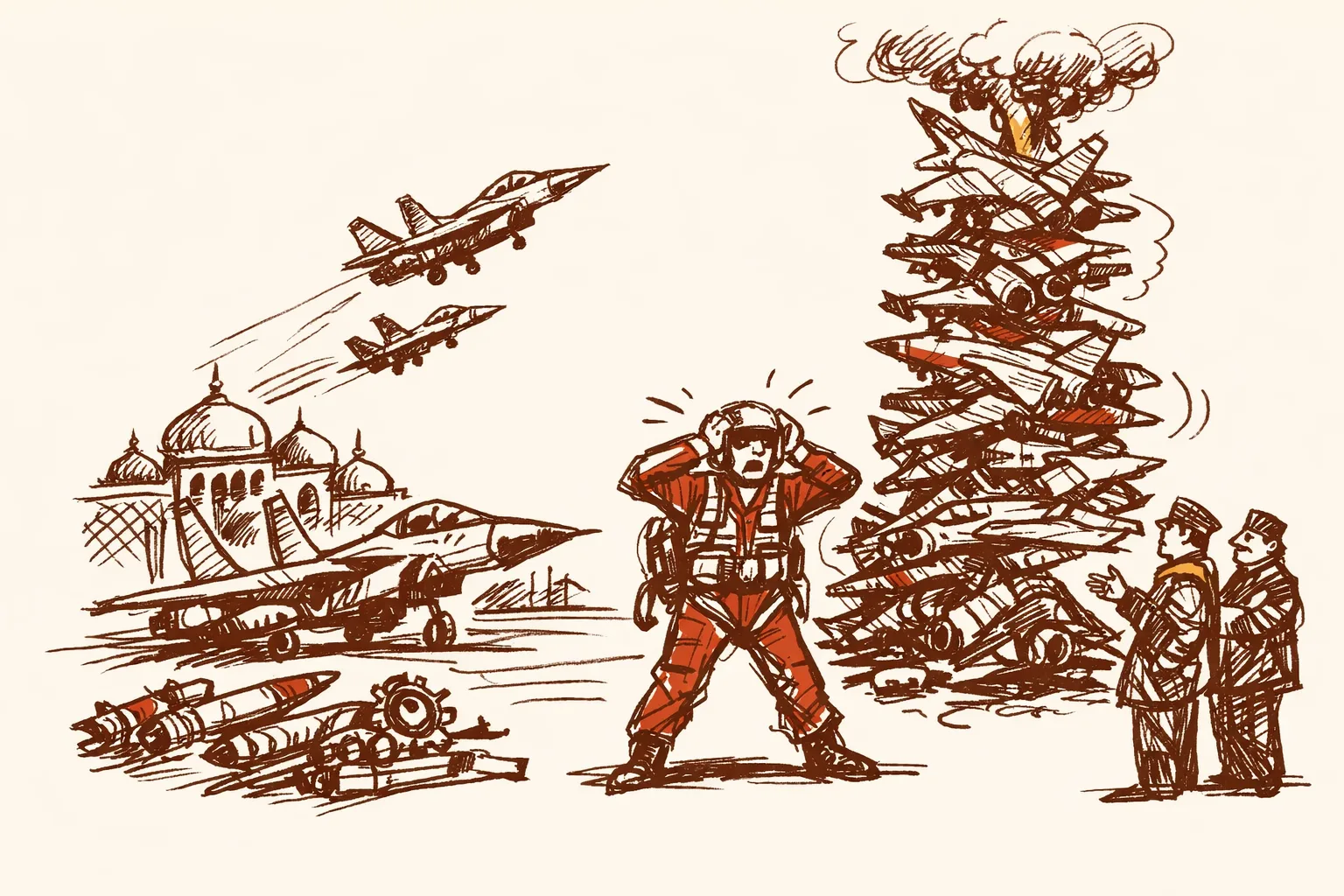
Picture a country with two nuclear-armed neighbors on its borders. One is expanding its air force at record speed. The other is receiving stealth jets from China. And the country in the middle - India - is flying fighter aircraft inducted before many of its pilots were born.
According to a report by the Manohar Parrikar Institute for Defence Studies and Analyses, India's Air Force has declined from a peak of 42 squadrons in the early 1990s to just 31 operational squadrons - well below the authorized strength of 42 that defense planners say is needed to fight on two fronts simultaneously. Each squadron has roughly 18 to 20 aircraft. That means the shortfall is approximately 200 fighters.
Former Air Chief Marshal Rakesh Kumar Singh Bhadauria described this shortfall as a "strategic liability". A weakened air force does not just lose dogfights. It loses deterrence. And when deterrence fails, hostile neighbors push harder.
The Scale of the Problem
The problem compounds because the aircraft being retired are not being replaced fast enough. According to Foreign Policy magazine, India is still flying Jaguar jets inducted in 1979. Three of those Jaguars have crashed during training in recent months. India keeps them flying because it has no other choice - there are not enough modern replacements.
According to the Indian Defence Research Wing, between 2014 and today, India's fighter fleet shrank by over 150 aircraft while China's grew by over 400 and Pakistan added 31. China now operates more than 300 stealth J-20 fighters. Pakistan is acquiring Shenyang J-35 stealth jets from China. India has 36 Rafales.
India is not defenseless. Its pilots are skilled. Operation Sindoor showed the IAF can strike hard when needed. But the math of numbers matters in sustained conflict. A force operating below strength has no reserves for attrition.
Why Procurement Keeps Failing
The procurement machine is the problem - not the money allocated to it.
India's defense acquisition rulebook has been revised so often that the Observer Research Foundation noted new revisions arrive faster than the government can implement old ones.
According to India's Comptroller and Auditor General, more than 60 percent of capital defense projects face delays ranging from one to seven years. Yet almost none of those delays result in any accountability measures.
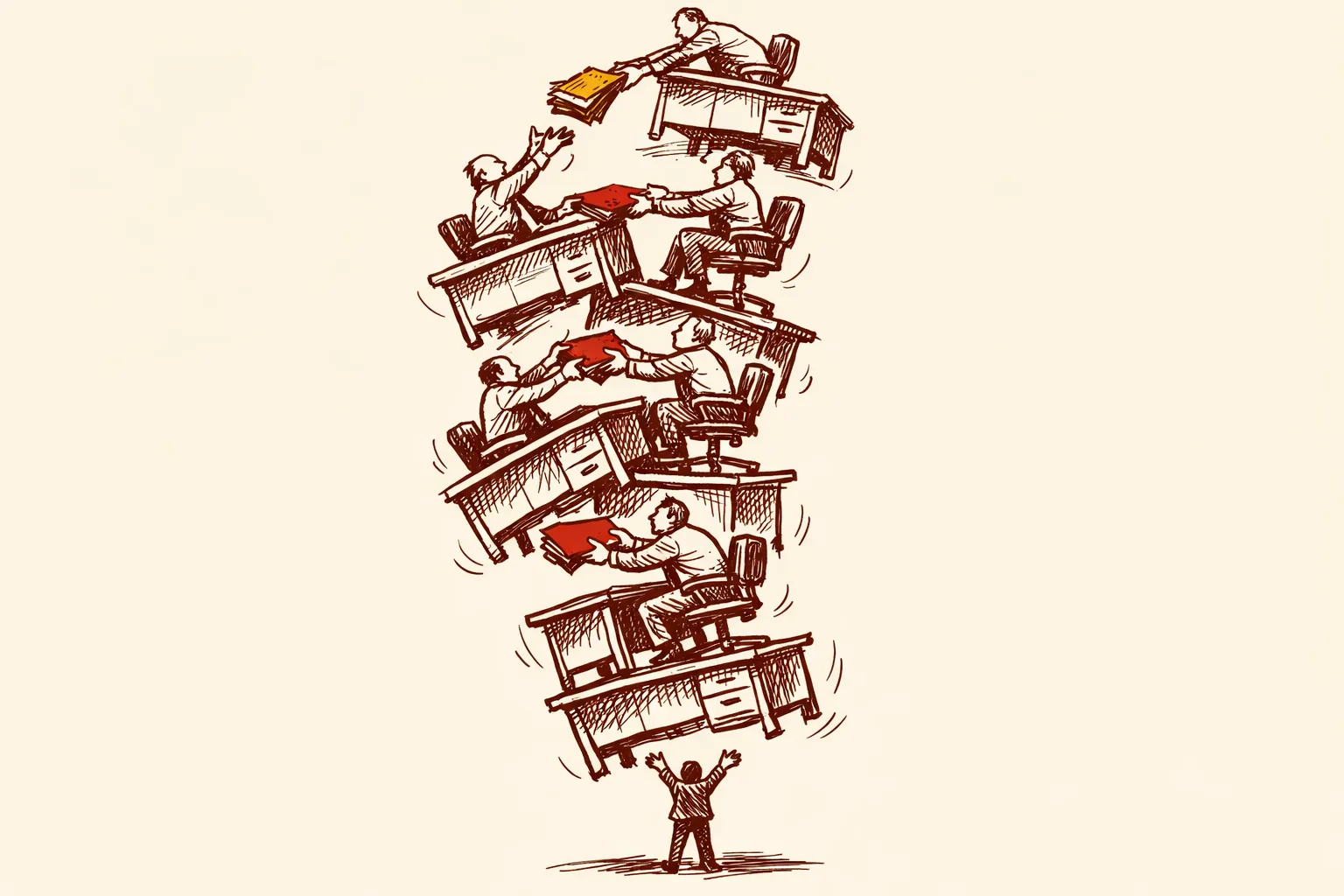
The procurement cycle has 12 formal phases involving multiple layers of approval. The Defence Acquisition Council, the Defence Research and Development Organisation, and the Service Headquarters each need to sign off - as do the Ministry of Defence and the Ministry of Finance. Any one of them can pause the clock. Every single one of them has, at one point or another.
Put simply: a procurement process designed after the Bofors scandal to prevent corruption became so focused on preventing corruption that it stopped being able to buy anything fast.
The Tejas Story - Great Aircraft, Impossible Timeline
In 1983, the government launched the Light Combat Aircraft program - now known as the Tejas - to replace the aging MiG-21.
Four decades later, the Tejas is a real aircraft. It flies. Its pilots praise it. But the production rate cannot fill the gap it was supposed to close.
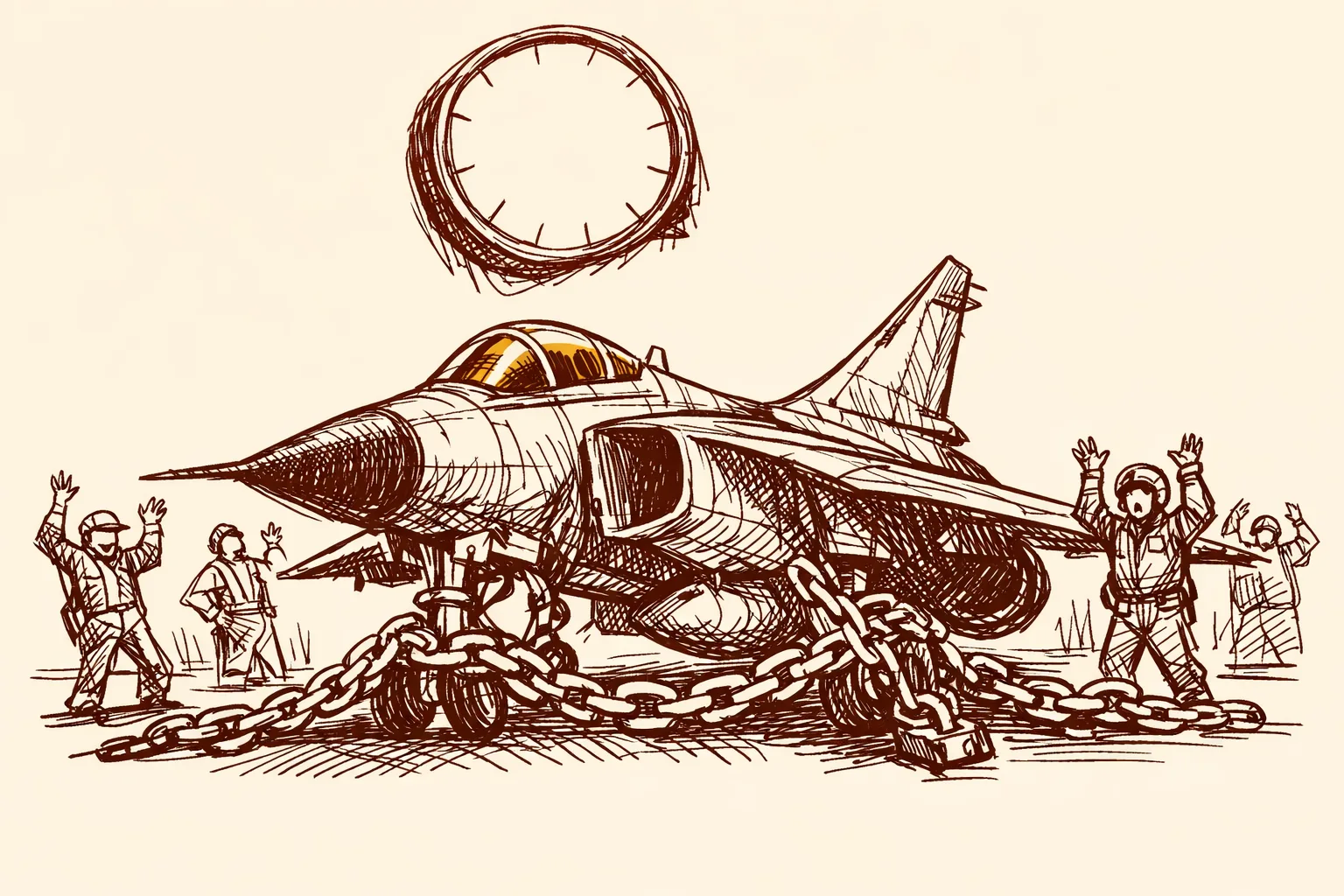
According to Livefist, the Air Chief Marshal A.P. Singh publicly upbraided Hindustan Aeronautics Limited at the Aero India air show in February for failing to deliver aircraft on schedule. As of early May, Hindustan Aeronautics had not delivered a single Tejas Mk1A to the IAF - despite having more than 20 airframes built and 6 engines in hand. The original delivery deadline was February of the previous year.
The cause is a tangle of overlapping problems. First, GE Aerospace has repeatedly missed engine delivery deadlines for the F404-IN20 engines that power the Tejas. According to Business Standard, Hindustan Aeronautics imposed financial penalties on GE Aerospace for missing delivery timelines. Second, there are technical incompatibilities between the Israeli-origin radar and the aircraft's own electronic warfare suite. The Air Force has refused to accept planes that are not fully combat-ready.
The total Tejas Mk1A order stands at 180 aircraft across two contracts. Even at peak production of 24 aircraft per year, the full order takes years to complete.
India's most important indigenous program is being held up partly by a foreign engine supplier. Forty years of effort, and the most critical component still comes from abroad.
The AMCA - A Better Sign This Time
The next-generation Advanced Medium Combat Aircraft is India's attempt to build a fifth-generation stealth jet. The program started in 2011 and received Cabinet approval for prototype development funding of Rs 15,803 crore.
The Modi government approved a new execution model that opens the AMCA program to private companies - not just Hindustan Aeronautics. According to Aero Morning, three private-sector consortia - involving Tata Advanced Systems, Larsen and Toubro, and Bharat Forge - were shortlisted to take the program forward. Hindustan Aeronautics did not advance to the next evaluation phase.
The AMCA is expected to fly its first prototype in . Serial production is targeted for . That is still a long wait for an Air Force that needs aircraft today.
What Has Already Been Tried
The Defence Procurement Procedure was revised six times between 2002 and 2016. In 2020, the Modi government introduced the Atmanirbhar Bharat framework, which imposed import restrictions on 101 defence items and pushed harder for domestic production. According to the Observer Research Foundation, these were genuine improvements. But penalty clauses for suppliers who miss indigenous content targets remain weak - just five percent deduction, far below what would make non-compliance costly.
The Medium Multi-Role Combat Aircraft program - begun in 2001 to procure 126 new fighters - collapsed completely in 2015 after 14 years. India ended up buying just 36 Rafale jets. The gap the original 126 were meant to fill was never closed.
The Ministry of Defence's draft Defence Acquisition Procedure includes outcome-linked procurement and guaranteed follow-on orders for companies that successfully deliver. But past revisions have been undermined not by poor intent but by the inability of existing institutions to execute reforms at the required pace.
How Other Countries Fixed This
South Korea - Build With Private Industry, Export to Stay Lean
South Korea started developing its indigenous supersonic trainer, the T-50, in the late 1990s. It flew in 2002 and entered Korean Air Force service in 2005 - development-to-service in about 7 years, in partnership with Lockheed Martin for technology transfer.
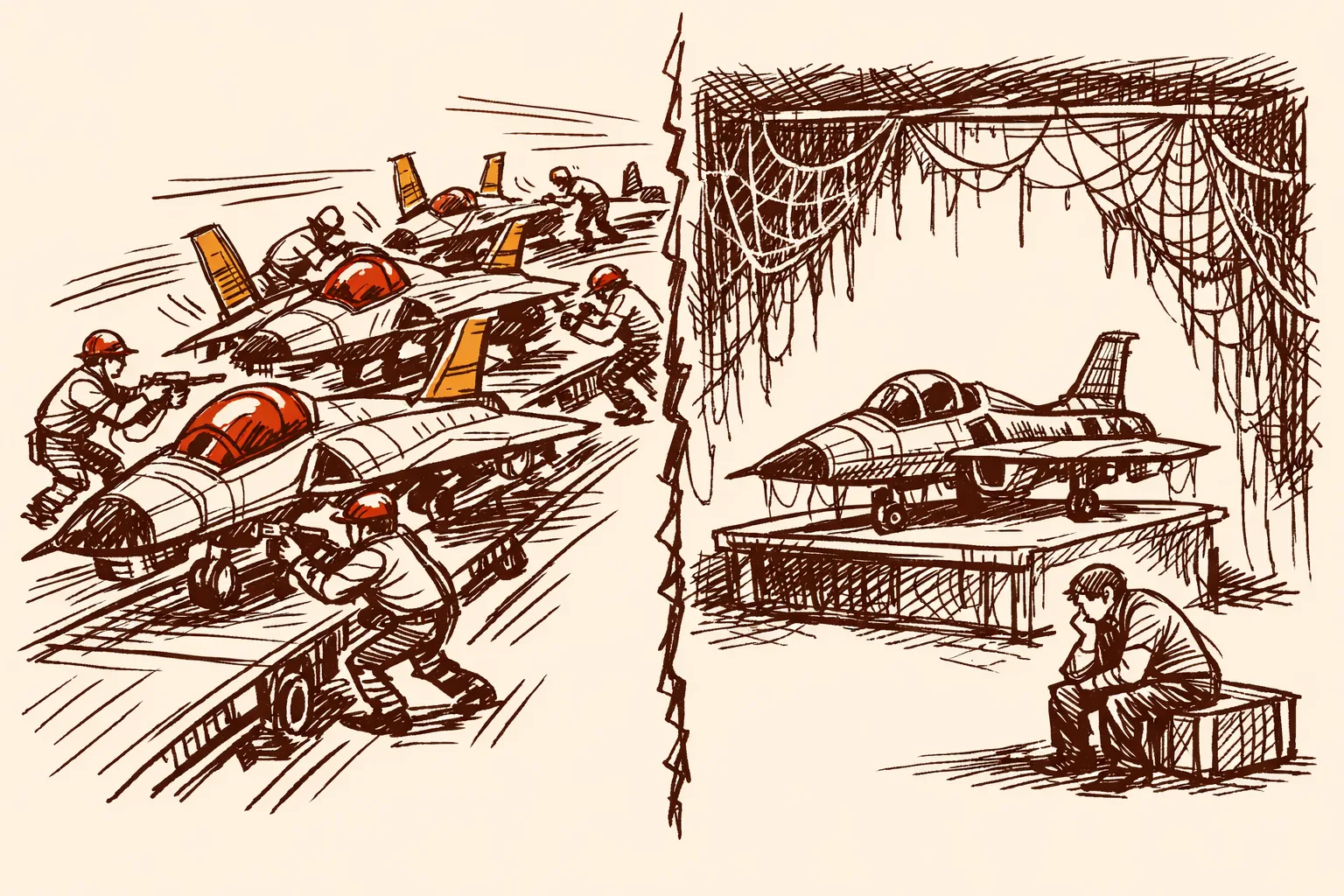
South Korea built a combat variant - the FA-50 - and exported it to six nations including Poland. Exports funded the industrial base. That industrial base produced the KF-21, South Korea's own 4.5-generation fighter, which entered mass production this year. South Korea used license production of the F-16 in the 1980s as a learning ladder. Each program built on the last. India never built that ladder. The Tejas program started from scratch, in isolation, without a private industrial partner from the beginning.
Israel - A Dedicated Procurement Body That Moves Fast
Israel's Ministry of Defence has a dedicated Production and Procurement Directorate, established in 1967, that centralizes all procurement under one roof. After its conflict with Iran, Israel's Ministerial Committee on Procurement approved two new fighter squadrons simultaneously under a dedicated long-term budget plan.
Israel has a committee that can approve major acquisitions in weeks. India's process has 12 formal phases. When speed matters for national security, the difference between those two systems is enormous.
Who Is Accountable
The Ministry of Defence owns the procurement framework. The Defence Acquisition Council, chaired by the Defence Minister, approves all major acquisitions. The Aeronautical Development Agency is responsible for indigenous aircraft design. Hindustan Aeronautics Limited is the primary manufacturer.
Capital expenditure for defence has been raised to Rs 2.19 lakh crore - a 22 percent increase - with Rs 6,373 crore specifically allocated for aircraft and aero-engines. Around 75 percent of the capital acquisition budget is reserved for domestic procurement. These are serious numbers. The question is execution speed.
More than 60 percent of capital projects are delayed by one to seven years, and nobody gets fired. No agency forfeits its budget. That must change.
What Would It Cost
The proposed acquisition of 114 Rafale jets is valued at Rs 3.25 lakh crore - approximately 35 billion US dollars - making it potentially India's largest-ever defence procurement. The two Tejas Mk1A contracts total approximately Rs 98,770 crore. The AMCA prototype development phase is budgeted at Rs 15,803 crore.
If procurement delays continue at the current pace, India's fighter strength could temporarily drop below 25 operational squadrons. Against China - which grew its fighter fleet by over 400 aircraft in the period that India's shrank - the cost is measured in deterrence, not rupees.
What Needs to Happen
The current government has moved on three of the right fronts: the Atmanirbhar Bharat push, the 75 percent domestic procurement target, and the AMCA private partnership model. What comes next must be more mechanical.
First, fix the engine problem at its root. The co-production deal with GE Aerospace for F414 engines must be treated as a strategic priority. The penalties Hindustan Aeronautics has already imposed on GE for delays are the right instinct. Enforce them fully and use them as leverage for faster technology transfer.
Second, build accountability into every phase of procurement. Make delivery milestones public. Publish delivery dashboards. Tie programme funding to verified delivery, not just contract signing. Someone should be accountable when programs slip.
Third, learn the South Korean lesson. Private sector involvement in the AMCA program is a start. But India needs a funded, long-term industrial development pathway where each completed program builds capability for the next one. The AMCA cannot be another isolated program that depends on bureaucratic goodwill for its budget every three years.
Fourth, bridge the gap now. The Air Force needs aircraft in the 2020s. The Modi government has already approved emergency procurement following Operation Sindoor. That urgency must be matched with clarity: which gap are we filling, with what, and by when.
Frequently Asked Questions
How many fighter squadrons does India have and how many does it need?
According to the Manohar Parrikar Institute for Defence Studies and Analyses, India currently operates approximately 31 fighter squadrons. Its authorized strength is 42 squadrons. The gap of about 11 squadrons represents roughly 200 missing aircraft.
Why has the Tejas Mk1A not been delivered yet?
As of May, Hindustan Aeronautics Limited has not delivered any Tejas Mk1A aircraft despite having airframes built and ready. The primary bottleneck has been delayed delivery of F404-IN20 engines from GE Aerospace. A secondary issue is that the radar and electronic warfare systems need full integration before the Air Force will accept the aircraft. The IAF has refused to accept jets without full combat capability.
What is the AMCA and when will it fly?
The Advanced Medium Combat Aircraft is India's planned fifth-generation stealth fighter. The prototype development phase was approved at a cost of Rs 15,803 crore. The first prototype flight is expected in , with serial production targeted for . Private companies including Tata Advanced Systems, Larsen and Toubro, and Bharat Forge have been shortlisted to build the aircraft.
What happened to the original plan to buy 126 medium fighters?
The Medium Multi-Role Combat Aircraft program ran from 2001 to 2015, evaluated six global manufacturers, and was ultimately cancelled. India instead bought 36 Rafale jets. The original gap those 126 aircraft were supposed to fill was never fully addressed. India is now pursuing a new 114-aircraft Rafale deal valued at Rs 3.25 lakh crore, which would see most jets manufactured in India.
How does India's procurement process compare to faster countries?
India's acquisition process has 12 formal phases and multiple overlapping approval bodies. South Korea took its T-50 from program start to Air Force service in about 7 years using a government-private industry partnership. Israel's dedicated procurement directorate can approve new fighter squadrons within weeks of a conflict. Both countries tie approvals to outcomes, not just procedures.
What did Operation Sindoor reveal about IAF readiness?
Operation Sindoor showed that the IAF can strike hard and with precision. It also highlighted the urgency of fleet modernization. According to The Print, the defence budget for the following financial year jumped 15 percent - the same pattern that followed the Kargil War and the 2008 Mumbai attacks. The Air Force needs more aircraft, more spare squadrons, and faster procurement.
Is China's air force actually larger than India's?
Yes. According to the Indian Defence Research Wing, China's air force operates over 3,200 aircraft including more than 300 J-20 stealth fighters. India operates 31 squadrons of mixed-generation aircraft, with 36 Rafales as its most modern platform. Pakistan has also been expanding, receiving JF-17s and J-10Cs from China and moving toward acquiring J-35 stealth jets. Quality and training matter, but numerical gaps matter in sustained operations.