The Debate Everyone Is Having and No One Is Finishing
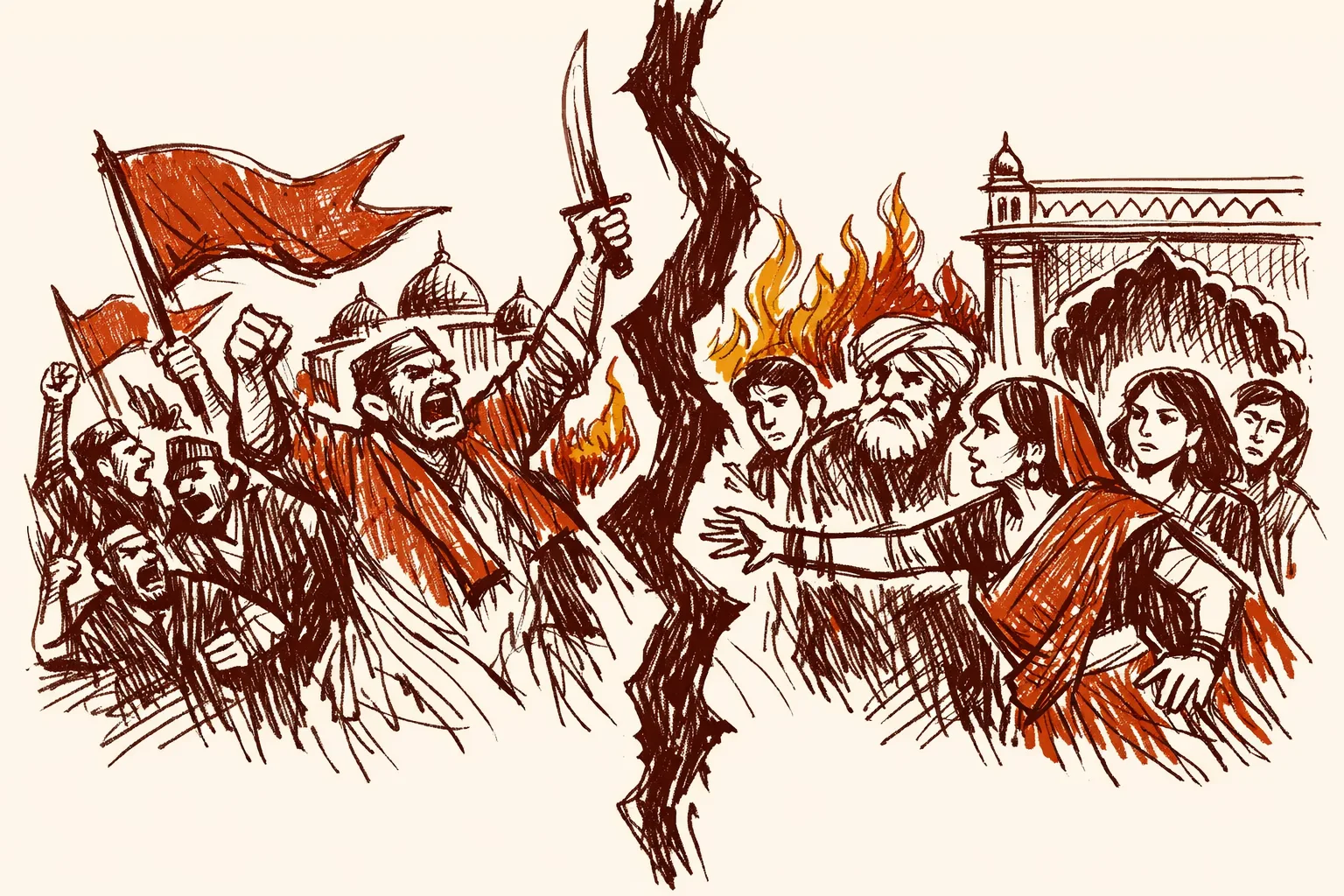
Walk into any chai stall from Chamba to Chennai and someone will have an opinion on Hindu Rashtra. The phrase is everywhere - in speeches, in court filings, in WhatsApp forwards. One side hears 'theocracy'. The other side means 'civilisational identity'. Those are two separate conversations happening at the same time.
India is racing to become the world's largest economy. That goal needs investor confidence, social stability, and a unified national story. The Hindu Rashtra debate touches all three. Getting clarity here helps India accelerate - not slow down.
What Hindu Rashtra Actually Means - And What It Does Not
The phrase was given political form by Vinayak Damodar Savarkar in his 1923 pamphlet Essentials of Hindutva. Savarkar's definition was cultural and geographic, not religious. According to political scientist Christophe Jaffrelot, Savarkar - who was an avowed atheist - "minimises the importance of religion in his definition of Hindu" and instead emphasises an ethnic group with a shared culture. For Savarkar, a Hindu was anyone who regards India as both fatherland and holy land.
That definition included Sikhs, Jains, Buddhists, and even Indian atheists. It excluded Muslims and Christians - not because of their personal faith, but because, in Savarkar's framing, their holy lands lay elsewhere. That exclusion is the core of every controversy the phrase has triggered since.
The RSS, founded in 1925, has publicly distanced itself from theocracy. At the RSS centenary event in Kolkata, chief Mohan Bhagwat stated that India is a Hindu nation rooted in culture, history, and tradition - not something that depends on legal recognition. He also invited critics to visit RSS shakhas and see for themselves.
But the Carnegie Endowment for International Peace notes that the practical result of various Hindu nationalist formulations "runs the gamut from a culturally pro-Hindu polity to outright theocracy." The phrase means different things to different people. Some of those meanings worry India's 200 million Muslims and 30 million Christians. A rising India needs all of its people pulling in the same direction.
The Constitutional Wall
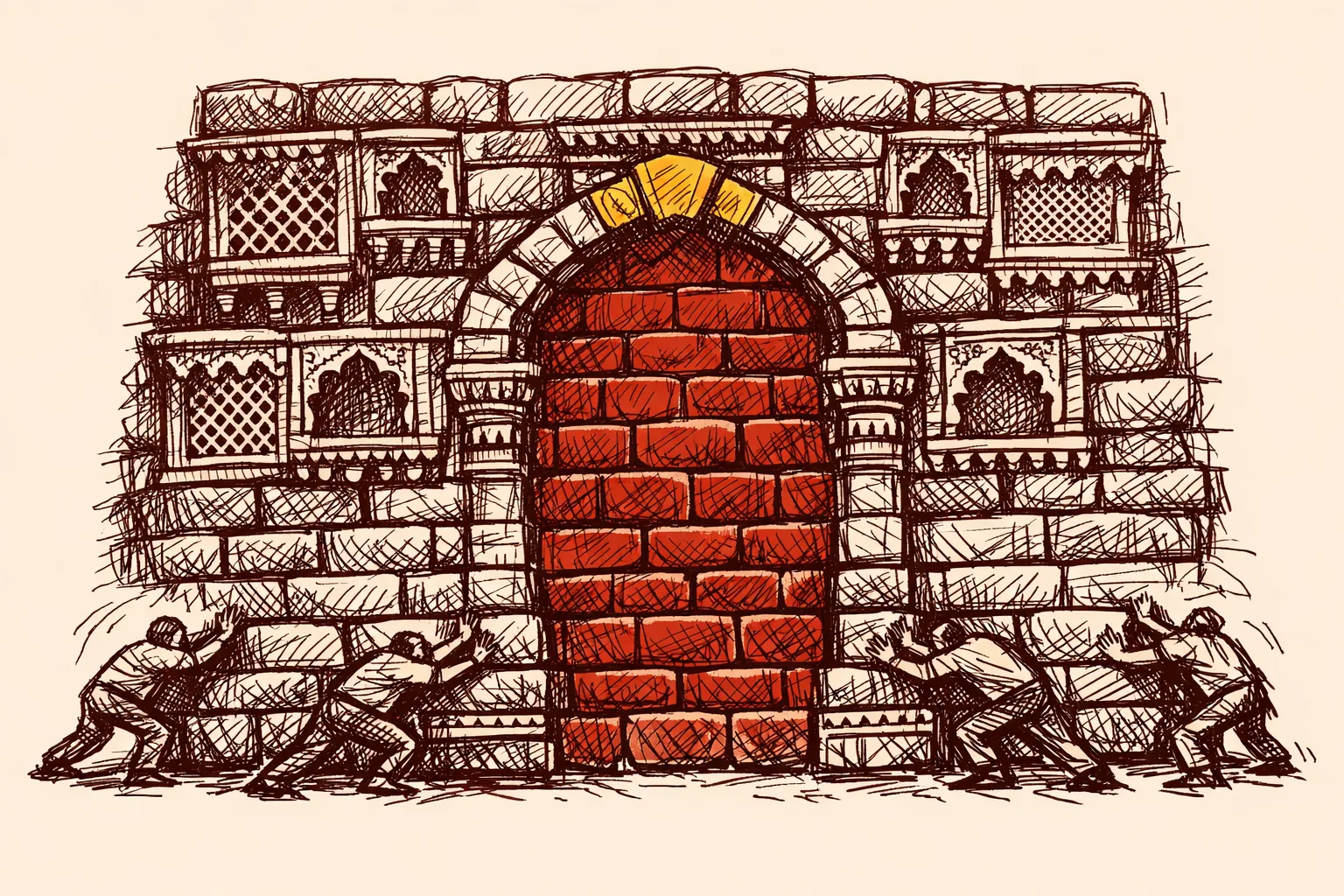
India's Constitution, adopted on 26 January 1950, was built on three foundational principles: equality, neutrality toward all religions, and liberty of religious practice. Articles 25 to 28 guarantee freedom of religion as a fundamental right to every person. Article 25 gives everyone the right to profess, practise, and propagate religion. Article 26 allows every religious group to manage its own affairs. Article 27 bars the government from taxing people to fund any specific religion.
The word 'secular' was not in the original preamble. It was added by the 42nd Amendment Act of 1976 - inserted by Prime Minister Indira Gandhi's Congress government during the Emergency, a period when opposition leaders were jailed and civil liberties were suspended. The RSS has argued this word was inserted illegitimately. Ambedkar himself had argued against adding the word, saying secularism was already embedded in the Constitution without needing to be stated.
In the 1994 case of S.R. Bommai v. Union of India, the Supreme Court held that secularism is part of the Basic Structure of the Constitution - a framework Parliament can amend but cannot destroy. Formally declaring India a Hindu Rashtra would require altering that basic structure, a two-thirds majority in both houses of Parliament, and would face an immediate Supreme Court challenge. In practice, it is close to constitutionally impossible.
What Has Already Been Tried
The demand for a Hindu state is not new. In the Constituent Assembly debates of 1946-49, Dr. Ambedkar rejected adding the word 'secular' to the preamble - not because he opposed secularism, but because he felt it was already the Constitution's spirit. The framers made their choice: no state religion, equal treatment for all faiths.
After the Babri Masjid demolition in 1992, some Hindu religious groups announced their own draft Hindu Rashtra Constitution. It went nowhere. No government since independence has formally moved to declare India a Hindu state through the legislative process.
The debate has moved in a different direction. Rather than a constitutional declaration, the push has been for laws and policies that express Hindu cultural primacy - anti-conversion laws in several states, the Citizenship Amendment Act, the building of the Ram Mandir at Ayodhya. These are legislative acts within the existing constitutional framework. They are contested. But they are different from formally changing the Constitution's character.
The Nepal Lesson
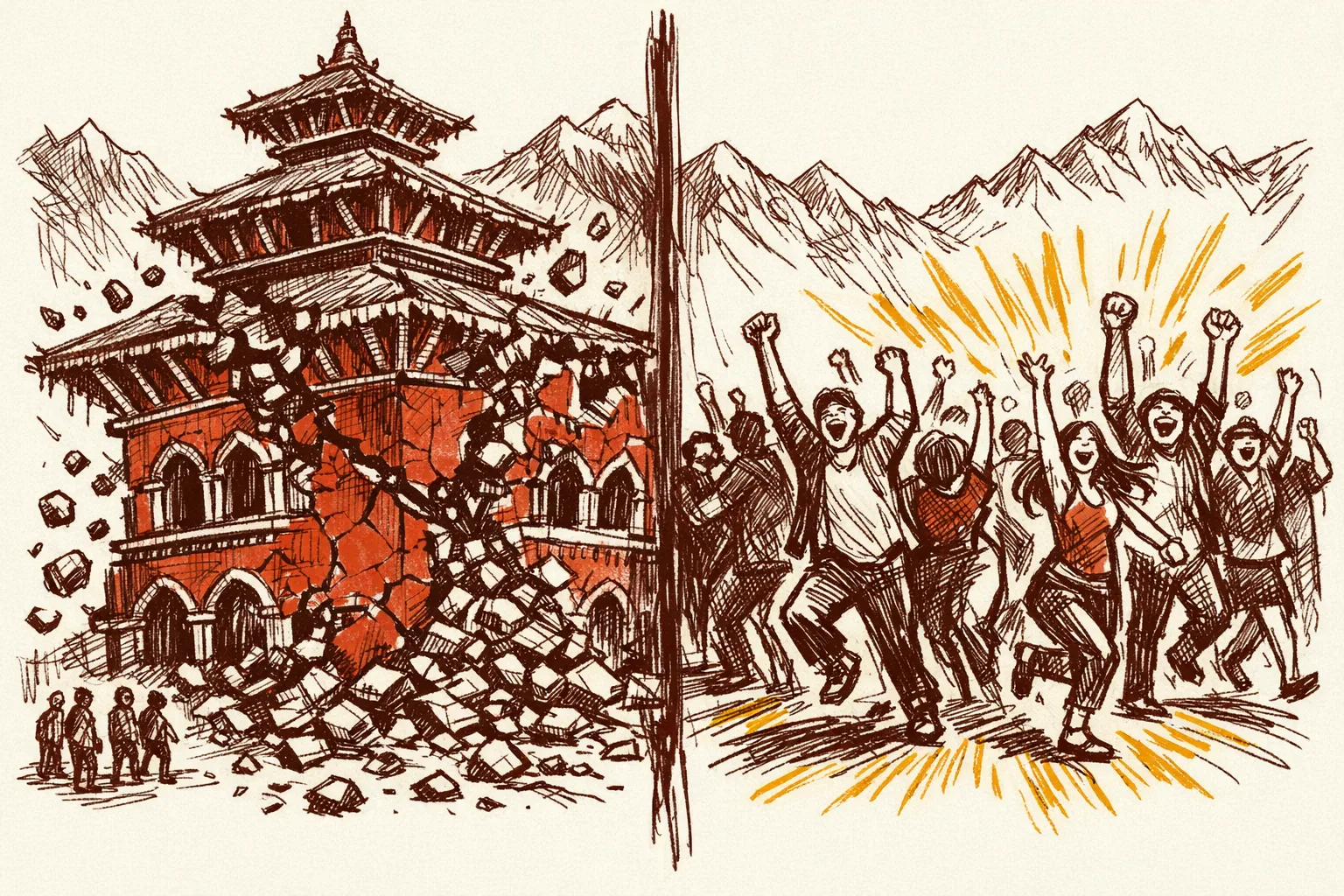
Nepal was, until 2006, the world's only constitutionally Hindu state. In May of that year, Nepal's parliament ended that status and declared the country secular - partly to bring Maoist rebels into a peace process and partly to acknowledge that minorities had been left out of power.
According to Conciliation Resources, the two-century-old process of embedding Hinduism in Nepal's national identity had "led to the domination of 'high-caste' Hindus in the economic, political, legal and educational spheres." Dalits, indigenous Janajati communities, Buddhists, and Muslims had been effectively shut out.
Nepal's lesson for India is not simple - Nepal's Hindu identity was tied to a monarchy abolished in 2008, and India has no such link. But the Nepal experience shows what happens when religious identity is written into state law: minority communities feel shut out, grievances build over generations, and the conflict costs more to fix than the original cultural pride was worth. India's trajectory - growing economy, rising global standing - depends on keeping all citizens invested in the national project.
The Economic Argument - Both Sides
Supporters of a stronger Hindu cultural identity in governance argue that civilisational pride can drive national purpose. Milan Vaishnav, senior fellow at the Carnegie Endowment, has written that the ruling party has long promoted two ambitions: building a culturally Hindu-centric nation and advancing India's economic development. The argument is that these can work together.
The counter-argument is that they often pull apart. Vaishnav himself observed that the government has at times "subsume[d] the latter to the former" - prioritising cultural politics over economic renewal during a slowdown. The Modi government's own record shows that when the focus stays on development - digital infrastructure, manufacturing, roads, defence - India wins. That is the gear worth staying in.
India and Pakistan had near-identical GDPs in 1990. Today India's GDP is around 10 times larger than Pakistan's. Pakistan got trapped early in a cycle of military coups and religious intolerance. It now faces economic collapse, entrenched terror infrastructure, and political chaos. India's 1991 liberalisation was the turning point - and that reform was possible because India had institutional stability. Societies consumed by identity conflict rarely reform well. Pakistan is the cautionary example sitting right next door.
Hindu culture is clearly an asset - in tourism, in soft power, in the global appeal of yoga, philosophy, and Indian food. The question is whether encoding that identity into constitutional law creates more economic and political stability or less. The evidence from every comparable case says less.
Who Is Accountable
The Ministry of Home Affairs handles internal security and communal harmony. The Ministry of Law and Justice owns constitutional interpretation and amendment processes. The final word on any constitutional change belongs to the Supreme Court and its Basic Structure Doctrine. The National Commission for Minorities, established under the National Commission for Minorities Act of 1992, is mandated to monitor constitutional safeguards for religious minorities.
Communal conflict costs India in FDI, in tourism, and in diplomatic credibility. Those costs fall on every ministry's balance sheet. The BJP-led government has made real gains on all three fronts - and protecting those gains means keeping institutions strong and communities included.
What Would It Cost
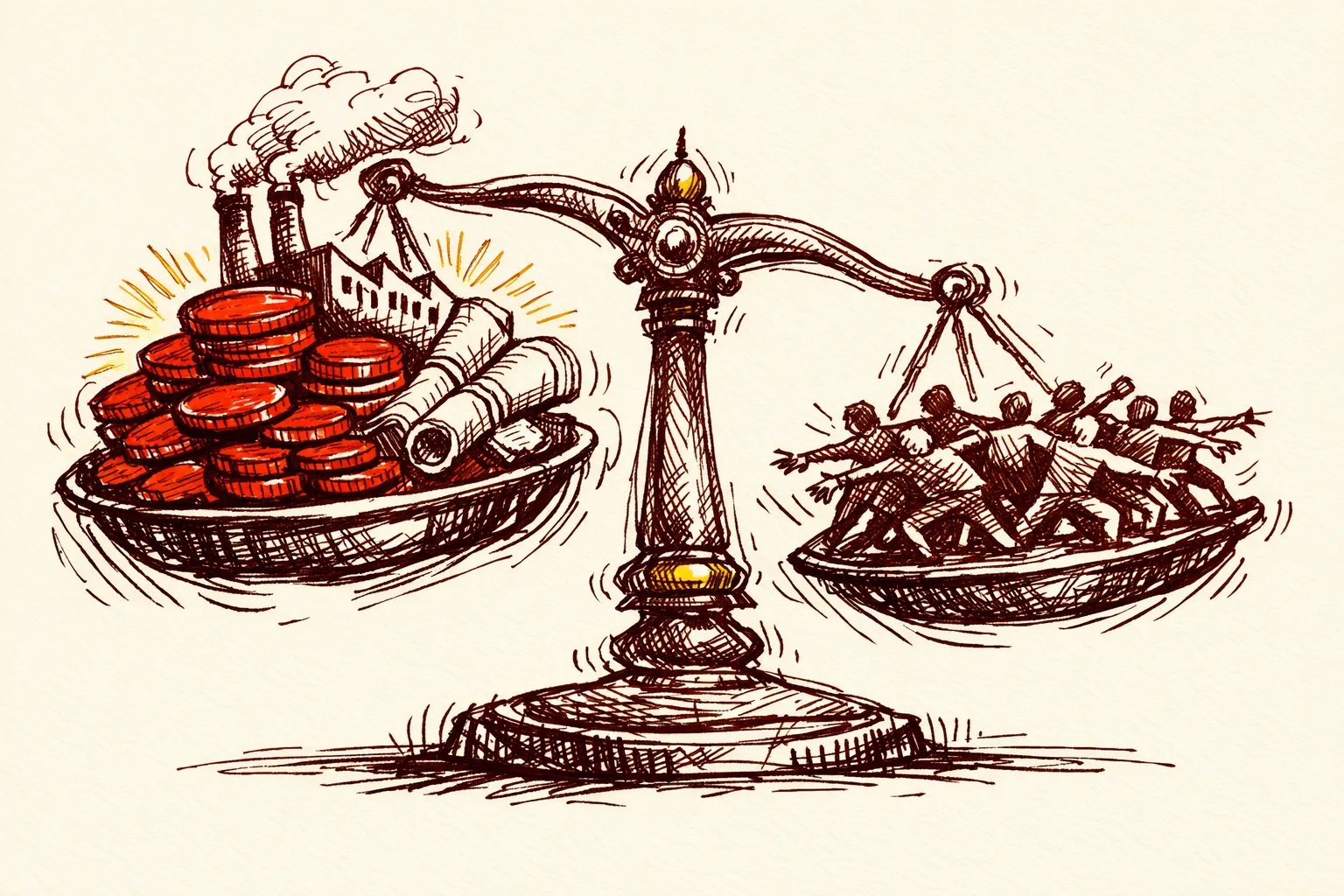
A formal constitutional amendment to declare India a Hindu Rashtra is legally a dead end. The real cost question is different: how much does the ongoing debate cost India in investor confidence and social stability?
India's FDI inflows were $81.72 billion in the financial year 2021. Investors making long-term bets on India want stable institutions, predictable law, and a consumer market that includes everyone. A country that makes 20 percent of its population feel unwelcome has shrunk its own domestic market by 20 percent. Harvard Professor Dani Rodrik has warned that "the recent surge of Hindu nationalism and intolerance has put at risk India's economic progress by threatening to undermine its social fabric." India's growth story is too important to let symbolic debates chip away at it.
What Needs to Happen
India does not need to choose between pride in its Hindu civilisation and equal rights for all its citizens. What it needs is to stop letting a symbolic debate crowd out the work that actually builds national strength.
India's Constitution already protects Hindu culture. It was built by people - including Dr. Ambedkar, a Dalit who had every reason to distrust Hindu social structures - who chose to build a republic rather than a theocracy. The civilisational pride that Hindu Rashtra supporters want to express is legitimate. The mechanism some reach for - constitutional change - is both legally blocked and strategically counterproductive. India becomes the world's largest economy not by narrowing who belongs to it, but by mobilising every single person within it. That is the Modi government's stated development vision. It is also the right one.
For a related look at how internal divisions affect India's economic trajectory, see our article on India's internal security costs and how governance reforms can address them.
FAQs
Is India currently a Hindu Rashtra?
India is constitutionally a secular republic. Its Supreme Court ruled in S.R. Bommai v. Union of India (1994) that secularism is part of the basic structure of the Constitution. Around 80 percent of its population is Hindu, and Hindu culture deeply shapes public life. But the state does not officially favour any religion. Whether India is a 'Hindu nation' in a cultural sense is a separate question from whether it is a Hindu state in a legal sense.
Could Parliament legally declare India a Hindu Rashtra?
It would be extraordinarily difficult. Any such change would require a two-thirds majority in both houses of Parliament and would immediately face a Supreme Court challenge under the Basic Structure Doctrine. Legal scholars widely consider India's secular character to be part of that protected framework, which cannot be changed even by a super-majority.
What does the RSS mean when it says India is a Hindu Rashtra?
The RSS uses the term in a cultural sense, not a legal one. RSS chief Mohan Bhagwat has said that India's Hindu identity is rooted in civilisation, culture, and history - not in Parliament or the courts. He has explicitly said the RSS does not require a constitutional declaration. However, different affiliates of the broader Hindutva movement use the phrase differently, and some versions of the demand do involve constitutional change.
When were 'secular' and 'socialist' added to India's Constitution?
Both words were added to the Preamble by the 42nd Amendment Act of 1976, during the Emergency imposed by Prime Minister Indira Gandhi's Congress government. The original preamble described India as a 'Sovereign Democratic Republic.' Dr. Ambedkar had actually argued against adding 'secular' in the original Constituent Assembly debates, saying the concept was already embedded in the Constitution's text.
Does Nepal's experience tell us anything about India?
Partly. Nepal was the world's only constitutionally Hindu state until it abolished that status in 2006-2007. The shift came because minority communities - Dalits, indigenous groups, Buddhists - had been shut out of power under the Hindu monarchical order. India's situation is different: India has no monarchy, has had Muslim and Sikh presidents, and has a far more complex federal structure. But Nepal shows that writing religious identity into state law tends to cement the dominance of higher-caste groups at the expense of everyone else - a path India's growth model cannot afford.
Is wanting a Hindu Rashtra the same as being anti-Muslim?
Not automatically. The RSS has explicitly said it is not anti-Muslim. Savarkar's original definition of Hindutva included anyone who considered India their home and cherished its culture. But some versions of Hindu Rashtra advocacy do involve second-class status for minorities, and the concern among Muslim and Christian Indians is real and documented. The phrase means different things to different people - and that ambiguity is itself a problem for national unity and investor confidence.
What is the economic cost of the Hindu Rashtra debate?
There is no single number. Communal violence reduces investment in affected regions. Religious polarisation makes coalition-building for economic reform harder. Investors making long-term bets on India's consumer market want to know that all 1.4 billion potential customers are included. Harvard Professor Dani Rodrik has specifically warned that religious nationalism threatens India's economic progress. India's growing economy cannot afford to make 20 percent of its population feel excluded from the national project.