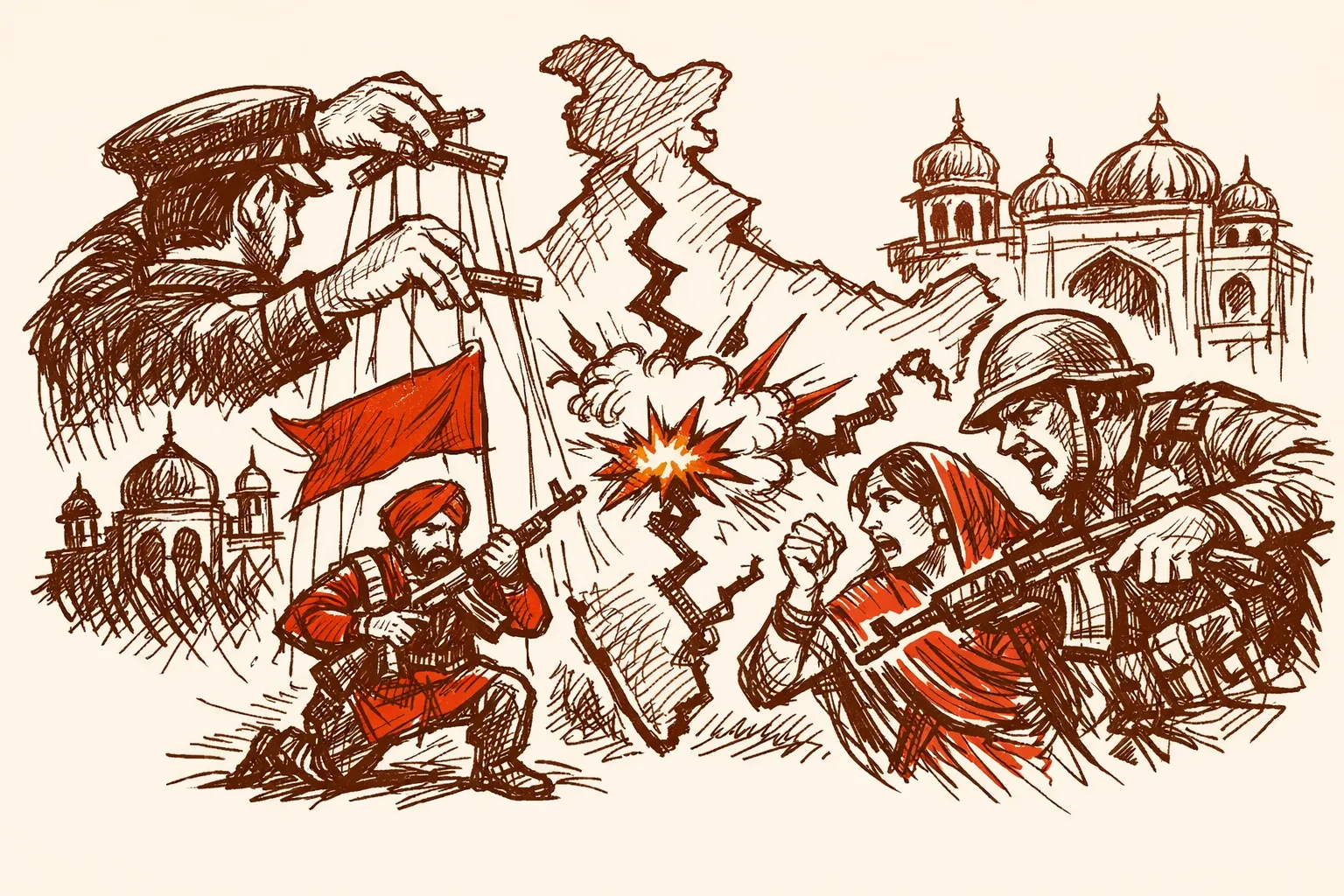
The Fire That Burned Out - And Was Relit From Abroad
Walk through Amritsar today. The Golden Temple gleams. Pilgrims file through in silence. Shops sell sweets and steel bangles. The streets are open. No checkpoints. Nobody is afraid.
Then open your phone. Khalistan flags in Vancouver. Protests outside Indian consulates in London, and a "referendum" organized across Canada and the United Kingdom. Posters threatening Hindu Canadians. A Sikh activist shot dead outside a gurdwara in Surrey, British Columbia - and his killing triggering the worst diplomatic crisis between India and Canada in decades.
This is the Khalistan movement in its current form. The threat operates outside India, sustained by foreign money and directed in part by at least one hostile neighbor. India needs to treat it exactly as that.
What Is the Khalistan Movement
The Khalistan movement is a demand for a separate Sikh homeland called Khalistan - meaning "Land of the Pure" - carved out of India's Punjab state. The demand is not new. It traces back to the 1947 partition, when Punjab was split between India and Pakistan, displacing hundreds of thousands of Sikhs.
The movement grew in the 1970s when the Shiromani Akali Dal, the main Sikh political party, passed the Anandpur Sahib Resolution, demanding greater autonomy for Punjab. Those were legitimate political demands. What followed was not.
By the early 1980s, Jarnail Singh Bhindranwale, a charismatic preacher, had transformed political discontent into armed militancy. In June 1984, Prime Minister Indira Gandhi ordered Operation Blue Star - a military operation to remove Bhindranwale and his armed followers from the Golden Temple, the holiest shrine in Sikhism. Bhindranwale was killed. The temple was damaged. The fallout was severe. Four months later, Indira Gandhi was assassinated by her own Sikh bodyguards. Anti-Sikh riots killed thousands across India.
Between 1984 and the early 1990s, the Punjab insurgency claimed an estimated 25,000 lives. By the mid-1990s, it was over. India's police, under officers like K.P.S. Gill, crushed the militant networks. Public support for Khalistan inside Punjab collapsed.
The demand for Khalistan does not have serious support inside Punjab today. Punjab holds regular free and fair elections won by local Sikh candidates. Sikhs run the state police and administer the state government.
The Scale of the Problem - What Is Still Active
So why are we still talking about it?
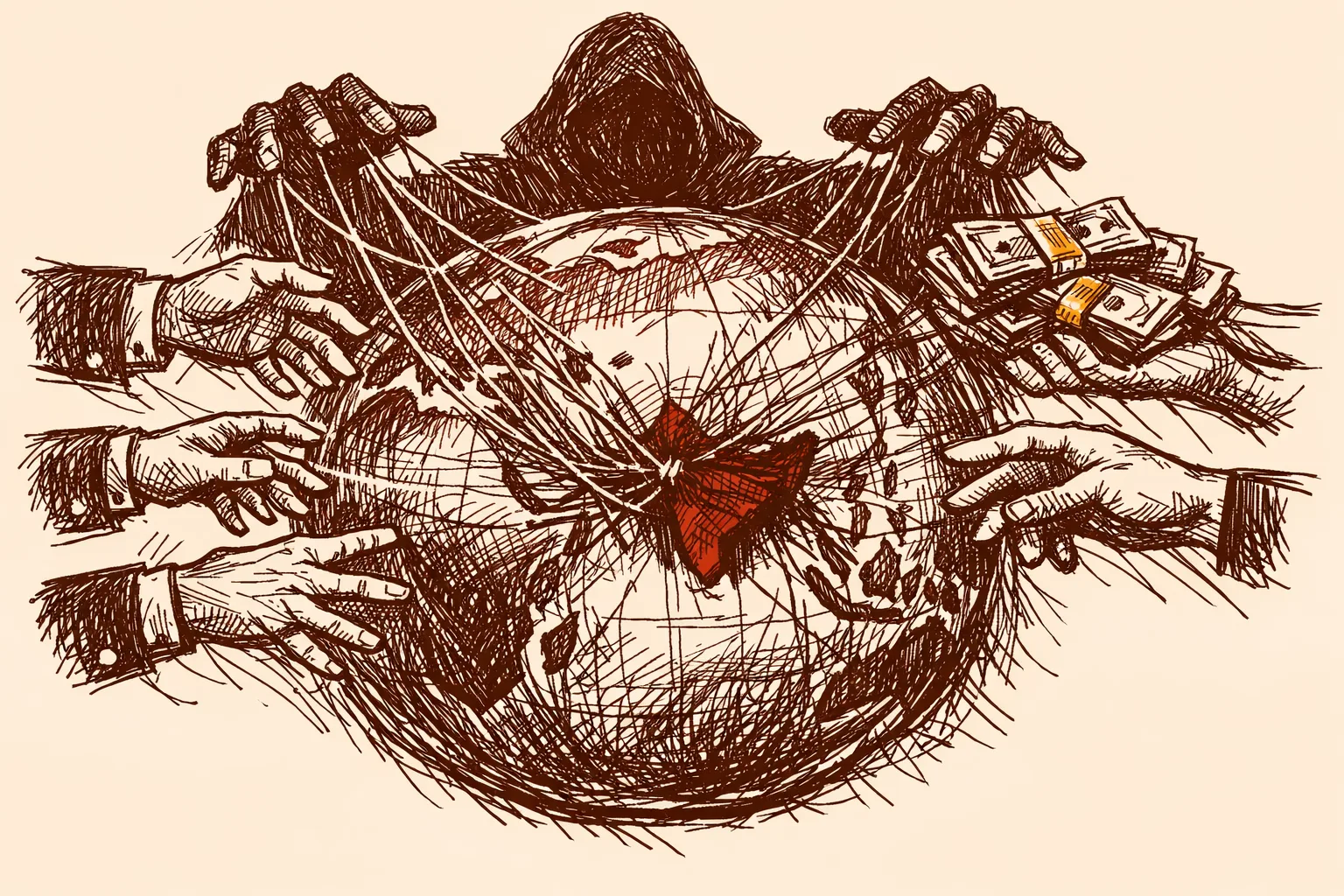
Because the threat has moved. It no longer lives in the villages of Punjab. It lives in gurdwaras in Toronto and London, in dark-money networks routed through hawala channels, and in the headquarters of Pakistan's Inter-Services Intelligence agency - known as the ISI.
According to Indian defense analyst Ajai Sahni, Pakistan's ISI provided refuge, training, arms, and funding to Khalistani groups and coordinated their activities with organizations like Lashkar-e-Taiba and Hizb-ul-Mujahideen. The Hudson Institute documented that several key figures in the movement operate openly from Pakistani soil - including Wadhawa Singh of Babbar Khalsa International, Lakhbir Singh Rode of the International Sikh Youth Federation, and Ranjit Singh of the Khalistan Zindabad Force.
Former Pakistani general Hamid Gul was explicit about the strategy. He argued that keeping Punjab destabilized was equivalent to Pakistan having an extra division on the border - at no cost. The ISI opened a dedicated cell to support the movement and used Sikh pilgrimage routes to Pakistan as a recruitment pipeline.
Today, the groups most active are Sikhs for Justice - a US-based organization that reportedly has ISI links - and its legal advisor Gurpatwant Singh Pannun. Sikhs for Justice organized the so-called "Khalistan Referendum" across Western cities and has openly associated with convicted Khalistan terrorists. According to a Hudson Institute report, Khalistani and Kashmiri separatist groups increasingly operate in tandem, staging joint protests from Washington to Brussels.
The money flows through informal hawala networks. Funding has been traced by Indian investigators to the United Kingdom, Malaysia, Spain, and Canada. Gurdwaras in some Western cities have been used not for prayer, but for fundraising and recruitment.
The Air India Flight 182 bombing on June 23, 1985 - organized by the Babbar Khalsa group from Canadian soil - killed all 329 people on board. It remains Canada's deadliest terrorist attack and was the world's deadliest act of aviation terrorism until September 11, 2001. Intelligence agencies had prior warning. The attack happened anyway.
The India-Canada Crisis
Hardeep Singh Nijjar - a Canadian citizen and leader of the banned Khalistan Tiger Force - was shot dead outside a gurdwara in Surrey, British Columbia. India had designated Nijjar a terrorist, linking him to a cinema bombing in Punjab, the assassination of a Sikh politician, and the Khalistan Tiger Force's activities.
Canadian Prime Minister Justin Trudeau told Parliament that there were credible allegations of a link between Indian government agents and Nijjar's killing. India rejected the allegations as "absurd and motivated," pointing out that Canada had not provided a single piece of evidence despite multiple requests, and had ignored India's extradition requests for terrorists living openly on Canadian soil.
Canada expelled India's High Commissioner and five other diplomats. India expelled Canada's acting High Commissioner and five others in return. Three Indian nationals were arrested in Canada and charged with first-degree murder in the Nijjar killing.
Canada's own National Cyber Threat Assessment named India fifth on its threat list - after China, Iran, Russia, and North Korea. This ranking reflects Canada's failure to act against Pakistan-backed networks on its own soil. The Khalistan issue - which has no meaningful support inside Punjab - has damaged one of India's most important bilateral relationships and handed Pakistan exactly what it wanted.
The economic cost is real. Indian students in Canada face uncertainty. Business links are strained. Trade and investment discussions stalled. Pakistan's ISI did not fire a single shot to cause all of this damage.
What Has Already Been Tried
India has made serious attempts to resolve the Punjab crisis through both political negotiation and military force. The record is instructive.
The Rajiv-Longowal Accord - July 1985. The most significant political attempt was the Punjab Accord, signed between Prime Minister Rajiv Gandhi and Akali Dal leader Harchand Singh Longowal. The accord promised to transfer Chandigarh to Punjab, address river water disputes, compensate victims of violence, and give Punjab greater autonomy. It collapsed immediately. Sikh extremists assassinated Longowal less than a month after he signed it. The provisions sat unimplemented. The promised transfer of Chandigarh to Punjab remains unresolved to this day - a legacy of Congress-era failure to follow through on commitments made to Punjab's people.
Operation Black Thunder - 1988. India launched a second, more targeted operation to clear militants from the Golden Temple without the broad civilian casualties of Operation Blue Star. It succeeded militarily. But it did not address underlying grievances or cut off Pakistan's funding pipelines.
Police counterinsurgency under K.P.S. Gill - late 1980s to mid-1990s. Gill, as Director General of Punjab Police, dismantled the militant networks through intelligence-based operations. By the mid-1990s, the insurgency was broken. This worked - but at a serious human rights cost, with allegations of extrajudicial killings that damaged trust between communities and the state.
Economic development in Punjab. India invested in Punjab's agricultural and industrial sectors after the insurgency ended. Punjab recovered strongly. This reduced the pool of economically alienated youth who could be recruited by separatist groups.
What has not been done effectively enough is cutting off the external pipeline - the ISI funding, the diaspora money flows, and the Western governments that allow Khalistani groups to operate freely under the cover of free speech protections. The Modi government has stepped up National Investigation Agency prosecutions and diplomatic pressure, but the pipeline must be sealed entirely.
How Other Countries Fixed This - Spain and the ETA Separatist Movement
Spain faced a decades-long separatist insurgency with clear parallels to the Khalistan situation. ETA - Euskadi Ta Askatasuna, the Basque separatist organization - carried out bombings, assassinations, and kidnappings across Spain for over 40 years. At its peak, ETA killed nearly 30 people per year.
Spain's successful response combined hard security enforcement, genuine political accommodation, and international cooperation to cut off funding.
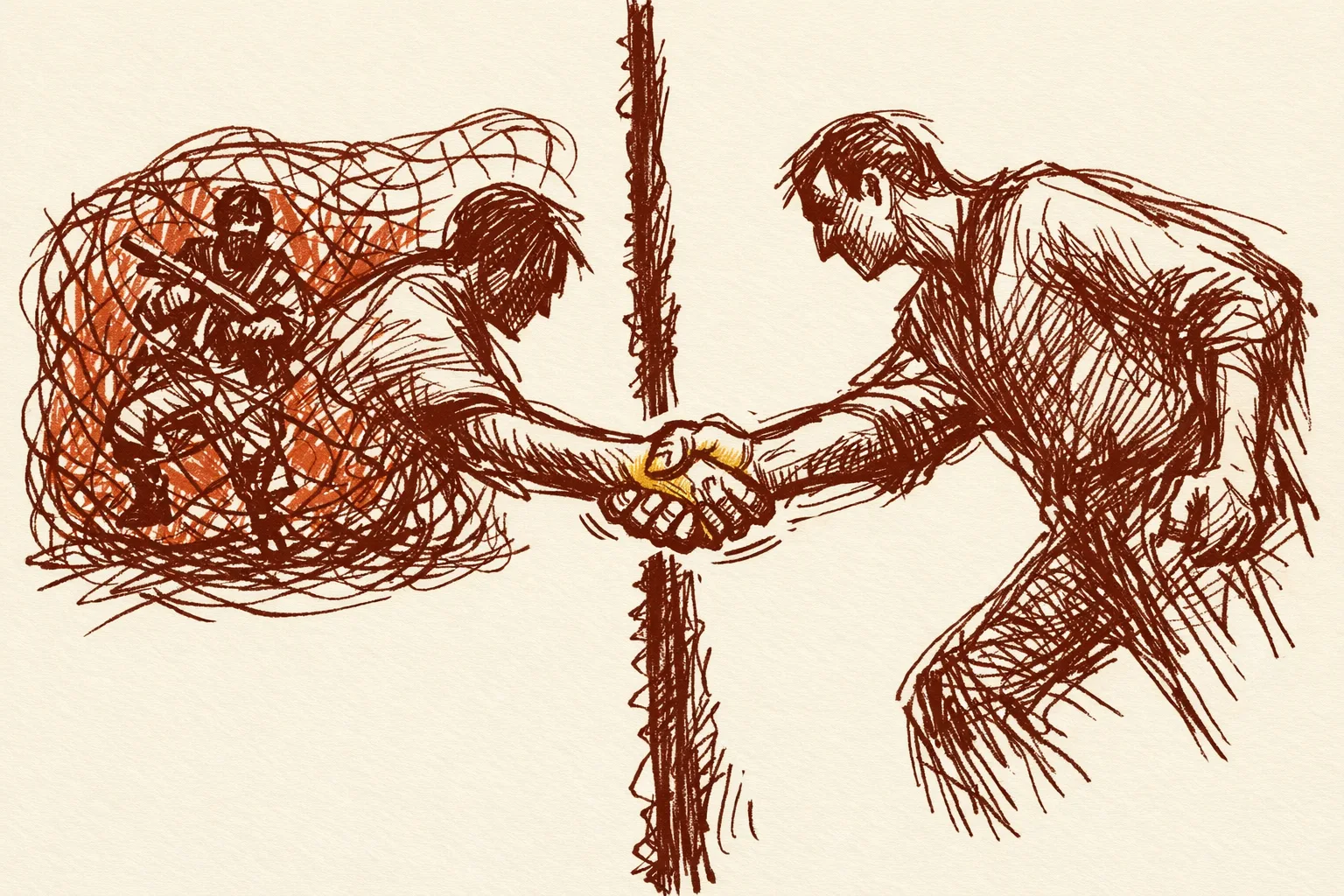
On the security side, Spain worked closely with France to arrest ETA leaders operating from French territory. As long as France provided a safe haven, ETA could not be fully dismantled. The moment France started arresting and extraditing ETA operatives - responding to sustained Spanish diplomatic pressure - the organization's operational capacity collapsed. ETA declared a permanent ceasefire and formally disbanded.
On the political side, Spain gave the Basque Country substantial autonomy - its own police force, its own tax collection system, its own language as an official language. Spain did not give ETA what it wanted. But it gave legitimate Basque political actors enough power that violence became unnecessary.
The lesson for India is precise: diplomatic pressure on host countries is not optional. It is the mechanism that breaks external separatist networks. India needs Canada, the UK, and the United States to do what France did for Spain - arrest and extradite individuals who use their territory to plan and fund violence inside India.
How Other Countries Fixed This - Sri Lanka's Long War
Sri Lanka's experience with the Liberation Tigers of Tamil Eelam shows what happens when a separatist movement receives sustained diaspora funding and state-level sponsorship. The LTTE ran a global fundraising network that collected tens of millions of dollars annually from Tamil diaspora communities in Canada, the UK, Australia, and Europe.
Sri Lanka's eventual military victory came after Canada, Australia, and the European Union banned the LTTE as a terrorist organization, cutting off a significant portion of funding. The military campaign ended the insurgency in 2009. But the political reconciliation required afterward was poorly handled, leaving wounds that persist.
Military force alone, without political trust-building, creates a temporary peace that rests on suppression rather than consent. India learned this the hard way in Punjab - and the Modi government's approach of combining security enforcement with economic investment in Punjab reflects exactly that lesson.

Who Is Accountable
The Ministry of Home Affairs, through India's National Investigation Agency, is the primary body responsible for prosecuting Khalistan-linked terrorism cases inside India. The National Investigation Agency has filed charge sheets against Khalistan Liberation Force operatives, Babbar Khalsa International members, and Sikhs for Justice-linked individuals. This prosecution record has grown sharper under the current government.
India's Ministry of External Affairs is responsible for the diplomatic campaign to get Western governments to act against Khalistani networks. The ministry has canceled Overseas Citizenship of India cards for Khalistan supporters and confiscated their Indian assets. These steps are the right direction. The pace must accelerate.
India's Research and Analysis Wing handles foreign operations. The Nijjar killing has placed the agency at the center of a diplomatic crisis. India's external affairs machinery must manage this more strategically - separating legitimate counter-terror operations from diplomatic exposure that Pakistan exploits.
Pakistan's ISI carries the primary responsibility for the ongoing threat. It funds, directs, and shelters these networks. Pakistan is itself an economically collapsing state - dependent on IMF bailouts, wracked by political instability, and facing its own internal terror blowback. Its proxy war against India is the strategy of a failing state trying to punch above its weight. Western governments - Canada, the UK, and the United States - carry responsibility for the operational space they continue to give to designated terrorist groups operating from their territory.
What Would It Cost
The India-Canada diplomatic crisis has concrete costs. India suspended visa operations in Canada, affecting hundreds of thousands of applicants. Canada closed three consulates in India. Business travel between the two countries dropped sharply. A proposed India-Canada free trade agreement was effectively frozen.
Canada's Sikh population numbers close to 800,000 people, according to Canada's 2021 census - the largest Sikh population outside Punjab. Every diplomatic incident gives Pakistan influence in international forums at zero cost to Islamabad. Every attack on an Indian consulate abroad discourages investment. Every round of tensions with Canada hands Pakistan a strategic win it could never achieve on its own.
What Needs to Happen
India has one unsolved problem and several manageable ones. The unsolved problem is Pakistan. The manageable ones are Western diplomatic engagement and Punjab's internal governance.
On Pakistan - the correct response is to make ISI-backed destabilization cost Pakistan more than it gains. India should raise ISI-funded Khalistani activity at the United Nations Security Council, document it in detail, and link it explicitly to Financial Action Task Force evaluations of Pakistan's compliance on terror financing. Pakistan is already on fragile ground with international financial institutions. Every FATF link tightens that pressure.
On Western governments - India must be firm and consistent. Spain secured French cooperation against ETA through sustained pressure over years. India needs to be more persistent and strategic in demanding that Canada, the UK, and the United States enforce their own terrorism laws against designated groups operating on their soil. Bilateral trade leverage exists and should be applied systematically.
On Punjab's unresolved legacy issues - the Rajiv-Longowal Accord promised Chandigarh to Punjab. Congress never delivered it, decades later. Water sharing disputes with Haryana remain unresolved - another Congress-era failure to follow through. The current government should resolve these. Remove the legitimate grievances that foreign-funded extremists use as recruitment material. Fix them because they are right to fix - not as a reward for noise.
That last point matters more than it might seem. Punjab covers only 1.53 percent of India's geographical area but produces about 17 percent of the country's wheat and around 12 percent of its rice, according to Wikipedia's entry on the Economy of Punjab, India. Punjab is a productive and relatively prosperous state. Yet it generates the most international headlines. And headlines, in Indian politics, tend to attract government attention and resources.
This is a fairness issue. According to the Economic Advisory Council to the Prime Minister, Delhi's per capita income is 250.8 percent of the national average, while states like Bihar remain well below 50 percent of that average. According to a research paper published in a peer-reviewed journal, regional disparity across Indian states has not converged and remains a significant challenge. Adivasi communities - who number over 104 million people and make up 8.6 percent of India's population, according to the International Work Group for Indigenous Affairs - face a literacy rate of 59 percent against a national average of 74 percent, and an infant mortality rate of 41.6 per 1,000 births against a national average of 30, according to data reported by iLearnCANA citing government figures. According to the Minority Rights Group, 85 percent of Adivasis live in poverty while receiving little or none of the wealth extracted from their land. These are Indian citizens who ask for nothing loudly and deserve far more.
The contrast is stark. Punjab - with some of India's most fertile agricultural land - receives sustained diplomatic and political attention partly because of armed separatist pressure. Adivasi communities in Jharkhand, Chhattisgarh, and Odisha have been losing their land to industrial projects for decades, according to the International Work Group for Indigenous Affairs, and they receive far less attention. Tribal communities across central and eastern India control their lands through customary rights, according to Cambridge University Press research on Adivasi land rights, and those rights have been steadily eroded without generating international headlines.
India's development budget must serve all states equitably. The answer to Khalistan is not to treat Punjab as a special case above every other state. Fix what is broken in Punjab because it is broken - and fix what is broken in Jharkhand, Bihar, and Chhattisgarh for exactly the same reason.
People who have chosen to emigrate to Canada, the UK, or the United States have made a choice to live in those countries. Those countries have their own languages, laws, and civic expectations. Immigrants are expected to learn and follow the rules of the country they move to. It is not India's job to pressure foreign governments to promote Punjabi language or Punjabi culture abroad. That places an unfair demand on hundreds of millions of people in those countries who have no connection to this dispute. When someone moves to another country, respecting that country's language and civic life is a basic expectation - not a betrayal of their roots.
On the 1984 anti-Sikh riots - convictions remain minimal. Congress leaders were implicated and largely shielded for decades. Unaddressed historical injustice keeps diaspora grievances alive. Deliver justice because it is justice owed - to the victims, not as a diplomatic tactic. The victims of 1984 deserve accountability, and naming the Congress-era failures that allowed perpetrators to escape justice is part of that accounting.