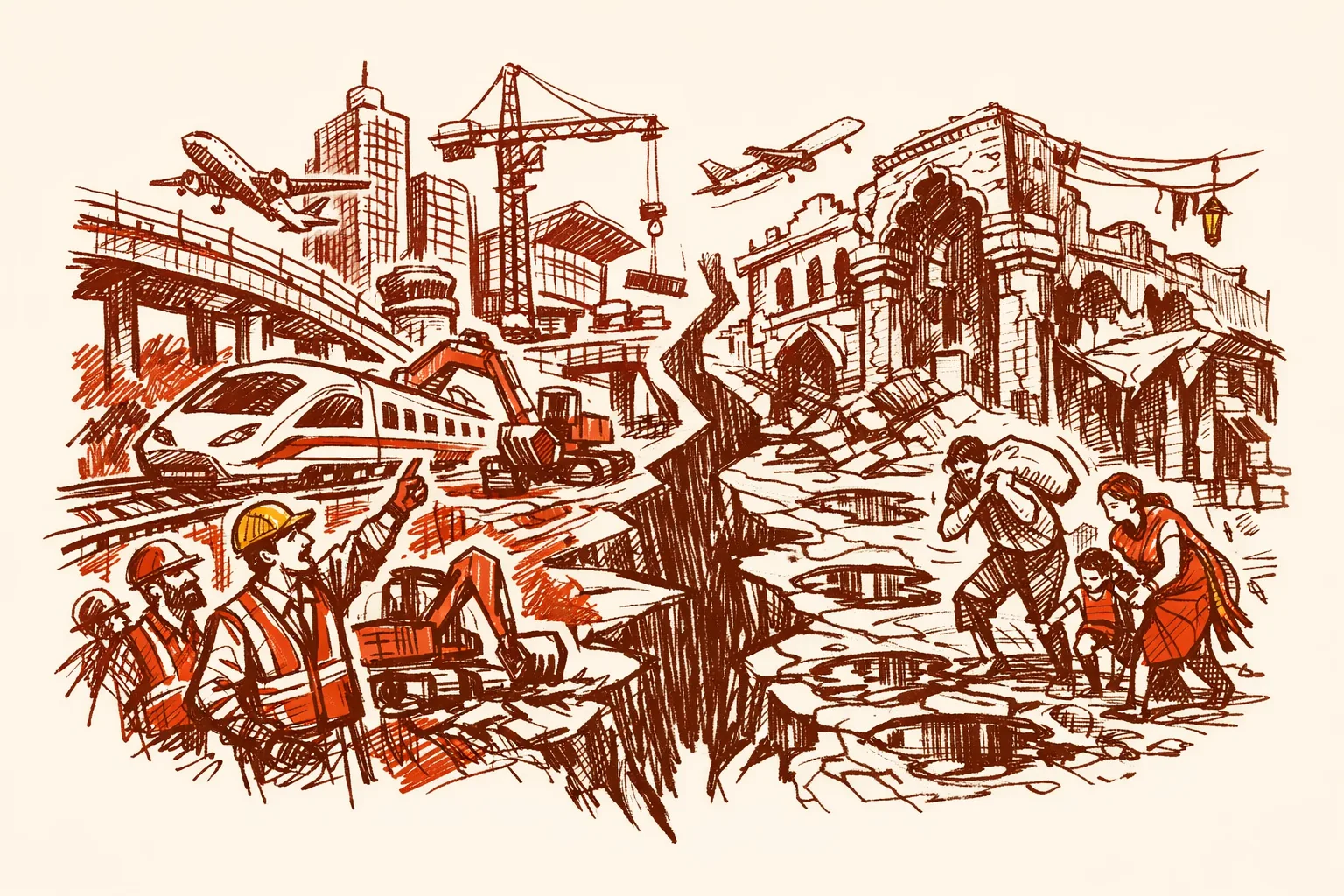
What You See When You Travel India Today
Drive the Delhi-Dehradun Expressway and you feel what modern India can build. Two hundred and ten kilometers of smooth road, wildlife corridors built into the design, and travel time cut to a fraction of what it once was. The road cost Rs. 12,000 crore and was built on time. It is a real thing you can drive on.
Then drive to a Tier-2 town an hour off the expressway. The road narrows. The potholes return. The difference between what India can build and what India has built everywhere is the whole story of Indian infrastructure right now.
I grew up in Chamba, Himachal Pradesh. We knew which roads washed out every monsoon and which ones had not been repaved in twenty years. That gap between what the government announces and what reaches your district - that is the gap this article is about.
How Far India Has Come - And the Numbers Are Real
According to Prime Minister Modi, annual infrastructure spending has risen more than sixfold since before 2014, from under Rs. 2 lakh crore to over Rs. 12 lakh crore today.
The government's own Press Information Bureau data shows that national highways more than doubled from 91,287 km in 2014 to 1,46,145 km by . Highway construction pace rose from 12.1 km per day in 2014-15 to 33.8 km per day in 2023-24.
Metro rail expanded from 250 km across a handful of cities in 2014 to 1,000 km across 21 cities by , with another 919 km under construction in 26 more cities. Indian Railways now has 136 Vande Bharat trains running. Port cargo capacity nearly doubled, from 800.5 million tonnes per annum in 2014 to 1,630 million tonnes per annum by . Port turnaround time fell from 94 hours to 48 hours.
India's World Bank Logistics Performance Index ranking improved from 54th in 2014 to 38th by 2023.
The Scale of What Is Still Needed
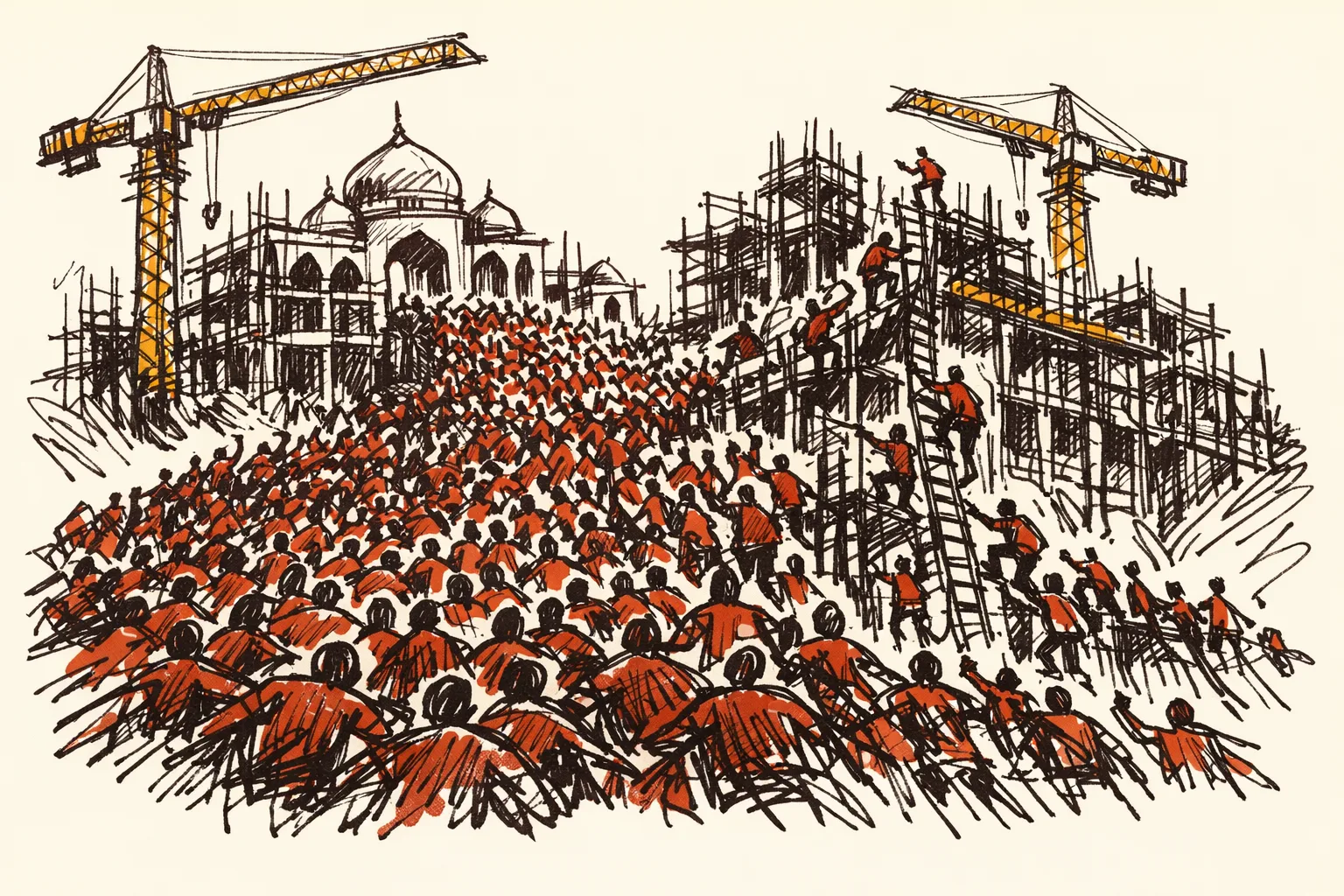
A World Bank report estimated that India will need to invest $840 billion over 15 years - about $55 billion per year - on urban infrastructure alone, just to keep up with its fast-growing city population. India's urban population is expected to grow from 470 million to 600 million by . That is 130 million new city residents who will all need roads, water, transit, and housing.
The government itself estimated an infrastructure financing gap exceeding 5% of GDP. Only 5% of Indian cities' infrastructure needs are currently financed through private sources.
According to ICRA's March analysis of the National Infrastructure Pipeline, private sector participation remains below 1%. Government entities execute 99% of all projects in the pipeline.
India cannot build everything it needs using only government money. The math does not work.
Why Projects Cost More and Take Longer Than They Should
According to data from India's Ministry of Statistics and Programme Implementation, as of early , out of 1,820 centrally monitored infrastructure projects, 449 had reported cost overruns totaling Rs. 5 lakh crore - a roughly 20% jump over original estimates. Another 779 projects were delayed.
Road projects show a modest 3% cost overrun on average. Railway projects average 52% overrun. Water resources projects have reached 197% overrun, according to GlobalData analysis of India's project pipeline.
India's CAG audit of Bharatmala Pariyojana found that per-kilometer highway costs had jumped from Rs. 14 crore to Rs. 24 crore. It also flagged irregularities in tendering and noted that nearly half the 70,050 km under Phase 1 were routes already developed under earlier schemes.
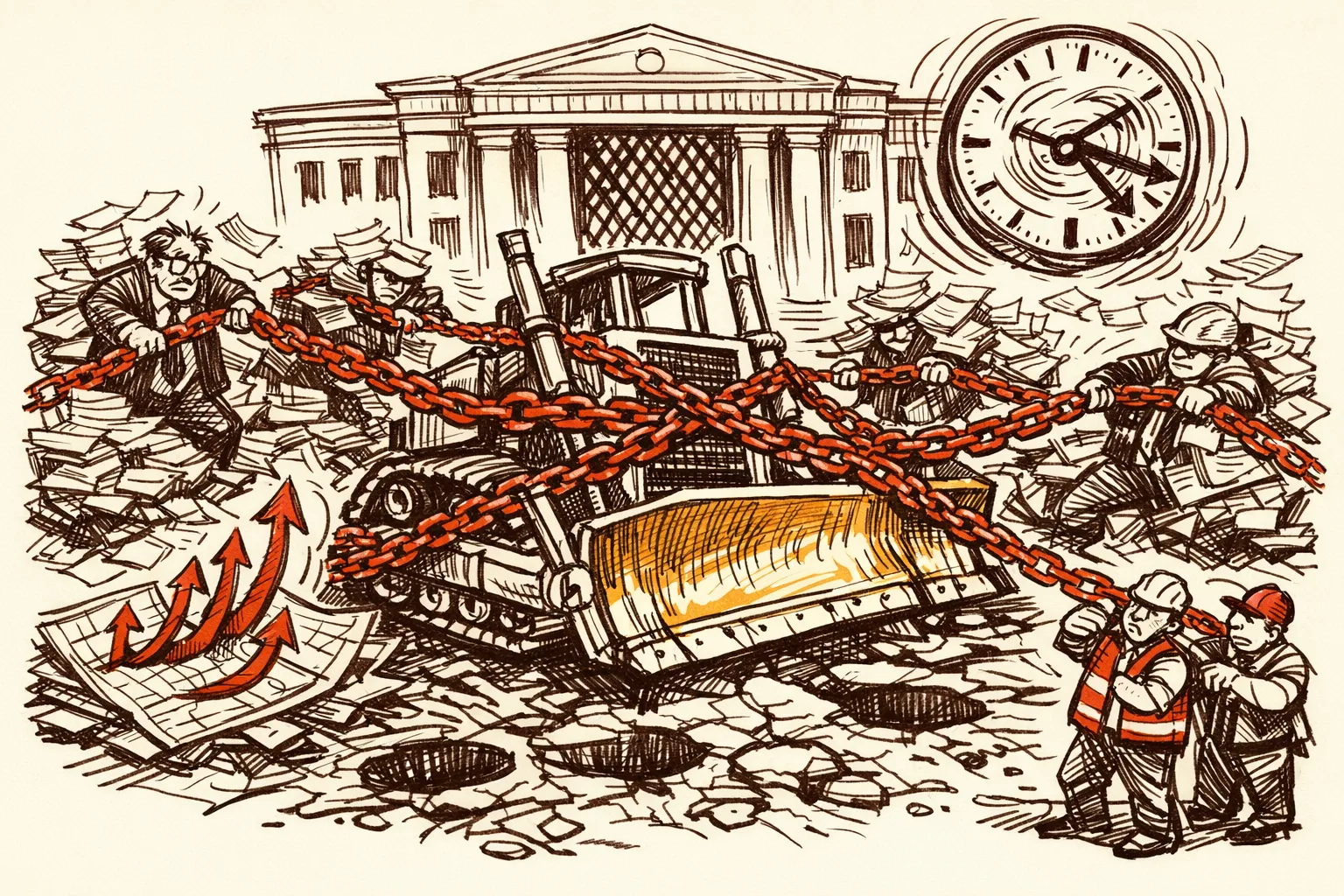
The causes are not mysterious. India's Ministry of Statistics and Programme Implementation lists them plainly: land acquisition delays, environmental clearance backlogs, design changes, contractor cash flow problems, and state-versus-center coordination failures. The same list appears year after year.
Land acquisition is the single hardest problem. A court case can stop a highway for years. In densely populated India, there is almost no project of scale that does not displace someone.
What Has Already Been Tried
The Pradhan Mantri Gram Sadak Yojana, launched in 2000, set out to connect every unconnected village with an all-weather road. It worked. By -25, 7.71 lakh km of rural roads had been completed under the program, up from just 4.19 lakh km in 2014-15.
The PRAGATI platform has tracked over 340 key infrastructure projects worth $204 billion, according to an Oxford University study. Monitoring tells you a project is late. The reasons it is late remain unfixed.
The National Infrastructure Pipeline, launched in 2019, was India's first attempt to map every major infrastructure project in one place and attract private capital. As of March , it covered 13,000 projects worth Rs. 185 lakh crore. The private sector share remains under 1%.
The PM Gati Shakti National Master Plan, launched in 2021, brought 16 ministries onto one digital platform with GIS mapping. The DPIIT-NCAER report found logistics costs have fallen to 7.97% of GDP in FY24, comparable to South Korea and the United States.
The National Bank for Financing Infrastructure and Development, created in 2021 with World Bank support, sanctioned over $18 billion in loans within 24 months of opening. This is the most promising recent reform.

How South Korea Fixed the Same Problem
South Korea in the 1990s faced exactly what India faces today: not enough private money going into infrastructure, over-reliance on government budgets, and projects that ran over cost.
In 1994, South Korea passed a law to bring private companies into infrastructure. It failed - risk rules were unclear and the government did not know how to partner with private firms. In 1998, they rewrote it as the Act on Private Participation in Infrastructure. This version worked. It gave private companies clear concession agreements spelling out exactly what they could earn and for how long.
Private investment in infrastructure rose from KRW 300 billion in the mid-1990s to KRW 3.2 trillion by 2006. The share of private investment in total infrastructure spending rose from 3.9% in 1998 to 15.4% in 2009. By 2009, South Korea had awarded 461 PPP contracts, of which 251 were fully completed.
A dedicated government body called PIMAC reviewed every proposed private infrastructure project above $50 million. Independent economists from the Korea Development Institute checked the numbers before any contract was signed. Risk was allocated clearly on paper before a single brick was laid.
The lesson for India is not to keep writing new policies. It is to make one policy stick, with clear contracts, independent review, and a single body that handles all private infrastructure deals.
Who Is Accountable
The Ministry of Road Transport and Highways owns highway construction. The Ministry of Statistics and Programme Implementation monitors project delivery and publishes monthly overrun data. The Comptroller and Auditor General audits whether money was spent as planned. The National Bank for Financing Infrastructure and Development handles long-term project lending.
The gap is not that nobody owns infrastructure. The gap is that land acquisition sits with state governments, environmental clearance sits with the Ministry of Environment, forest rights sit with tribal affairs, and the highway builder owns none of them. When a project stalls, every agency points at another agency. Nobody gets fired.
What Would It Cost to Close the Gap
According to the CRISIL Infrastructure Yearbook, India will spend nearly Rs. 143 lakh crore (about $1.7 trillion) on infrastructure in the seven fiscal years through . Morgan Stanley projects India's infrastructure investment will rise from 5.3% of GDP to 6.5% by .
India is currently spending about $16 billion per year on urban infrastructure - less than a third of the $55 billion per year the World Bank says is needed. At current public spending levels, India would need private investors to contribute at least three times what they are contributing today just in cities.
What Needs to Happen
India has the spending. It needs the system.
First, land acquisition needs its own fast track. A dedicated infrastructure land court in each state - with a six-month ruling deadline - would cut years off project timelines.
Second, private investors need guaranteed contracts. India should create a standard concession agreement template - pre-approved by the government - that private investors can sign without a year of negotiation. The Infrastructure Finance Secretariat already exists. Give it this mandate.
Third, the National Bank for Financing Infrastructure and Development needs credit enhancement instruments - partial guarantees that make projects safer for private investors. These require Reserve Bank of India rule changes to work at scale. Those changes should be fast-tracked.
Fourth, outcome-linked contractor payments should replace activity-linked ones. Today, a contractor gets paid for laying asphalt. They should also get paid for whether the road survives the first monsoon.
Fifth, small and mid-size businesses need logistics relief. Small firms with turnover below Rs. 5 crore face logistics costs averaging 17% of their revenues. Large firms face 7.6%. The 35 multimodal logistics parks being built under Bharatmala Pariyojana must be completed and opened to shared use by smaller businesses specifically.
FAQs
How much is India spending on infrastructure right now?
According to Prime Minister Modi, India now spends over Rs. 12 lakh crore (about $128 billion) per year on infrastructure. This is more than six times what was spent before 2014. The Union Budget allocated Rs. 11.21 lakh crore for capital investment, equal to 3.1% of GDP.
Are India's logistics costs really improving?
Yes. The DPIIT-NCAER report found India's logistics costs at 7.97% of GDP in FY24. This is comparable to South Korea (8%) and the United States (8.8%), and lower than China's 14.4%.
Why do so many infrastructure projects run over budget in India?
According to India's Ministry of Statistics and Programme Implementation, the main causes are land acquisition delays, environmental clearance backlogs, design changes mid-project, and cost underestimation at the start. Railway projects have average cost overruns of 52%. Water projects have seen costs triple from original estimates.
What is the National Infrastructure Pipeline and is it working?
The National Infrastructure Pipeline, launched in 2019, is India's master list of infrastructure projects worth over Rs. 100 crore each. As of March , it covered 13,000 projects worth Rs. 185 lakh crore. Private sector participation remains below 1%. Almost all projects are still government-executed.
What has the Modi government done differently from previous governments on infrastructure?
The pace of highway construction rose from 8-11 km per day under earlier governments to 33 km per day. The PM Gati Shakti platform connected 16 ministries on one digital map to reduce planning conflicts. The National Bank for Financing Infrastructure and Development was created to solve long-term lending. The Dedicated Freight Corridors are close to completion after years of Congress-era delays.
What is India's biggest infrastructure challenge right now?
Private capital. The government cannot build everything India needs alone. The World Bank estimates urban infrastructure alone needs $55 billion per year. India currently spends about $16 billion. Closing that gap requires private investors, which requires clear contracts, predictable returns, and faster land clearance.
How does India compare to China on infrastructure?
China spends about 6% of GDP on infrastructure. India is moving toward 6.5% by , according to Morgan Stanley. On logistics costs, India is now below China - 7.97% vs 14.4% of GDP. India is catching up fast in road and port quality. The remaining gap is in urban infrastructure density and rail freight speed.