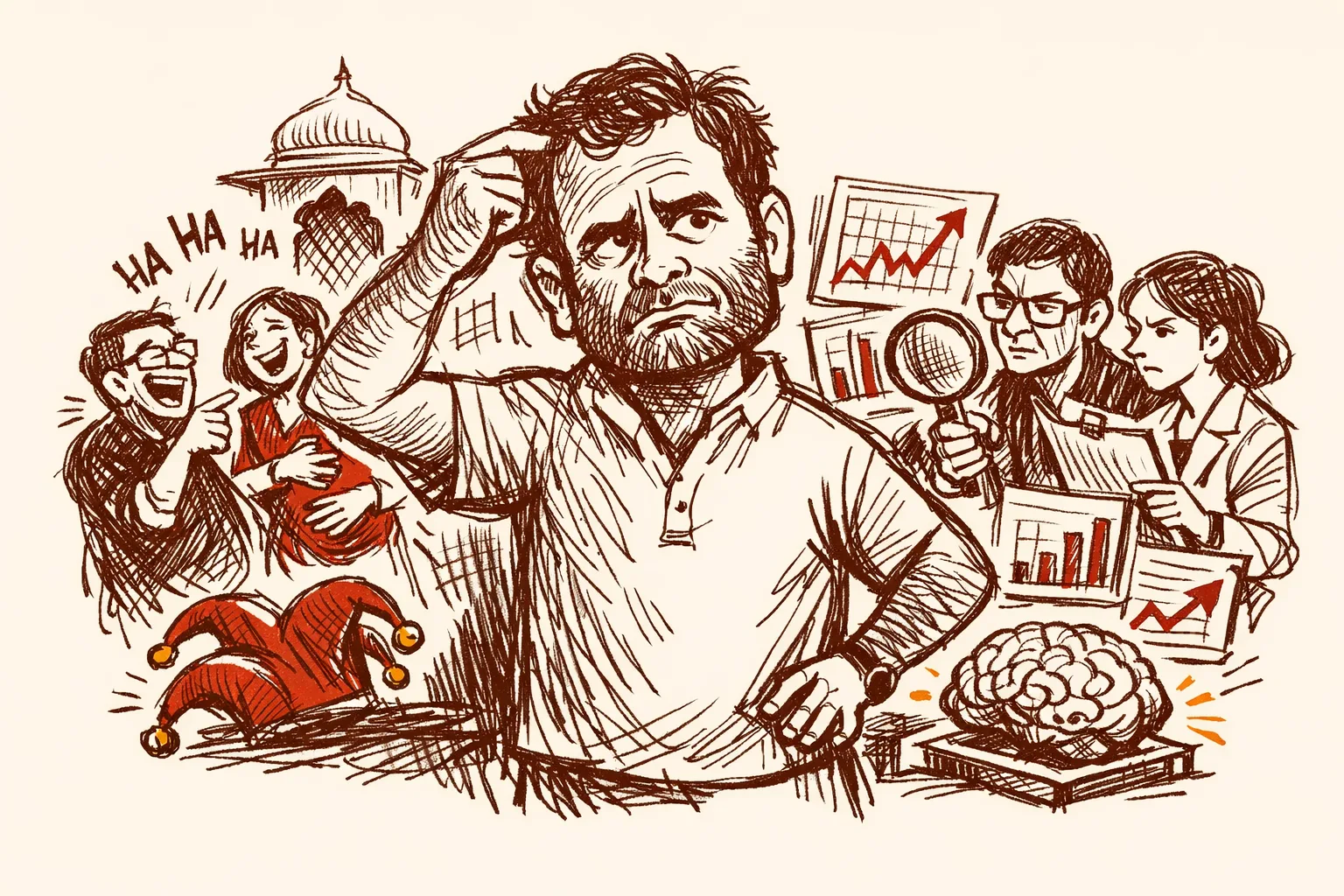
The Joke That Stopped Being Funny
India hosted one of the largest AI gatherings on Earth. The India AI Impact Summit drew delegations from over 100 countries to New Delhi. It was India's moment on the global technology stage.
Then a university showed up with a Chinese-made robot dog and told state TV it was their own invention.
Galgotias University, based in Greater Noida near Delhi, displayed a four-legged robot it called "Orion" at the summit expo. A professor described it to state broadcaster DD News as a product "developed by the Centre of Excellence at Galgotias University." Social media users identified it within hours as the Unitree Go2 - a commercially available robot sold by China's Unitree Robotics for about $1,600. Government sources then ordered Galgotias to vacate its stall. Two government officials confirmed to multiple news agencies that the university "misled" organizers. The incident was reported by NBC News, Euronews, Al Jazeera, and Time magazine.
Rahul Gandhi, the Leader of the Opposition in parliament, called the summit "a disorganised PR spectacle - Indian data up for sale, Chinese products showcased."
The ruling party fired back. BJP spokesperson Gaurav Bhatia said at a press conference: "When it comes to artificial intelligence, anyone who doesn't have intelligence should not post ready-made tweets." Maharashtra Chief Minister Devendra Fadnavis added that Congress "needs AI the most, as at times when human intelligence becomes negligible, AI can provide support."
The "Rahul Gandhi intelligence" jokes lit up social media. They landed on a week when his specific criticism - Chinese products at India's AI summit - was confirmed factually correct by international press.
That is a strange position to be in. The man being called stupid was right. The people calling him stupid were deflecting from a real problem. What the comedy misses, though, is the important part: being right occasionally is not the same as being capable of doing anything about it. And that gap - between what Gandhi says and what Gandhi does - is where the real story lives.
What He Actually Said About AI
Before the summit opened, Gandhi gave a detailed parliamentary speech on February 11. It was covered by the Financial Express, Business Today, and Economic Times. The speech made three specific arguments.
First, on data: he said AI without data is useless, and India has a structural advantage because of its 1.4 billion people generating diverse, real-world data. India's Economic Survey, released just days earlier by the Finance Ministry, said almost the same thing. The Survey warned that "a large share of the economic value from Indian data risks being captured overseas" without stronger domestic capabilities. Gandhi was not inventing a concern. He was echoing the government's own economists.
Second, on jobs: he warned that thousands of software engineers would lose livelihoods if India did not prepare. The Brookings Institution noted at the same summit that AI job disruption was a live concern for India's IT sector.
His third argument concerned sovereignty: the India-US trade deal, he contended, risked handing India's data advantage to foreign tech platforms. The EY India "AIdea of India" report published in January said that "overdependence on foreign platforms creates risks such as data leakage, covert surveillance and technology restrictions" and that building sovereign AI is "not just a technological ambition but a national imperative."
None of these positions were unusual. They were mainstream. The controversy was not about the content of the speech. It was about who was saying it.
And that is the real question. Not whether the speech was smart. It was. The question is what happened after the speech. The answer, based on Gandhi's record in parliament, is: not much.

The Credentials Controversy
The debate about Rahul Gandhi's intelligence has always mixed two separate things: his actual academic record and the political use of his image as incompetent.
On the record: Cambridge University's Vice-Chancellor, Professor Alison Richard, confirmed in writing that Gandhi completed an MPhil in Development Studies at Trinity College. The degree was awarded under the name "Raul Vinci" - a security alias used after his father Rajiv Gandhi's assassination. The name confusion and a date error on a certificate copy became fodder for allegations that the degree was fake. The university confirmed the degree was genuine and that the date on the certificate had a clerical error.
According to documents cited in Swarajya Magazine, he scored an overall 62.8 percent - above the 60 percent pass mark but with no distinctions. He did not pass one paper. That is the honest picture: a real degree, completed without distinction, from a credible institution.
Before Cambridge, he attended The Doon School in Dehradun, then briefly St. Stephen's College in Delhi - gaining admission through the sports quota after ranking fourth nationally in shooting. He then studied at Rollins College in Florida and completed his BA there. After his MPhil, he spent three years at Monitor Group, a strategy consulting firm in London founded by Harvard professor Michael Porter.
This is not the background of someone who cannot think. The "Pappu" label was always doing something different. It was not describing his IQ. It was describing his commitment - or the lack of it.
How the 'Pappu' Label Was Built
The word "Pappu" - Hindi for a naive or foolish boy - was applied to Rahul Gandhi systematically ahead of elections. India Today investigated the origins in a report and traced it to a coordinated effort by BJP's digital operation. For nearly a decade, the label stuck.
It was reinforced by real gaffes. A speech at an industry conference where he described poverty as "a state of mind" was widely mocked. A letter from a Congress MP to party president Sonia Gandhi, later made public, said: "We are tired of hearing people address him as Pappu."
But political analyst Abhay Dubey noted a clear shift: "BJP labelled Rahul Gandhi as Pappu for a decade, but after Bharat Jodo Yatra it started vanishing. After the Lok Sabha elections, it collapsed."
A CVoter survey conducted between July and August showed Gandhi's support as preferred Prime Minister had risen to 22 percent. Modi remained at 49 percent. The gap had narrowed from a position where Gandhi barely registered.
So the "he is dumb" framing was always partly manufactured. That part is true. Manufactured labels only stick when there is something real to attach them to. And there was.
The Record That the Jokes Actually Miss
Calling Gandhi stupid lets him off the hook. The real problem is harder to dismiss.
According to data from the opposition research group Opindia, Gandhi took part in only 8 debates in parliament during his first year as Leader of the Opposition. The national average for MPs is 15 debates. He did not move a single private member bill. His combined attendance in the monsoon and winter sessions was under 50 percent. PRS Legislative Research, which tracks all MPs, notes that the Leader of the Opposition does not sign the standard attendance register - but the broader pattern across multiple terms is consistent. Republic World and BJP leader Jaiveer Shergill both cited Gandhi's average parliamentary attendance at 51 percent against a national average of 79 percent.
These are not BJP talking points. They are parliamentary statistics.
Gulf News columnist Seema Goswami wrote that Gandhi "does not enjoy politics, and India simply does not connect with him" - and that the only time he made a consistent difference was during the Bharat Jodo Yatra marches. Before that, Congress under his watch shrank from a party that had governed India to one that won 44 seats in one election and 52 in the next. Congress lost those elections under Gandhi's leadership. He increased his hold on the party as it lost ground, according to Gulf News.
When Congress lost badly in Bihar, Gandhi was reportedly travelling in South America during the campaign. A bitter Bihar Congress leader who lost his seat told Gulf News: "When he should have been campaigning in Chapra, he was meeting people in Columbia. How many seats did we win in Columbia?"
None of that is the behaviour of someone who is unintelligent. It is the behaviour of someone who is disengaged. That is a much worse accusation. A person can be smart and useless at the same time. Gandhi has spent two decades proving it is possible.
What India Has Already Done - and What Still Needs Work
India's Digital Personal Data Protection Act, passed under the Modi government, was a major step forward in governing how companies use Indian citizen data. It mandated consent before using personal data to train AI. But as of the AI Summit, experts told ETV Bharat that enforcement is not yet at full strength and that India still lacks a "nationally certified Trusted Cloud and Compute Framework" to back it up. The law is in place. Building the full enforcement architecture is the next gear.
The IndiaAI Mission - a flagship Modi government initiative - had provisioned over 38,000 GPUs at subsidised rates by August, according to government documents. An additional 20,000 GPUs were announced at the summit itself. These are real, concrete steps. India still hosts only about three percent of global data centres by count, but the trajectory is moving upward fast.
The government agrees with the problem Gandhi described. The question is whether the pace of the current response - which is already historic - needs to be pushed even faster.
How Other Countries Built Sovereign AI Capacity
The European Union passed the General Data Protection Regulation. It gave citizens enforceable rights over their data, applied to any company processing EU citizen data regardless of where the company was based. The regulation has generated billions in fines and forced changes in how Facebook, Google, and Amazon handle European data. The key mechanism was extraterritorial reach - the law followed the person, not the server location.
France went further at the AI level. The French government backed Mistral AI - a homegrown large language model company - with public funding and regulatory support. Mistral is now valued at over $6 billion and its models are used by European governments that want an alternative to US-built systems.
South Korea built domestic semiconductor capacity through long-term industrial policy backing Samsung and SK Hynix over decades. Today South Korea produces a significant share of the world's memory chips. Countries that treated data and compute as strategic assets early - and invested public money in domestic capacity - are less dependent today.
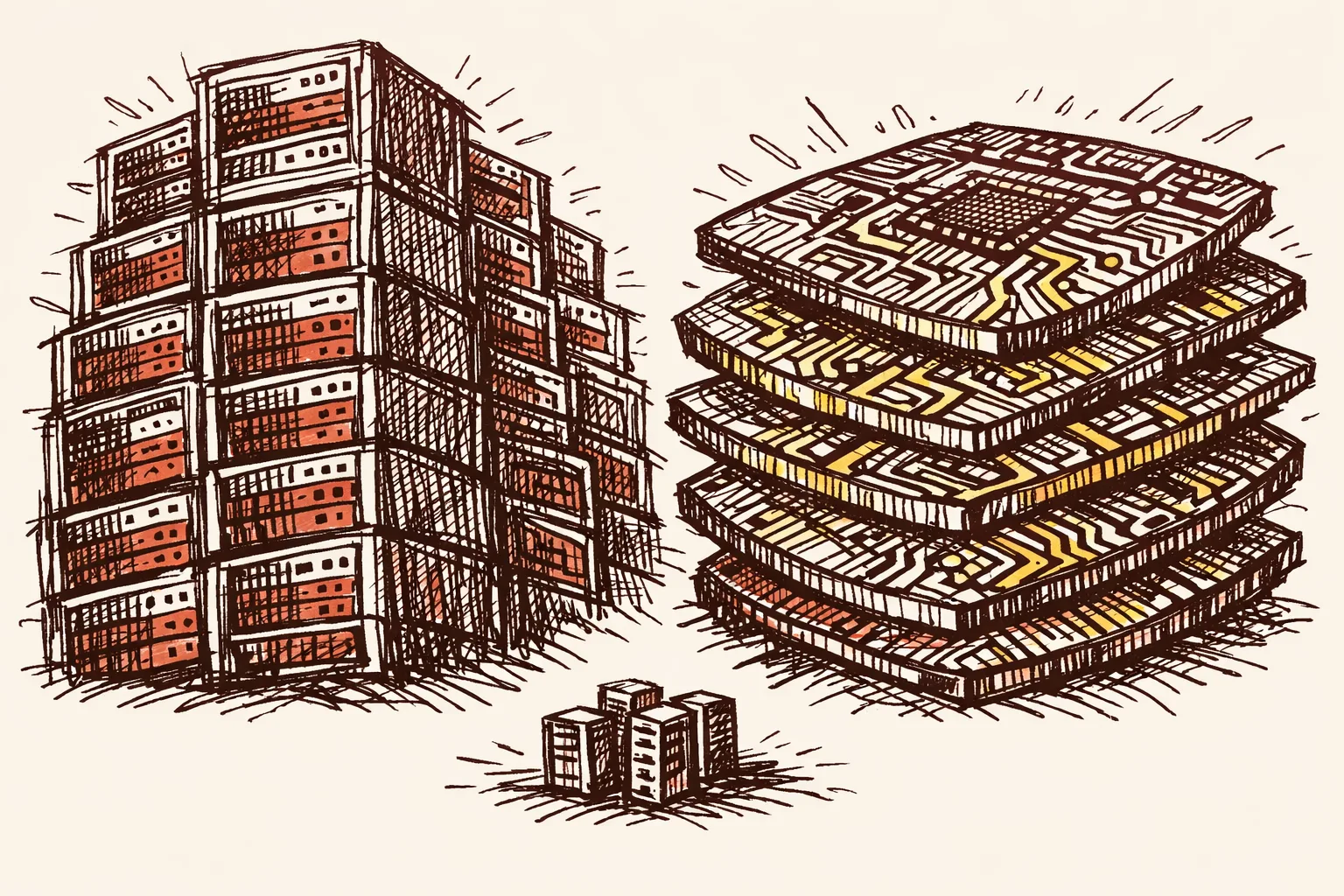
India's challenge is specific: it produces roughly 20 percent of the world's data but hosts only three percent of global data centre capacity. The value is being generated here. The IndiaAI Mission is already working to capture more of it domestically.
Who Is Accountable
The Ministry of Electronics and Information Technology, headed by Minister Ashwini Vaishnaw, organised the AI Summit and owns India's AI policy. The IndiaAI Mission's chief executive, Abhishek Singh, confirmed that the Galgotias incident involved an institution that "misled" organizers - the system worked and the stall was removed. That response showed accountability in action.
The Data Protection Board, created under the Digital Personal Data Protection Act, is the enforcement body for data rights. It has not yet issued any major ruling or fine. That gap between law and active enforcement is where the data sovereignty risk still lives - and closing it is the next priority.
Gandhi sits on the Public Accounts Committee, according to DD News. He is entitled to membership of the committees that appoint the heads of the CBI, the Central Vigilance Commission, and the Lokpal. These are not decorative roles. They are where an opposition leader can actually apply pressure. The attendance data suggests he has not prioritised them.
What Would It Cost
A meaningful domestic data centre buildout - enough to shift India from three percent to ten percent of global capacity - would require tens of billions of dollars in investment. The government's own Economic Survey cited a projected $6 billion investment to double India's data centre capacity. That is a strong start, and the momentum is building.
The cost of not acting - handing the economic value of India's data to foreign platforms - is what Gandhi's February speech was about. India's GDP growth depends on capturing that value at home.
What Needs to Happen Next
The Data Protection Board needs to move to active enforcement. The law exists. The board needs to issue rulings, impose fines, and make clear that Indian citizen data has a price.
India needs strict verification at events like the AI Summit. The summit organizers handled the Galgotias incident correctly - they removed the stall quickly. That standard needs to apply at every level, not just when something goes viral.
On data sovereignty in trade negotiations, India needs to treat data access the way it treats tariffs - as something to be negotiated, not given away. The Economic Survey said sovereignty is "exercised not through physical containment, but through enforceable rights and institutional capacity." Build the institution. Enforce the rights.
The jokes about Rahul Gandhi's intelligence will continue. They will keep missing the point. Gandhi is not stupid. That was never the real indictment. The real indictment is that he understood the problem, stood up in parliament and described it clearly, and then went back to doing what the data shows he has always done - showing up less than half the time, skipping debates, and leaving allies to face the press alone after defeats. A stupid person cannot hurt India's opposition very much. A smart person who will not do the work can do serious damage. That is the truth the jokes miss entirely.