
The Cameras Were Already Watching
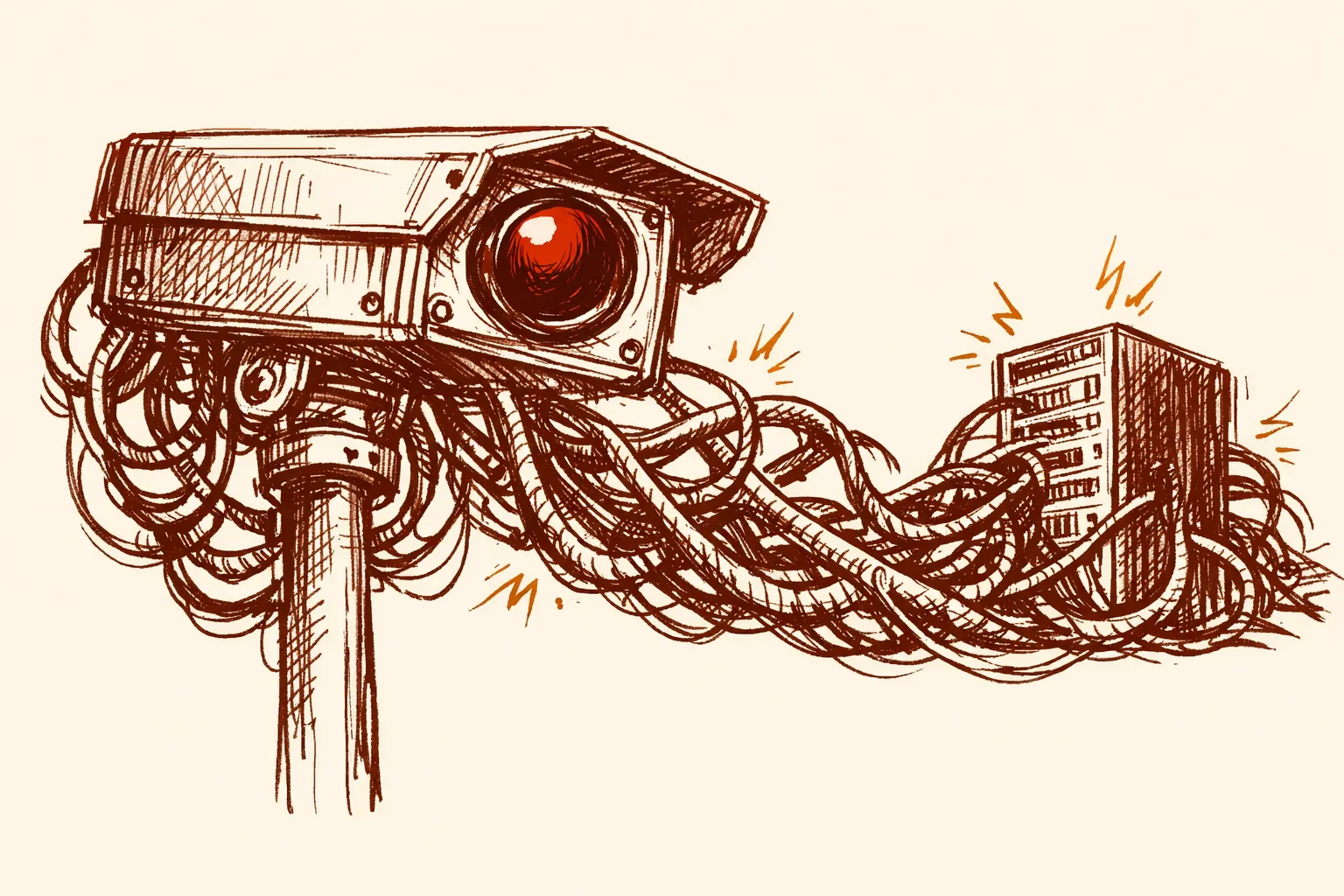
Walk down any main road in Delhi and you pass rows of CCTV cameras mounted on poles. They were put there to make people safer. But according to India's own security agencies, many of those cameras were potentially sending data to servers outside India.
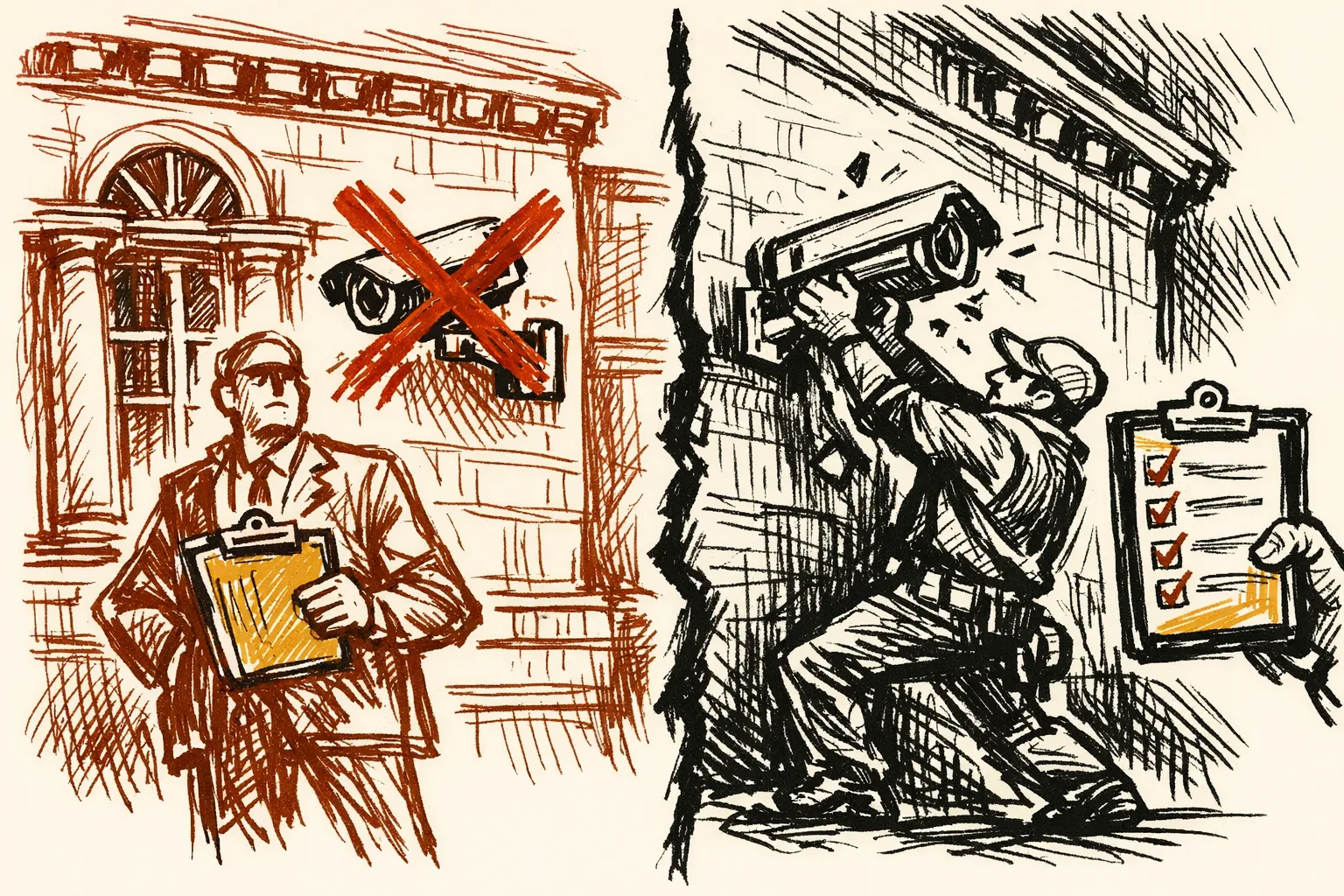
The Delhi government has now confirmed it will remove 1.4 lakh CCTV cameras installed by the previous Aam Aadmi Party administration. All 1,40,000 cameras installed in Phase 1 were from the Chinese company Hikvision, which has faced global security concerns. In the first phase, approval has been given to replace 50,000 Chinese cameras.
The harder question is this - how did 1.4 lakh cameras from a company flagged by India's own navy ever get installed on Delhi's streets in the first place?
What Was Installed - and When
Under Delhi's Public Works Department, a total of 2,74,389 CCTV cameras were installed in two major phases - 1,40,000 in Phase 1 between September 2020 and November 2022, and 1,34,389 in Phase 2 between June and March.
Every single camera in Phase 1 came from Hikvision. In September 2021, the Indian Navy's headquarters asked all its formations to discontinue procurement of CCTV cameras and surveillance systems from Hikvision. The Indian Navy also ordered the replacement and destruction of its existing Hikvision cameras.
The Indian Navy raised the alarm in September 2021. Delhi's AAP government kept installing Hikvision cameras on public roads until November 2022 - fourteen months after that warning was made public.
Delhi's Public Works Department Minister Parvesh Sahib Singh did not soften his words. He said: "Surveillance infrastructure is not just about visibility, it is about control over sensitive data. This was not a routine procurement decision. When you deploy such systems across an entire city, you are making a national security choice."
Why Hikvision Is a Problem
Hikvision is a Chinese state-controlled surveillance company. The People's Republic of China is the controlling stakeholder of Hikvision through the state-owned China Electronic Technology Group. Under China's National Intelligence Law, companies like Hikvision are legally required to assist the country's intelligence services upon request.
Security researchers have identified specific technical risks. Hidden backdoors were found in the equipment - a serious security breach intentionally built into a foreign-manufactured product. India's National Security Council Secretariat and Defence Intelligence Agency raised security concerns about the possible threat of data loss through Chinese-origin surveillance cameras. Data loss can occur even if the cameras are not connected to an external network.
This loss could occur through programmed or coded servers or embedded hardware for wi-fi or SIM-based connectivity, or during maintenance or replacement from the memory of the CCTV and other surveillance systems.
India Knew - That Is the Real Problem
In August 2020, the Indian government banned Hikvision from bidding in government tenders and required the removal of Hikvision cameras from military and high-security areas. Then in March, India's Ministry of Finance released a document banning 17 Chinese companies, including Hikvision and Dahua, from participating in tenders in India.
The central government moved in stages. The AAP-run Delhi government moved in the wrong direction entirely - buying more Hikvision cameras even as central agencies were raising red flags.
In 2021, a former junior IT minister revealed that over a million cameras deployed across Indian government institutions were of Chinese origin, some of which had reportedly been transferring sensitive data to offshore servers. That number was disclosed to Parliament. And yet city-level procurement kept buying the same equipment.
What Has Already Been Done
The Ministry of Electronics and Information Technology introduced mandatory safety standards for CCTV cameras in April. These Essential Requirements mandated disclosure of the country of origin of key components including chipsets, and compulsory testing for vulnerabilities that could enable unauthorised remote access.
India has begun prohibiting Chinese video surveillance companies, including Hikvision and Dahua, from selling internet-connected CCTV cameras. Companies are required to certify each product at designated government labs. Authorities have also begun denying certification to products that use Chinese chipsets or firmware, effectively excluding major Chinese manufacturers from the Indian market.
So far, the government has certified 507 CCTV camera models under this framework. According to Counterpoint Research, Indian players now control more than 80 percent of the CCTV market as of early. Brands like CP Plus, Qubo, Prama, Matrix, and Sparsh have shifted to Taiwanese chipsets and locally developed software.
The national ban covers new products sold from April 1 onward. It does not automatically remove cameras already installed. Delhi is doing that job manually - and only because the new government chose to act. Other cities may not.
How Other Countries Fixed This
The United States - Ban Before You Buy
Under Section 889 of the 2019 National Defense Authorization Act, the US federal government cannot procure or obtain video surveillance produced by Hikvision or Dahua due to national security concerns. This covers all federal agencies, including the military, and US embassies overseas.
The procurement ban came first. Removal came second. India did it the other way - partial procurement restrictions arrived years after Chinese cameras were already in city infrastructure.
The United Kingdom - Audit Then Remove, With a Deadline
In April 2022, the UK Department of Health and Social Care banned the purchase of Hikvision cameras. In November 2022, the UK prohibited the use of Hikvision equipment in government buildings. Over 50 percent of sensitive sites that had deployed such equipment have now replaced it. Approximately 70 percent of the remaining sites were expected to have the devices removed by autumn, with a target for complete removal by April. The Cabinet Office oversees progress to ensure departments meet this deadline.
The mechanism is specific: one agency with oversight, named departments responsible, a public deadline, and progress reporting to Parliament. India's ongoing Delhi replacement has no equivalent oversight body and no stated national completion deadline.
Who Is Accountable
At the national level, the Ministry of Electronics and Information Technology owns the STQC certification framework that now governs new camera sales. The Ministry of Finance's Procurement Policy Division issued the tender ban covering 17 Chinese companies. At the city level, Delhi's Public Works Department installed all 2.74 lakh cameras and is responsible for replacement. The first phase of 50,000 replacements has been approved. No completion date for all 1.4 lakh Phase 1 cameras has been stated publicly. No audit of other Indian cities' CCTV networks has been announced.
What Would It Cost
India's video surveillance market is worth between 5 billion and 7.5 billion US dollars, according to Mordor Intelligence.
For Delhi's 1.4 lakh cameras specifically, no official cost figure has been released. A rough estimate: mid-range certified replacement cameras cost between Rs 3,000 and Rs 8,000 per unit. Replacing 1.4 lakh cameras at the lower end means roughly Rs 42 crore in hardware alone. Installation, cabling, and integration add to that figure. The transition away from Chinese surveillance hardware has driven a 15 to 20 percent price increase across mid-range and high-end camera segments as manufacturers absorb the costs of alternative components and compliance testing.
That cost is real. But it is a fraction of the cost of compromised surveillance infrastructure in a city of 20 million people - a city that houses Parliament, the Supreme Court, three major airports, and the headquarters of every central ministry.

What Needs to Happen
Three things must follow Delhi's camera removal.
Every state government must audit its existing CCTV network. The national ban covers new purchases, not the cameras already on poles in Mumbai, Bengaluru, Hyderabad, Chennai, and every Smart City project. A national audit with state-level reporting and a completion date is the only way to know what is actually deployed.
Second, procurement rules must be enforced before purchase orders are signed. The Ministry of Finance's tender ban should be mandatory at the state and municipal level, not just for central government agencies. A camera going up on a Delhi street pole needs the same vetting as one going up at a naval base.
Third, the STQC certification framework needs enforcement teeth. Certification alone does not help if state agencies are not required to check certificates before buying. The central government should make STQC compliance a condition for state-level procurement funding under Smart Cities and urban development schemes.