The Framing Is Wrong
A foreign media outlet recently asked whether Modi is "coup-proofing" India's military. The question tells you more about the writer than about India.
India is a democracy with an unbroken record of civilian control over its armed forces. Our military has never threatened a government. The premise is borrowed from Pakistan's history and applied to India without evidence.
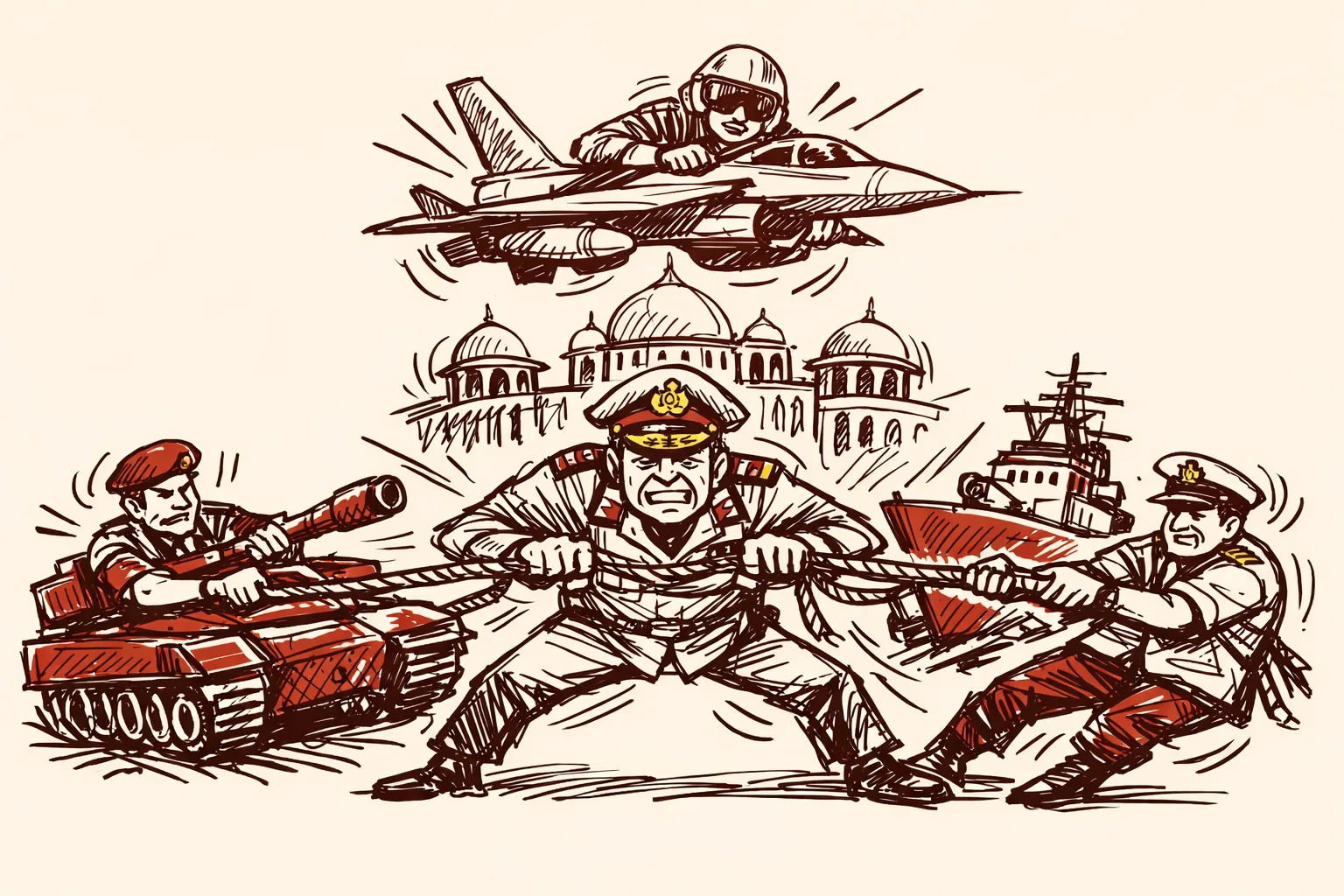
The real question is whether the Chief of Defence Staff (CDS) reform is delivering genuine military jointness. Bureaucratic turf wars are a bigger threat to this reform than any political meddling.
What the CDS Was Created to Do
Prime Minister Modi announced the creation of the CDS post on Independence Day 2019. The idea had been waiting since the Kargil War.
The CDS was meant to do three things. First, act as a single-point military adviser to the government. Second, push the Army, Navy, and Air Force to work together. Third, drive the creation of integrated theatre commands - unified geographic commands that merge all three services under one operational commander.
India's defence ministry officially created the post in December 2019 and appointed General Bipin Rawat as the first CDS. That was the plan. The execution has been slower.
The Scale of the Problem
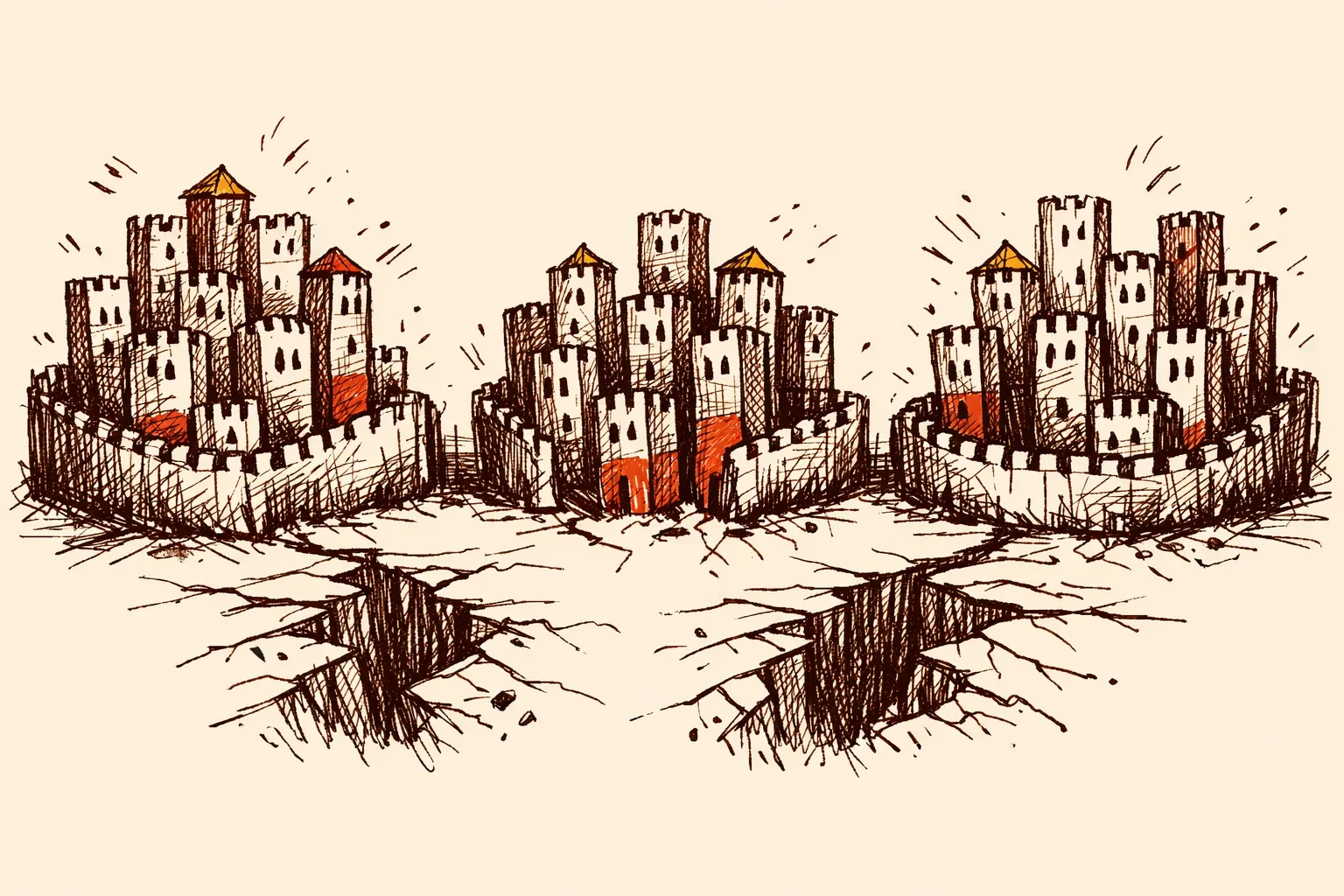
India currently has 17 single-service commands. Each service - Army, Navy, Air Force - runs its own show. They train separately. They procure separately. Coordinating them in a crisis takes time that a modern war will not give you.
The Kargil War showed this in 1999. After Pakistani intrusions were detected, the Indian Air Force was not committed until more than three weeks after initial awareness. Coordination failure built into the structure itself caused that gap.
The proposed theatre command structure would place Army, Navy, and Air Force assets under a single commander for each geographic region. The current plan is three commands - one focused on China in the north, one on Pakistan in the west, and one maritime command.
India also faces a two-front problem. China has been building road and rail infrastructure toward the Tibetan plateau for years. Pakistan remains a nuclear-armed adversary. A military that cannot coordinate between its own services is a liability in that environment.
What Has Already Been Tried
The CDS idea is not new. It is actually 26 years old.
The Kargil Review Committee was formed in July 1999, three days after the war ended. It recommended the creation of the CDS post to ensure jointness among the Army, Navy, and Air Force. A Group of Ministers endorsed the proposal in 2001. Out of 75 recommendations on defence management, 63 were implemented. Eight related to the CDS remained pending. Congress governments sat on the CDS recommendation for 18 years.
Modi's government finally created the post in 2019. But General Bipin Rawat, India's first CDS, died in a helicopter crash in December 2021. The post then sat vacant for nine months.
General Anil Chauhan was appointed second CDS in September 2022. His tenure has been extended to see the theatre command reform through.
What Has Been Accomplished
Critics who say nothing has happened are not looking at the evidence.
Operation Sindoor gave the clearest signal yet of what joint operations look like. Tri-services synergy produced a unified, real-time operational picture, empowered commanders to take timely decisions, and reduced the risk of fratricide. Defence Minister Rajnath Singh called it a living example of jointness delivering decisive results.
The CDS now has the power to issue joint directives without relying on separate approvals from the service chiefs. It removes a genuine bottleneck in the command chain. The services now share a joint communication architecture, and all sensors of the three services have been optimised. An inventory integration project worth Rs 400 crore is linking logistics data across all three services.
More than 90 per cent of the planning for theatre commands has been completed, according to a top military official.
Where the Real Friction Is
Each service chief commands one of the most powerful bureaucracies in India. Theatre commands would reduce their operational role significantly. Existing three-star commanders of 17 single-service commands face displacement, while several senior staff officer positions could become redundant.
The Air Force has been particularly cautious. Air power is fast and flexible. Locking it into a geography-based command structure raises real doctrinal questions about how aircraft are allocated across fronts. These are legitimate concerns, not obstruction.
There is also a sequencing debate. The full range of military reforms involves three phases: jointness, integration, and the creation of theatre commands. India is still working through phase two.
How Other Countries Fixed This
The United States
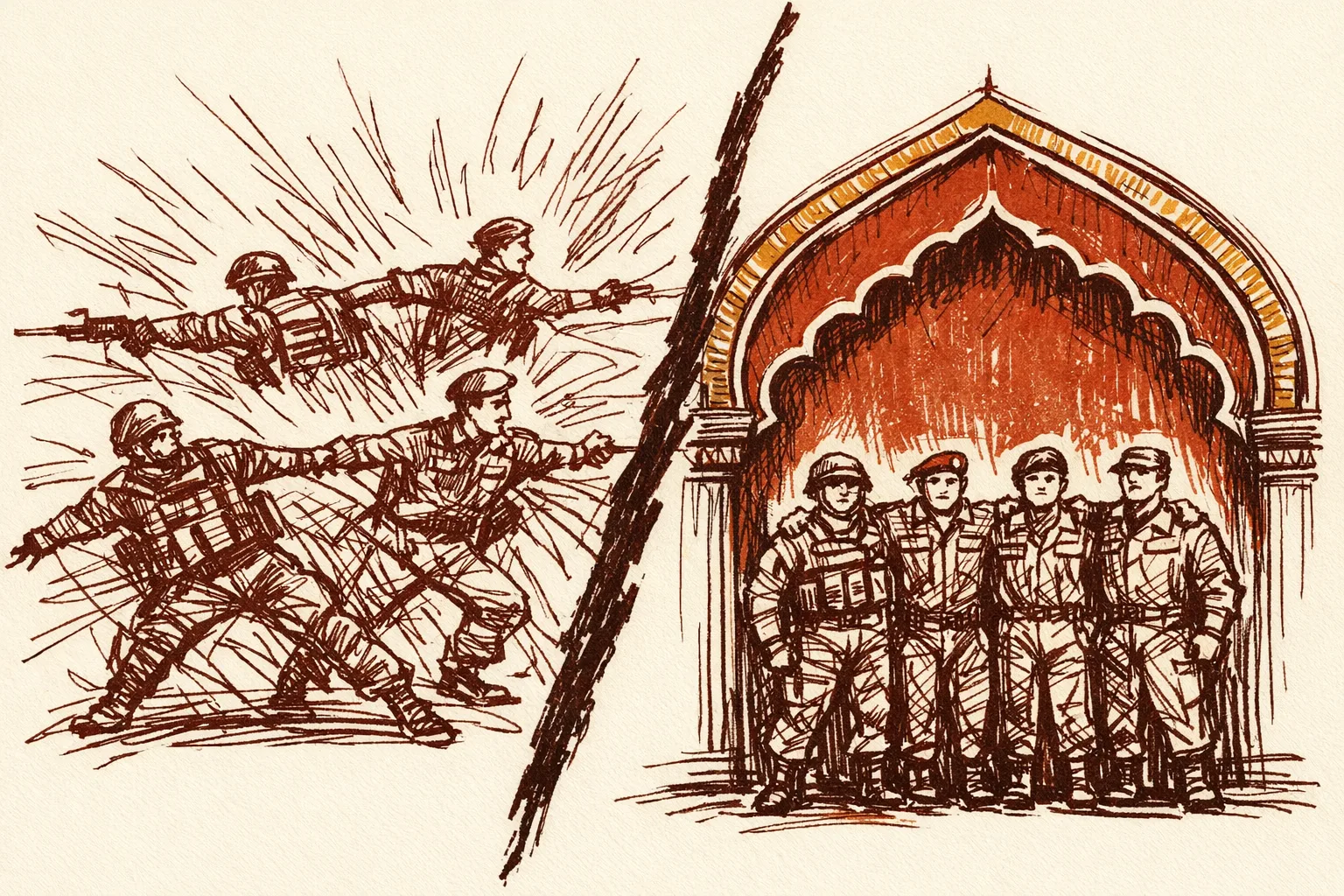
America faced the same problem in the 1980s. The 1983 invasion of Grenada succeeded militarily but exposed embarrassing coordination failures between the services. The Goldwater-Nichols Act of 1986 elevated the Chairman of the Joint Chiefs of Staff to principal military adviser to the president. Regional commanders got comprehensive authority over all services in their zone. The service chiefs were moved to an advisory role.
In the decade following its passage, the Act was credited with the success of the First Gulf War. The key was legislative force. Congress mandated the change. The service chiefs could not block it.
India's lesson: reform that depends entirely on consensus among the services it threatens will always move slowly. At some point it needs to be directed from above.
China
In January 2016, China disbanded its top four military departments and reorganised into five new theatre commands. The services focus on force building - manning, training, and equipping - while the theatre commands focus on warfighting. That is the same separation General Chauhan is now advocating for India.
China's reform was faster because it was imposed from the top of an authoritarian system. India cannot and should not copy that method. But China now has a multi-year head start.
Who Is Accountable
Three sets of recommendations on theatre commands have been submitted to Defence Minister Rajnath Singh. The Cabinet Committee on Security - chaired by the Prime Minister - is the final approval body. The reform blueprint is ready. Nobody has pulled the trigger.
The Department of Military Affairs, headed by the CDS, was created specifically to break the old pattern where civilian bureaucrats in the defence ministry had more power over military affairs than the military itself.
What Would It Cost
Theatre commands do not primarily require new money. They require reorganising existing assets and commands. The inventory integration project already underway is valued at Rs 400 crore. The Defence Space Agency and Defence Cyber Agency expansions are already funded.
The bigger cost is strategic. Every year India runs 17 separate single-service commands is another year of duplicated logistics, duplicated procurement, and slower response times. That is a capability gap.
What Needs to Happen
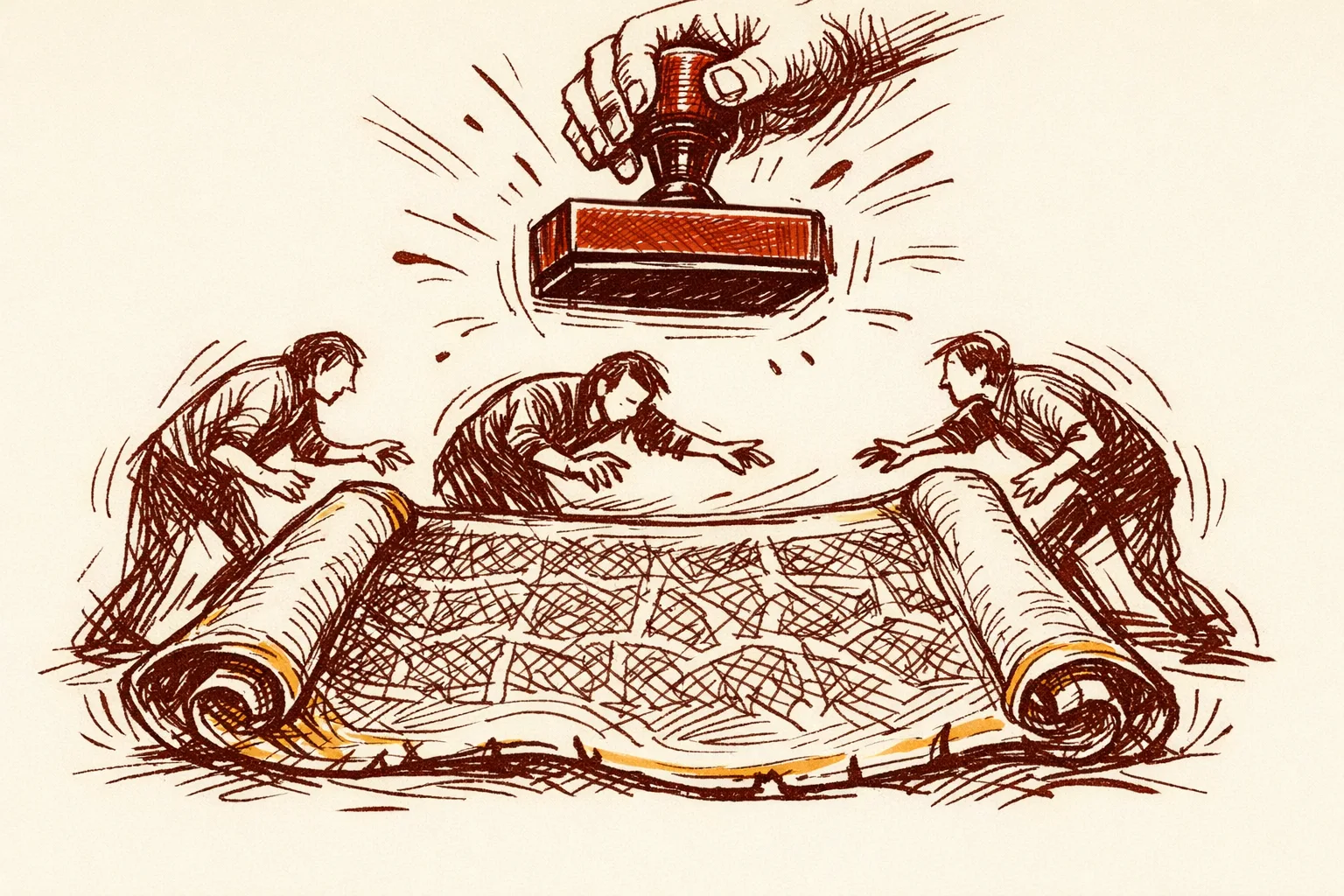
India does not need another committee. It needs the Cabinet Committee on Security to approve the theatre command blueprint and set a firm implementation deadline.
The CDS should have the power to direct implementation, not just advocate for it. India should legislate a fixed term for the CDS so that appointments are rule-based, not discretionary. Joint duty requirements should become mandatory for senior promotions - an officer who has never worked across service lines should not command at the highest levels.
The Air Force's concerns about air power allocation are legitimate. Resolve them in the blueprint. Do not leave them to erode the reform from within.
Operation Sindoor showed that India's services can work together when properly directed. The architecture now needs to make that the permanent default, not the exception.