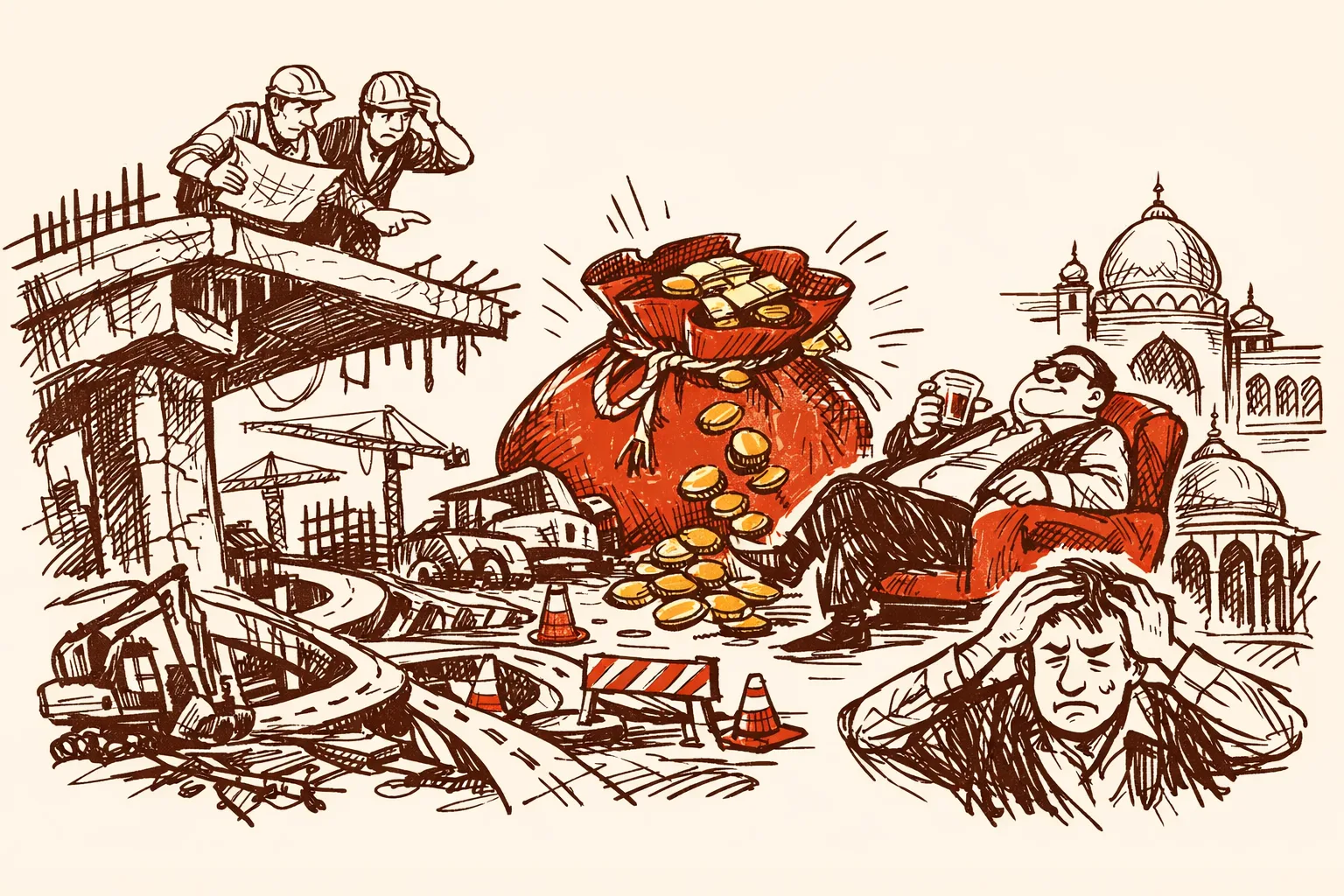
The Money Is Being Spent. The Projects Are Still Bleeding.
India is building at a pace no Congress government ever attempted. Roads, railways, ports, power lines - the scale of investment is genuinely historic. The central government's capital expenditure has risen from 14% of total spending to 28%, according to data cited by Moneylife. The money is real.
And yet something is also very wrong.
The Ministry of Statistics and Programme Implementation released its April Flash Report on Central Sector Infrastructure Projects. It monitors every project worth more than ₹150 crore. The numbers are uncomfortable. The original cost of 1,981 projects was ₹37.12 lakh crore. The revised cost is now ₹42.78 lakh crore. That is a gap of ₹5.65 lakh crore - enough to fund India's entire health ministry for several years.
What the Numbers Actually Show
The IJCRT research journal, analysing MoSPI data, found that about one quarter of India's large public projects are incurring substantial cost overruns. That ratio points to a pattern, not a series of unlucky accidents.
The sectors tell the story clearly. According to Business Today's analysis of the MoSPI April report, the Water and Sanitation sector has seen an 82% rise in revised costs - the highest across all sectors. The Communication sector has seen an 81% rise, and BharatNet has recorded a cost overrun of over 207%.
Railway projects have historically been the worst offenders. As of an earlier MoSPI snapshot cited by Moneylife, 249 railway projects saw original costs of ₹4.44 lakh crore balloon to ₹6.85 lakh crore - a 54% jump. Water resource projects have seen costs rise by 200% in some cases.
Roads are the one bright spot. The Ministry of Road Transport and Highways, which runs 1,137 projects, has seen only about 3% cost overrun, according to Business Today. The gap between road performance and every other sector is where the real problem lives.
Why This Keeps Happening
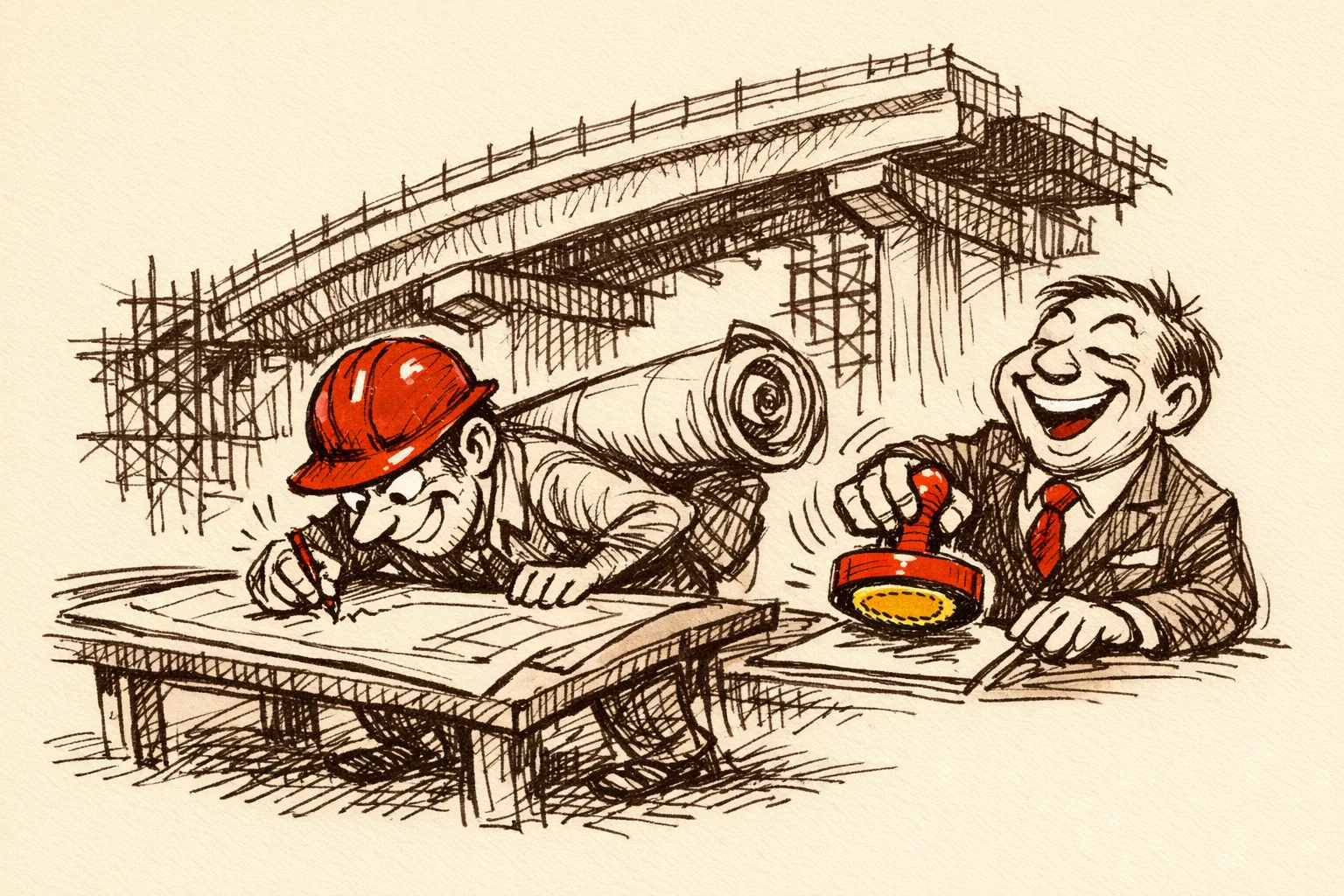
The MoSPI report itself names the main causes. The first is deliberate under-estimation of original costs. Projects are bid low to get approved, then revised up once they are under way. The incentive to win sanction is stronger than the incentive to be accurate.
The second cause is design changes after contracts are awarded. Energy projects frequently undergo engineering changes after tenders are signed - a primary driver of cost escalation across sectors.
The third cause is what the MoSPI report calls the Completion Trap. Nearly 40% of projects - 801 assets - have crossed 80% physical progress but are stuck in the final 5-10% phase due to last-mile regulatory disputes or connectivity issues. A project that is 90% done but not commissioned cannot earn returns.
The fourth cause is land acquisition and clearances. 30% of infrastructure projects face delays from land acquisition. Environmental clearances take an average of 180 days. One example: a portion of the Delhi-Meerut Expressway faced an 11-month delay because railway approval for a single bridge was pending, even though the road itself was fully built.
The fifth cause is data blindness. Project managers often fail to update milestones on the PAIMANA tracking portal, preventing early government intervention.
What Has Already Been Tried
PRAGATI - launched in March 2015 and chaired personally by the Prime Minister - has covered over 3,300 projects worth more than ₹85 lakh crore and resolved 7,156 documented issues, according to the India Brand Equity Foundation. Specific wins include clearing defence land issues for the Pune Metro, fast-tracking the Bhubaneswar-Puri rail line, and reviving the Lumding-Silchar Broad Gauge Railway Line in Assam.
PM Gati Shakti, launched in October 2021, integrates 16 central ministries and 36 states and Union Territories on a single GIS-based platform with over 1,614 data layers. It has evaluated 208 major projects worth ₹15.39 lakh crore and trained over 20,000 government officials.
Both reforms are real and meaningful. The problem is that neither addresses the root cause: cost estimates that are wrong at the start, and no penalty when they are wrong.
The CAG found that civil construction costs on Delhi's Dwarka Expressway escalated to ₹250 crore per kilometre against an approved ₹18 crore per kilometre. Projects were also awarded to bidders using falsified documents. The audits are thorough. Nobody gets fired.
How Other Countries Fixed This
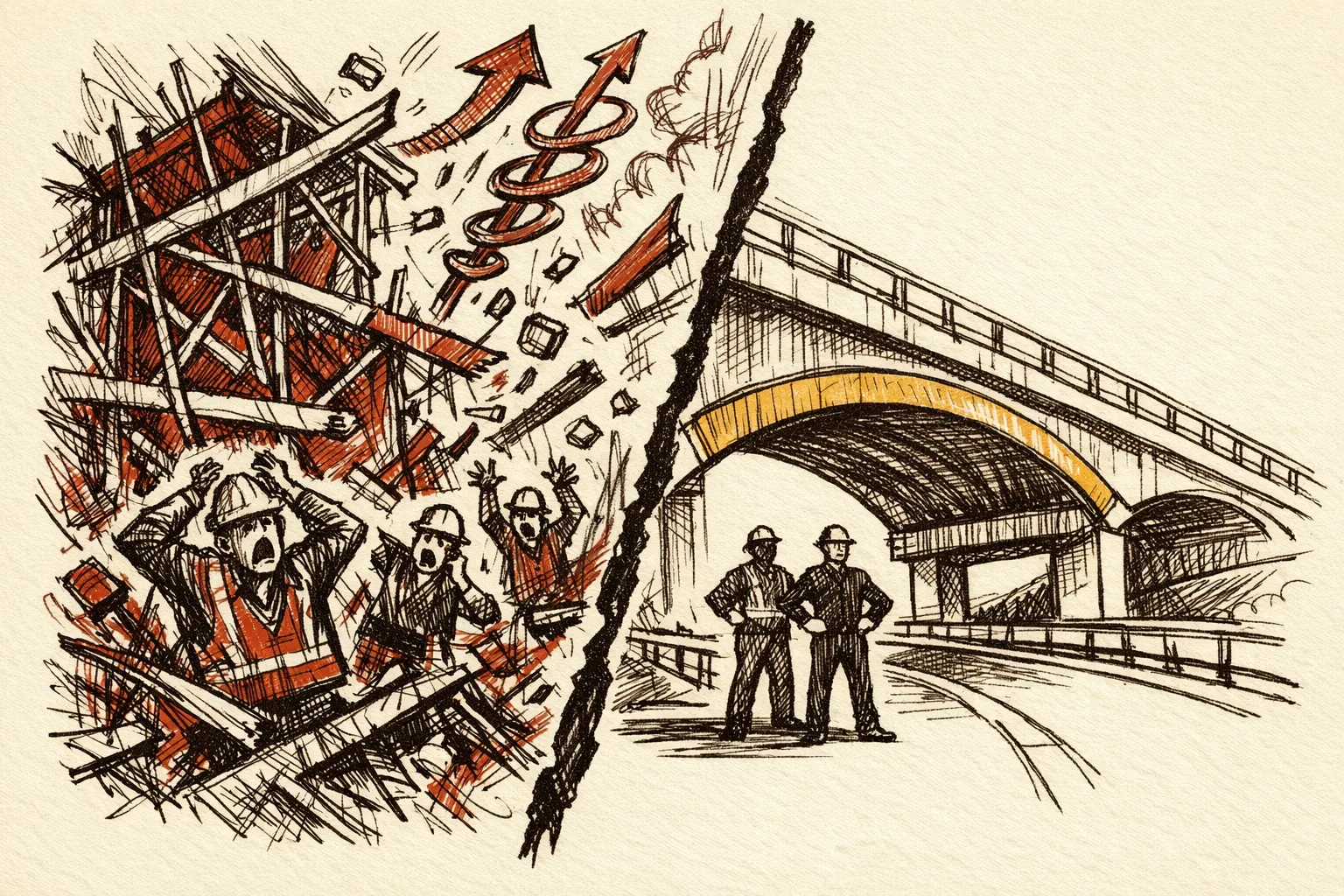
The United Kingdom's infrastructure projects routinely ran 38% over budget on average. In 2003, the UK mandated reference class forecasting for all major transport projects - forcing planners to look at what similar projects actually cost historically, rather than what they wish the current one will cost. The average cost overrun fell from 38% to 5%.
South Korea introduced a Total Project Cost Management System to control cost escalation from design changes, and created formal legislation in 1998 governing private participation in infrastructure. Pre-approved cost ceilings and legal frameworks reduced mid-project redesigns - the exact problem MoSPI identified in India's energy sector today.
Who Is Accountable
The Ministry of Statistics and Programme Implementation monitors the projects but does not control them. Each project is owned by its line ministry. When a project runs over budget, the line ministry submits a revised cost estimate for re-approval - but this process has not prevented escalations. The CAG can flag problems and table reports in Parliament. It cannot recover money or remove officials.
The PAIMANA portal tracks project progress, but project managers often fail to update it, meaning the system designed to catch problems early is running on stale data.
What Would It Cost
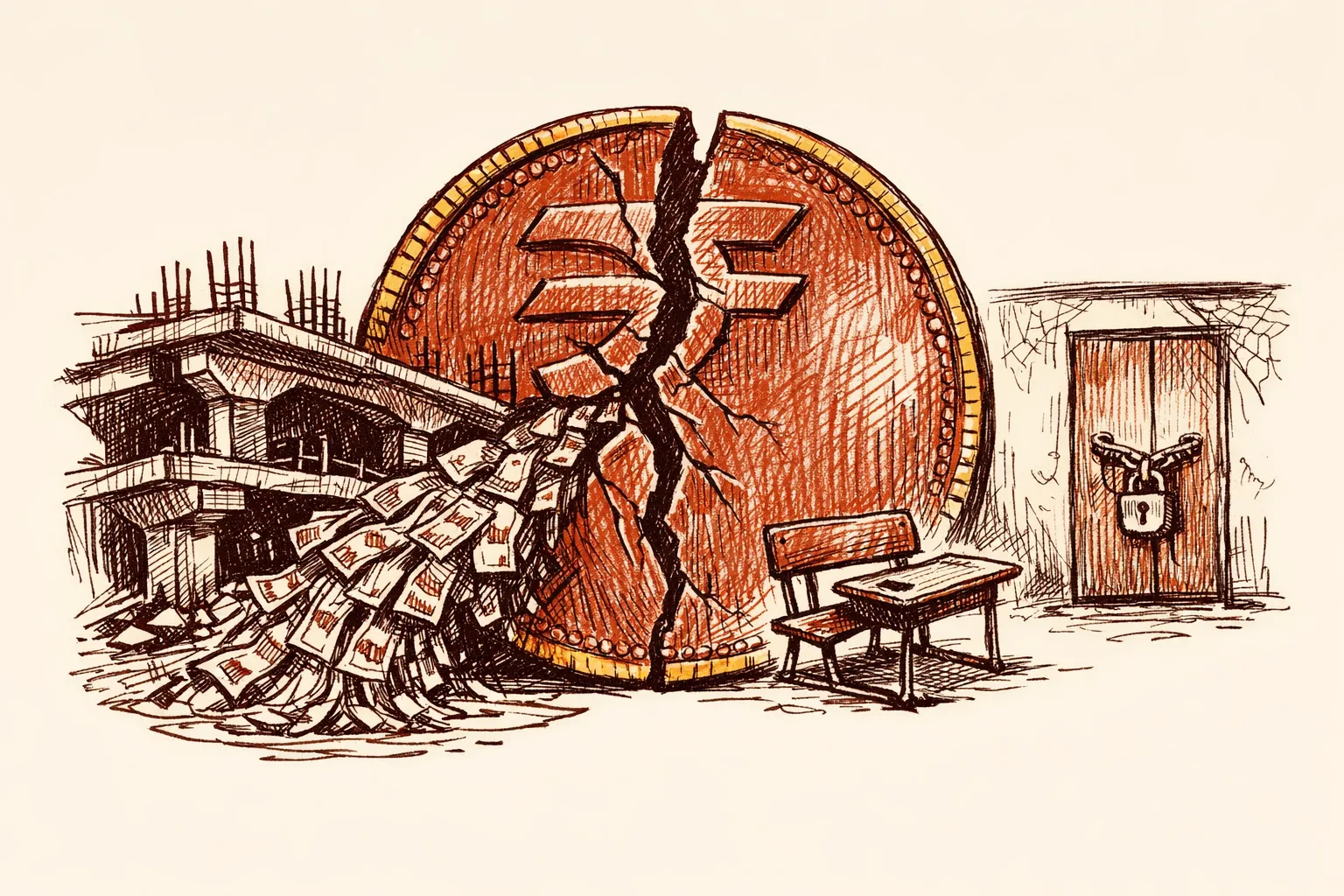
The ₹5.65 lakh crore overrun is additional money that will be needed to complete these projects over their original budgets. Every rupee absorbed by cost overruns is a rupee not available for primary education or public health. The fiscal cost is not abstract. It is the teacher who was not hired, the clinic that was not built.
India's logistics costs currently sit at about 13-14% of GDP, compared to 8-10% in Germany and Japan. Every percentage point reduction in logistics costs translates to better export competitiveness and more affordable goods for Indian consumers. The cost of overruns is therefore double: you pay more to build, and you wait longer to benefit.
What Needs to Happen
India already has the monitoring systems. What is missing is consequence.
The first change is mandatory reference class forecasting before any project above ₹150 crore is approved. The UK experience shows this alone can cut average overruns from 38% to 5%. India has the MoSPI project database to build this from.
The second change is a design lock rule. Once a contract is awarded, engineering changes should require sign-off from a Finance Ministry-level official and automatic revision of the project manager's performance record. Requiring a named official to approve each change creates accountability where none currently exists.
The third change is commissioning-linked payment. Contractors should receive a portion of their final payment only after the project is formally commissioned and used, not just when physical construction is declared complete. This directly targets the Completion Trap.
The fourth change is a fast-track land acquisition tribunal with a 90-day maximum decision window. Clearance delays of 180 days are caused by process, not legal complexity. A dedicated tribunal with strict timelines solves a process problem.