What Actually Happened
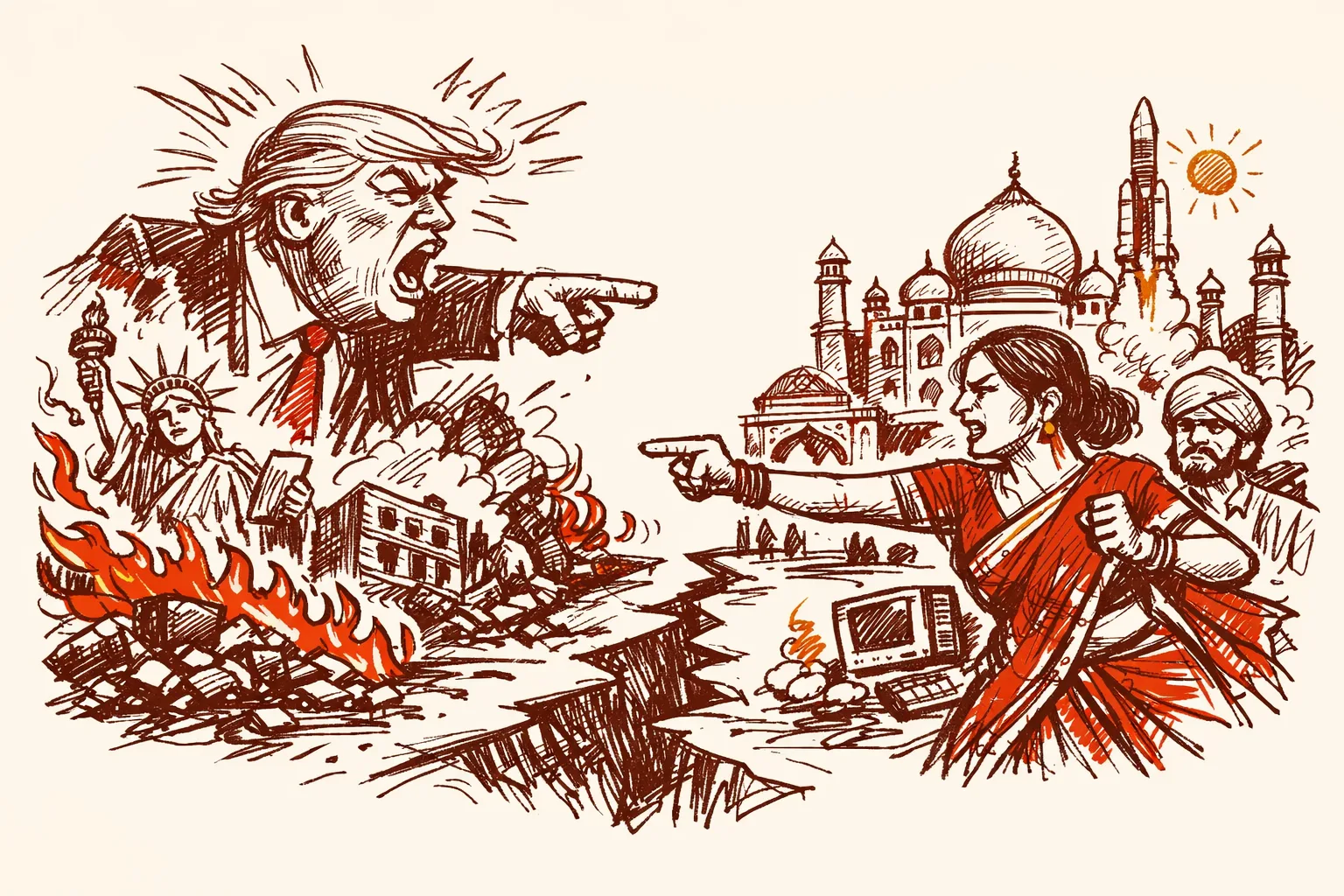
On April 22, US President Donald Trump reposted a four-page transcript and video from conservative radio host Michael Savage on his Truth Social platform. Trump added no comment of his own. The repost was the message.
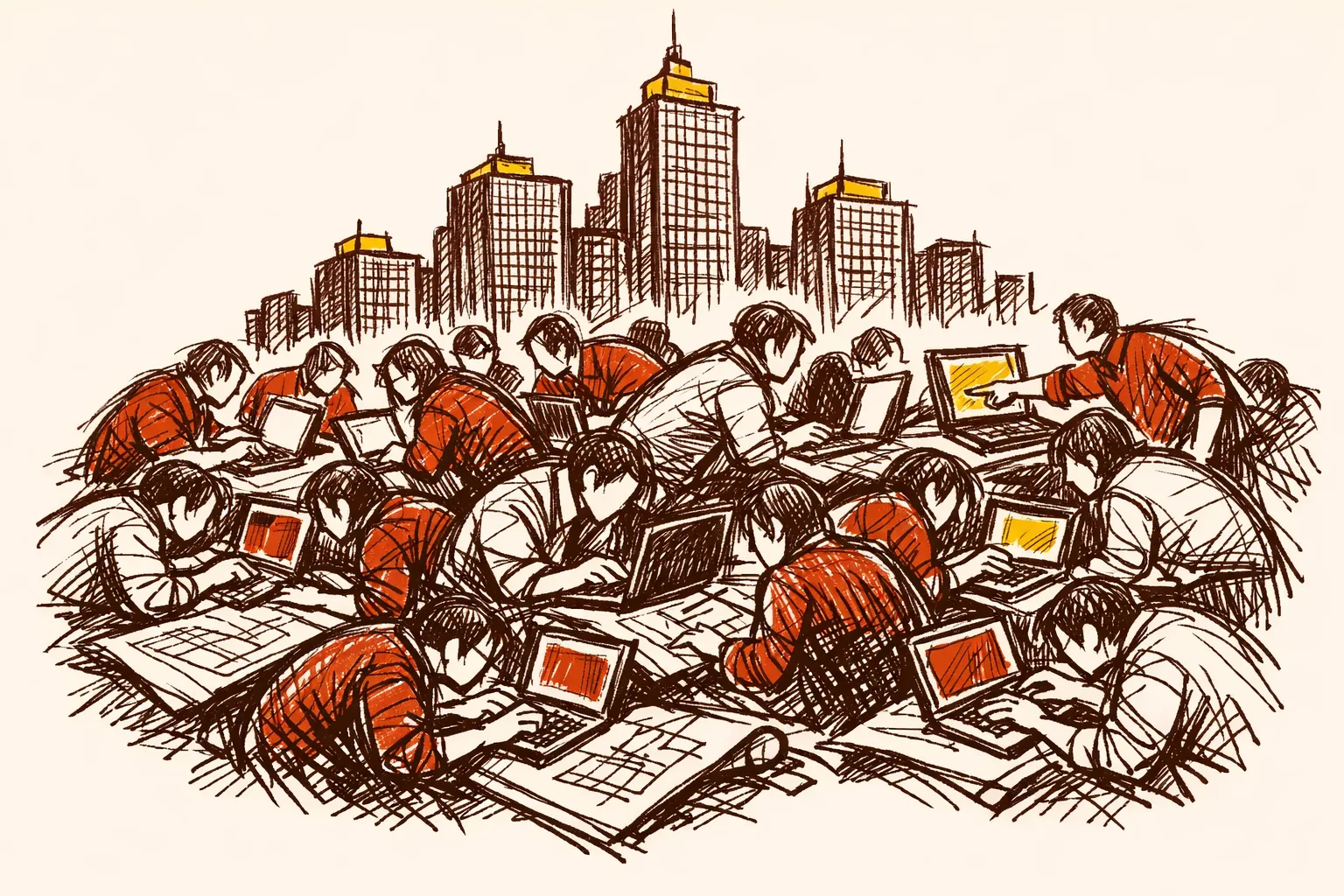
Savage had been responding to US Supreme Court arguments on birthright citizenship - the rule that says any child born on American soil is automatically a citizen. Criticizing that rule, Savage wrote: "A baby here becomes an instant citizen, and then they bring the entire family in from China or India or some other hellhole on the planet." He also called Indian and Chinese immigrants "gangsters with laptops" and claimed, without evidence, that white men could not get jobs in California's technology sector anymore.
Trump shared it. That made it his endorsement.
I grew up in Chamba, Himachal Pradesh. My town has a fort older than most European nations. Calling this civilization a "hellhole" is embarrassing for the person saying it.
Who Is Michael Savage
Savage's real name is Michael Alan Weiner. His father was a Russian Jewish immigrant - the exact category his rhetoric now targets. He hosted "The Savage Nation," which at its peak was the second most popular radio show in America. He was permanently banned from the UK in 2009 for fostering hatred. His ideology - borders, language, and culture - is widely credited as a direct influence on Trump's political thinking. Trump himself, after his first election, called Savage personally to thank him for his loyalty.
His language about India had no factual basis. The claim about white men being shut out of California tech hiring was made without a single piece of supporting data.
The Numbers Savage Got Wrong
Indian nationals received 283,397 H-1B visas in the last US fiscal year - 71 percent of all H-1B approvals, according to the Centre for Strategic and International Studies. These are engineers, doctors, and researchers that American companies applied to hire through a lottery.
A study by UC San Diego economist Gaurav Khanna found that US workers gained approximately $431 million in real income in one year alone from productivity generated in Silicon Valley - productivity that depended heavily on skilled Indian tech workers.
H-1B visa holders pay US federal and state income taxes. They pay into Social Security and Medicare, but cannot collect those benefits without citizenship or permanent residency. The "gangsters with laptops" framing is not just offensive - it is factually inverted on every economic measure.
Savage also claimed no other country offers birthright citizenship. About three dozen countries, including Canada, Mexico, and most of South America, grant automatic citizenship to children born on their soil.
India's Response - Restrained by Design
India's Ministry of External Affairs spokesperson Randhir Jaiswal gave two responses. The first, on April 23, was five words: "We have seen some reports. That is where I leave it."
The formal statement the next day was sharper. "The remarks are obviously uninformed, inappropriate and in poor taste," Jaiswal said. "They certainly do not reflect the reality of the India-US relationship, which has long been based on mutual respect and shared interests."
It did not name Trump. It did not name Savage. That is diplomacy, not weakness.
The US Embassy moved quickly to contain the damage. Spokesperson Christopher Elm cited Trump's own past words - that India is "a great country" with "a very good friend of mine at the top" - to signal that the bilateral relationship remained intact.
The Opposition Used It. BJP Did Not.
The Congress party called the remark "extremely insulting and anti-India." Congress President Mallikarjun Kharge asked publicly why Modi had stayed silent. Trinamool Congress MP Mahua Moitra posted a pointed message mocking the "phraand" (friend) framing of the Modi-Trump relationship. AAP's Manish Sisodia addressed Trump directly in a statement defending India's dignity.
Not a single BJP leader issued a statement criticizing Trump or demanding an apology. That criticism landed.
Shashi Tharoor offered the contrarian view: that India should not respond at all to a social media post, because doing so would be beneath the country's diplomatic stature. There is a difference between a formal US government position and a repost from a radio shock jock. India's calibrated non-escalation reflected that distinction.
Iran Stepped In
Within hours of the post going viral, Iran's consulate in Hyderabad wrote on X: "China and India are the cradles of civilisation. In fact, the hellhole is where its war-criminal president threatened to decimate the civilisation in Iran."
Iran's consulate in Mumbai posted a video celebrating Maharashtra's culture and told Trump to book a "one-way cultural detox" trip to India. The posts were widely shared in India - and deeply embarrassing for the Modi government, because Iran had defended India's honor more forcefully than India's own ruling party.
The Rubio Moment - One Month Later
US Secretary of State Marco Rubio visited India for four days in a relationship-repair mission. The India-US relationship had taken real hits - 50 percent tariffs on Indian goods at their peak, H-1B fee hikes, tensions over Operation Sindoor, and the hellhole episode.
At a joint press conference with External Affairs Minister S. Jaishankar at Hyderabad House, WION correspondent Sidhant Sibal asked Rubio directly about racist comments from the United States targeting Indians and Indian-Americans.
Rubio first asked: "Who said that?" When the reporter kept the question broad, Rubio responded: "I'm sure that there are people who have made comments online and in other places, because every country in the world has stupid people. I'm sure there are stupid people here. There are stupid people in the United States who make dumb comments all the time."
The clip went globally viral within the hour. The US State Department initially posted Rubio's remarks on X - then deleted the question from the post hours later. That deletion confirmed the clip had caused damage inside Washington.
Rubio acknowledged that over $20 billion had been invested in the US economy by Indian companies and said: "We want that number to continue to increase."
What the Broader Context Shows
The "hellhole" post did not come from nowhere. Trump imposed tariffs on Indian goods that reached 50 percent at their peak before a partial rollback. Trump also claimed credit for brokering a ceasefire after India's Operation Sindoor strikes on Pakistan. Modi pushed back on that framing. Meanwhile, Trump hosted Pakistan's Prime Minister and Army Chief at the White House.
Indian firms are investing heavily in the US - partly as economic partnership and partly as diplomatic hedging. Reliance is building what Trump has called "the first refinery in 50 years" in the US. Adani pledged $10 billion and 15,000 American jobs. The US Embassy announced total Indian company investments exceeding $20.5 billion. These commitments run completely opposite to the "hellhole" and "gangsters with laptops" narrative.
Who Is Accountable
The Ministry of External Affairs is responsible for India's diplomatic response. The rapid response failure - five words on day one, a formal statement on day two - sits with MEA's public diplomacy division. India's missions abroad, particularly the Indian Embassy in Washington, should have issued a coordinated statement within six hours of the post going viral. India's 5.5 million-strong diaspora in the US is a strategic asset. They needed to hear from their government faster.
What It Would Cost to Fix This
A rapid-response diplomatic communication unit - with social media monitoring, multilingual spokespeople, and a 24-hour response protocol - would cost a fraction of what India spends on a single embassy building renovation. Israel's model can be replicated for under Rs 50 crore annually. That is the cost of India looking competent in real time when something like this happens again. And it will happen again.
How Other Countries Have Handled This
Israel's Ministry of Foreign Affairs runs a 24/7 social media monitoring and rapid response unit - staffed with trained diplomats who respond within hours to any major international post misrepresenting Israel or its people. The response is calibrated to the source: different treatment for a head of state vs a commentator, a formal government statement vs a viral post. India should build this.
China said nothing publicly about the hellhole post. China calculates that responding to Trump elevates the controversy. For a country of China's size and geopolitical weight, silence is a form of contempt. India needs the relationship too much right now to ignore it - but it also needs to not look rattled every time a radio host says something offensive.
South Korea, after a series of American pop culture incidents that portrayed Koreans negatively, invested heavily in K-culture diplomacy. India has Bollywood, yoga, food, and one of the oldest living civilizations on Earth. That story tells itself, if India invests in telling it.
What India Must Do
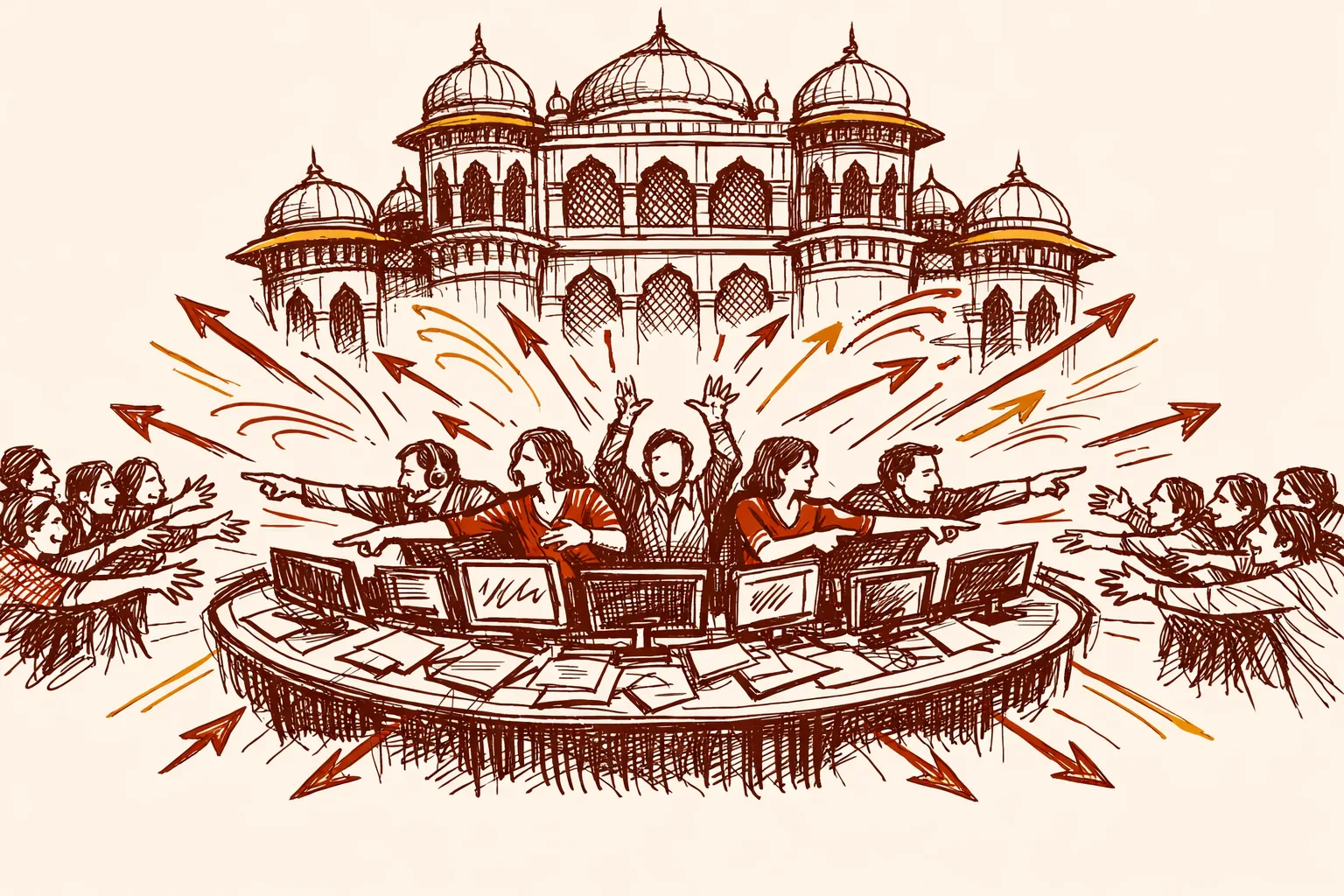
First, MEA should build a real-time public diplomacy rapid response unit. When a post targeting India goes viral in the US, India's response should be coordinated, factual, and out within hours - not the next day after the narrative has already set.
Second, India's missions abroad should be ready with the numbers: Indian H-1B workers' tax contributions, Indian corporate investments in the US, Indian-origin executives running American companies. Facts beat rhetoric, but someone has to deploy them fast.
Third, India's diaspora needs institutional advocacy. The 5.5 million Indians in America have no equivalent of the American Jewish Committee - organizations that respond rapidly and with authority when their community is targeted. India should help fund and encourage such a body without controlling it.
Fourth, the BJP's selective silence on Trump's insults must stop. When the opposition can credibly say "your party is silent because of personal friendship," it weakens India's negotiating position.