What Happened
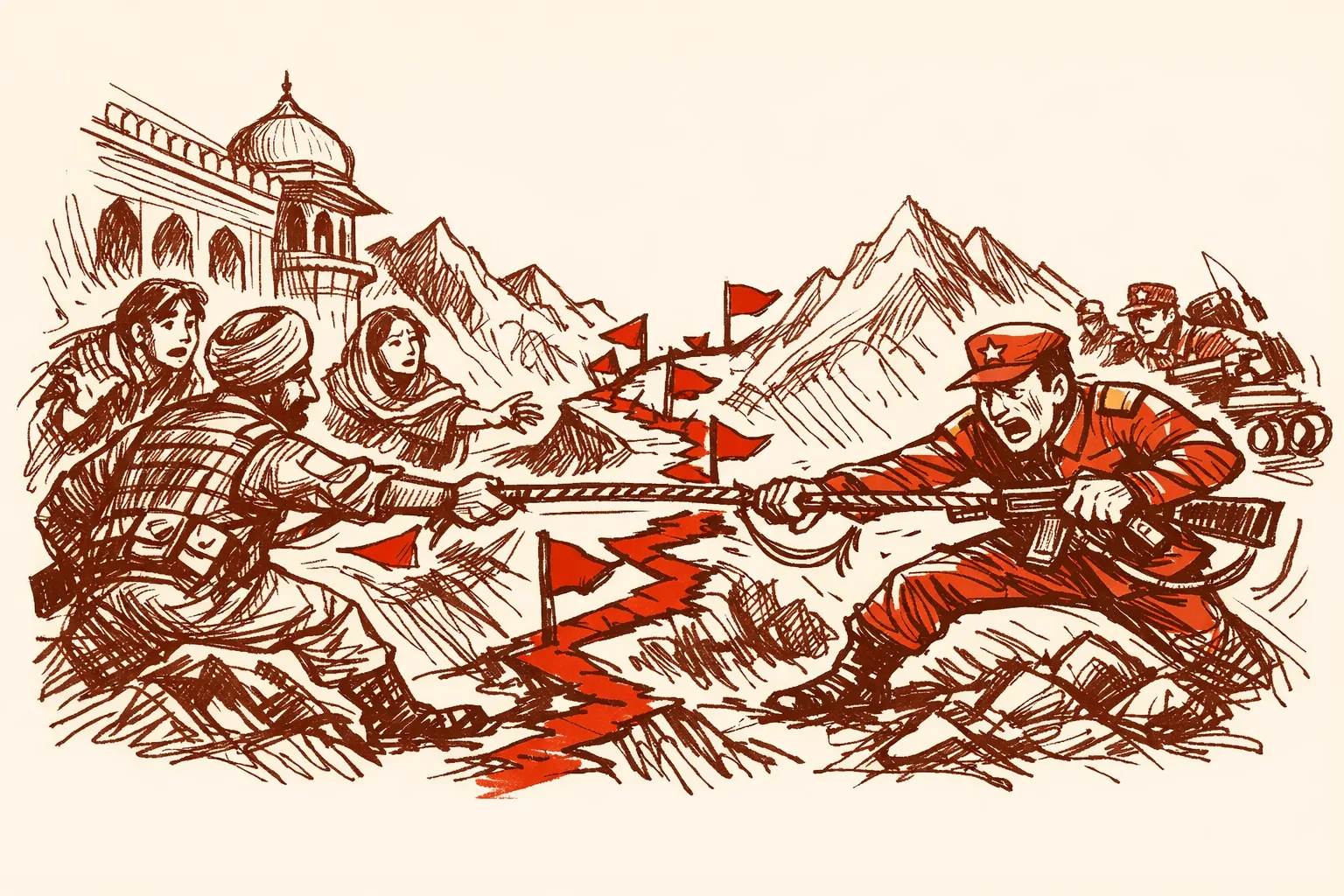
A few weeks ago, a retired Indian army chief made headlines. General M.M. Naravane, who commanded the Indian Army from 2019 to 2022 - including during the Galwan crisis - gave an interview to ThePrint. He suggested that India and China should revive a proposal from the late 1950s. The proposal: India accepts China's control of Aksai Chin. China accepts India's control of Arunachal Pradesh. Both sides shake hands and move on.
He called it a possible path to ending the dispute. He framed it as pragmatic.
Surrender dressed up as diplomacy is what it actually is. And the timing makes it worse.
India just completed a hard-fought disengagement from China after four years of standoff. Twenty Indian soldiers were killed at Galwan Valley. India spent hundreds of thousands of crore rupees on border infrastructure and force deployment. Prime Minister Modi held firm on the principle that normalcy in the relationship required resolution of the border situation. After all that, a retired army chief is suggesting India should consider formally legitimising the line China seized by force.
This piece is about why that is wrong - historically, legally, and strategically.
What the 1959 Proposal Actually Was
On November 7, 1959, Chinese Premier Zhou Enlai wrote a letter to Prime Minister Jawaharlal Nehru. Zhou proposed that the armed forces of both sides withdraw 20 kilometres from the McMahon Line in the east and from "the line up to which each side exercises actual control" in the west. This is where the phrase "Line of Actual Control" - the LAC - first appears in history.
The context matters. India had granted asylum to the Dalai Lama, which angered China. The letter came after the first fatal clash between Indian and Chinese forces at Longju in Arunachal Pradesh, and after Chinese forces ambushed an Indian police patrol at Kongka Pass in Ladakh, killing nine men.
China had already occupied Aksai Chin by building a highway through it without India's knowledge. During the 1950s, China built a 1,200-kilometre road connecting Xinjiang and western Tibet, of which 179 kilometres ran through the Aksai Chin region claimed by India. Indians did not learn of the existence of the road until 1957. Then China sent a letter proposing both sides freeze where they stood.
If India accepted, China kept Aksai Chin - territory it had quietly occupied. This is what Nehru correctly saw as incoherent and rejected. Nehru rejected the proposal, stating that an agreement about the status quo would be meaningless because the facts of the status quo were themselves disputed.
How the 1959 Line Became the LAC - And Why That Is a Problem
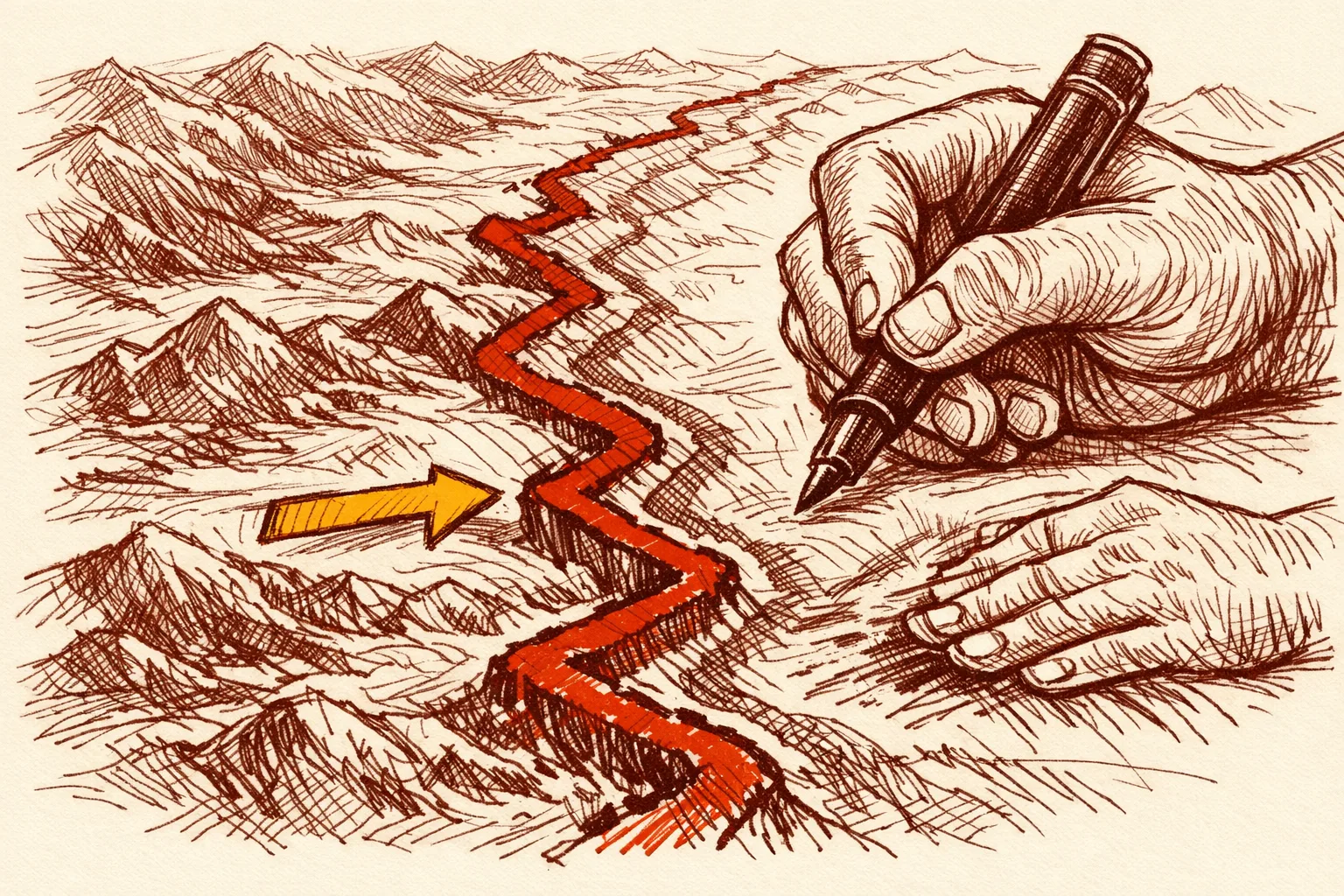
Nehru said no. Then India lost the 1962 war. And China encoded the 1959 line into reality anyway.
When China declared a unilateral ceasefire in November 1962, it announced it was withdrawing to the position it had held as of November 7, 1959. Chinese maps showed a steadily advancing line in the western sector, each of which was identified as "the line of actual control as of 7 November 1959." In other words, China kept moving the line and then labelling the new position as the historic one.
This line was forgotten for decades. Then, in 2013, China revived it during its Depsang incursion as a new border claim.
Every time India shows flexibility, China advances the line and then calls the advanced position the legitimate one.
India's Legal Position - And Why It Must Hold
"India has never accepted the so-called unilaterally defined 1959 Line of Actual Control. This position has been consistent and well-known, including to the Chinese side," said Anurag Srivastava, spokesperson for the Ministry of External Affairs.
This is not just a rhetorical stance. It has legal weight. Clause six of the 1993 Agreement on the Maintenance of Peace and Tranquility along the Line of Actual Control mentions: "The two sides agree that references to the line of actual control in this Agreement do not prejudice their respective positions on the boundary question."
India signed agreements referencing the LAC but explicitly preserved its sovereign claims in every single one. Accepting the 1959 line now would undo sixty years of consistent legal positioning at a moment when India's border infrastructure is stronger than it has ever been.
What Galwan Actually Cost India
On June 15, 2020, 20 Indian soldiers laid their lives in Eastern Ladakh. Colonel Santosh Babu, commanding officer of the 16th Bihar Regiment, was among those killed. The men were fighting without firearms, under rules of engagement designed to prevent escalation.
China initially denied any casualties. After months of denial, China later acknowledged the loss of at least five of its soldiers, although independent reports suggested Beijing lost around 35-40 soldiers in the clashes.
Then came four years of expensive standoff. India and China each deployed around 50,000 additional soldiers on the 832-kilometre LAC in Ladakh since the summer of 2020. Every extra soldier at altitude costs money - all of it spending that happened because China chose to advance its 1959 claim line by force.
To now suggest India should accept that claim line as the starting point for a settlement is to say those 20 deaths and all that spending achieved nothing.
The Disengagement of October Was Not a Surrender - But It Must Not Become One
The Modi government's handling of the post-Galwan crisis deserves credit. India held firm on the principle that the broader relationship could not normalise until the border situation was resolved. China wanted to separate the two issues. India refused. For four years, India refused.
On October 21, the two countries agreed on patrolling arrangements leading to disengagement at the Depsang Bulge and the Charding-Ninglung Nala junction near Demchok - the last two of six areas blockaded by China's PLA in 2020. China withdrew its forces from the remaining places where they had crossed the border, and both sides resumed patrolling in the same areas as before the incursions.
That is a genuine win. India restored its patrolling rights. It did not cede territory. It did not accept the 1959 claim line. Foreign Secretary Vikram Misri was clear in Parliament that the objective was to restore what existed before 2020 - not to create a new baseline.
General Naravane's suggestion, if followed, would take that win and throw it away. It would convert a restored status quo into a permanent concession.
India Has Leverage. It Should Use It.
The argument for reviving the 1959 proposal assumes India is negotiating from weakness. That assumption is wrong.
India is building the world's highest tunnel in Ladakh. The Shinkun La tunnel is being built by the Border Roads Organisation at a cost of Rs 1,681 crore and will ensure swift movement of troops and heavy weapon systems. The Border Roads Organisation's capital budget was Rs 5,000 crore in 2023-24, a 43 per cent rise from the previous year, and reached Rs 6,500 crore for 2024-25. The Sela Tunnel in Arunachal Pradesh is open.
China's own foreign ministry spokesperson complained that India's infrastructure moves "only complicate the boundary question." When India builds, China objects. That means the infrastructure is working. India should build faster, not offer concessions.
Retired Lieutenant General H.S. Panag has argued that China's 2020 incursions were specifically about protecting access routes into Aksai Chin. The Depsang Plains allow a division-sized Indian force to threaten the heart of Aksai Chin from the south. China blocked that access. India's infrastructure push is precisely what makes Aksai Chin more difficult for China to hold permanently. That is leverage. That is bargaining power.
The Nehru Mistake Must Not Be Repeated
Nehru signed the Panchsheel Agreement with China in April 1954, recognising Chinese sovereignty over Tibet and effectively abandoning India's traditional buffer. He assumed good faith. China assumed Aksai Chin.
Indian MPs were livid when Nehru described Aksai Chin as a "barren uninhabited region without a vestige of grass," while China was building a strategic military highway through it. That highway - connecting Xinjiang to Tibet - is why Aksai Chin is strategically vital to China.
Then came the 1962 war. India's military was unprepared. Defence Minister V.K. Krishna Menon suppressed warnings from senior generals. The result: 1,383 Indian soldiers killed, nearly 4,000 taken prisoner, and the permanent loss of Aksai Chin to Chinese occupation.
General Naravane is not Nehru. His suggestion comes from a genuine desire to resolve the dispute. But the lesson of 1959 to 1962 is not that India should have accepted Zhou's offer earlier. The lesson is that territorial concessions made under pressure do not end Chinese ambition. They invite more of it.
What Has Already Been Tried
India has attempted multiple rounds of boundary diplomacy since 1962. The 1993 LAC Agreement was the first bilateral document to use the phrase "Line of Actual Control." The 1996 agreement added confidence-building measures including a ban on firearms within two kilometres of the LAC. A 2005 agreement added political parameters for a final settlement.
None of these solved the dispute. Each agreement was followed by Chinese incursions. Depsang in 2013. Doklam in 2017. Galwan in 2020. Diplomatic agreements buy time but do not change China's territorial objectives.
What has worked is posture and infrastructure. India's post-2020 military deployment, combined with its border road network, forced China back to the October patrolling agreement.
How Other Countries Have Handled Territorial Disputes
There is no perfect international model for the India-China border. But three cases offer useful lessons.
Japan and the Senkaku Islands. Japan administers the Senkaku Islands in the East China Sea. China claims them. Japan's policy is to never acknowledge the dispute as open for negotiation, even as it manages incidents at sea. Tokyo builds coast guard capacity, maintains administrative control, and refuses to enter any framework that treats the islands as contested. Japan did not offer China a compromise and call it pragmatism.
Taiwan. Taiwan has faced continuous Chinese pressure since 1949. It has not accepted Beijing's framework. It has built the most capable military it can afford, deepened partnerships with the United States and others, and maintained its own institutions. Strategic ambiguity backed by real capability is why Taiwan exists.
Vietnam and the South China Sea. Vietnam lost territory to China in the 1988 Johnson South Reef clash. It did not accept Chinese sovereignty over disputed reefs. It built its own outposts and internationalised the dispute through ASEAN and international law. Vietnam built up its military infrastructure and used that posture as leverage, not as a concession.
The common lesson: territorial disputes with China are not resolved by accepting Chinese frameworks. They are managed through credible posture and consistent refusal to legitimise seizures.
Who Is Accountable
The Ministry of External Affairs and the National Security Council Secretariat are responsible for India's border negotiation positions. The Ministry of Defence controls the Border Roads Organisation budget. The Cabinet Committee on Security approves major infrastructure projects like the Shinkun La tunnel.
What needs to be watched is whether the diplomatic reset following the October disengagement produces any softening of India's stated position on the 1959 claim line. The MEA's position since 2020 has been clear and consistent. That clarity must not erode as trade talks and diplomatic normalisation resume.
General Naravane has retired. He speaks for himself, not for the government. But the fact that his suggestion generated significant media coverage - and not enough pushback - is itself a problem.
What Would It Cost
Accepting the 1959 proposal would legitimise the loss of approximately 38,000 square kilometres of territory that India claims as part of Ladakh. Aksai Chin is the size of Switzerland. It sits on the only year-round passable route between China's Xinjiang and Tibet regions - which is exactly why China is unlikely to give it up regardless of what India offers in return.
India spent $86.1 billion on defence in 2023 - a 42 per cent increase from 2015, much of it directly attributable to the northern border challenge. China's PLA spends three times what India's armed forces spend overall. The response to that gap is continued investment in border infrastructure and indigenous defence production - which the Modi government has correctly prioritised.
What Needs to Happen
India needs to hold three things simultaneously.
First, the MEA's stated position on the 1959 claim line must remain unchanged: it is unilaterally defined, India has never accepted it, and India never will. Silence during the post-disengagement normalisation phase will be interpreted as softening.
Second, border infrastructure must accelerate. The Shinkun La tunnel must complete on schedule. The Sela Tunnel must be fully operationalised. China's displeasure with India's infrastructure push is a sign that it is strategically effective.
Third, India must internationalise its position more aggressively. The 1959 claim line has no basis in international law. India's legal position should be articulated in every multilateral forum. India is the world's largest democracy and most populous country. It does not need to accept a 1959 Chinese letter as the definition of its own border.
The diplomatic reset with China is not wrong in itself. But engagement must not come at the price of sovereignty. The October disengagement showed that firm positions produce results. Offering concessions would teach China the opposite lesson.