The Proposal That Should Not Be on the Table
Picture a map of India's northeast. Arunachal Pradesh is the size of Austria. It has 1.4 million Indian citizens. It has Buddhist monasteries older than many nations. And it has a tunnel - the Sela Tunnel - that Prime Minister Modi just opened to give Indian soldiers all-weather access to the border.
Now picture someone proposing to hand that ground advantage to a country that sent soldiers to kill 20 Indians in Galwan Valley just a few years ago.
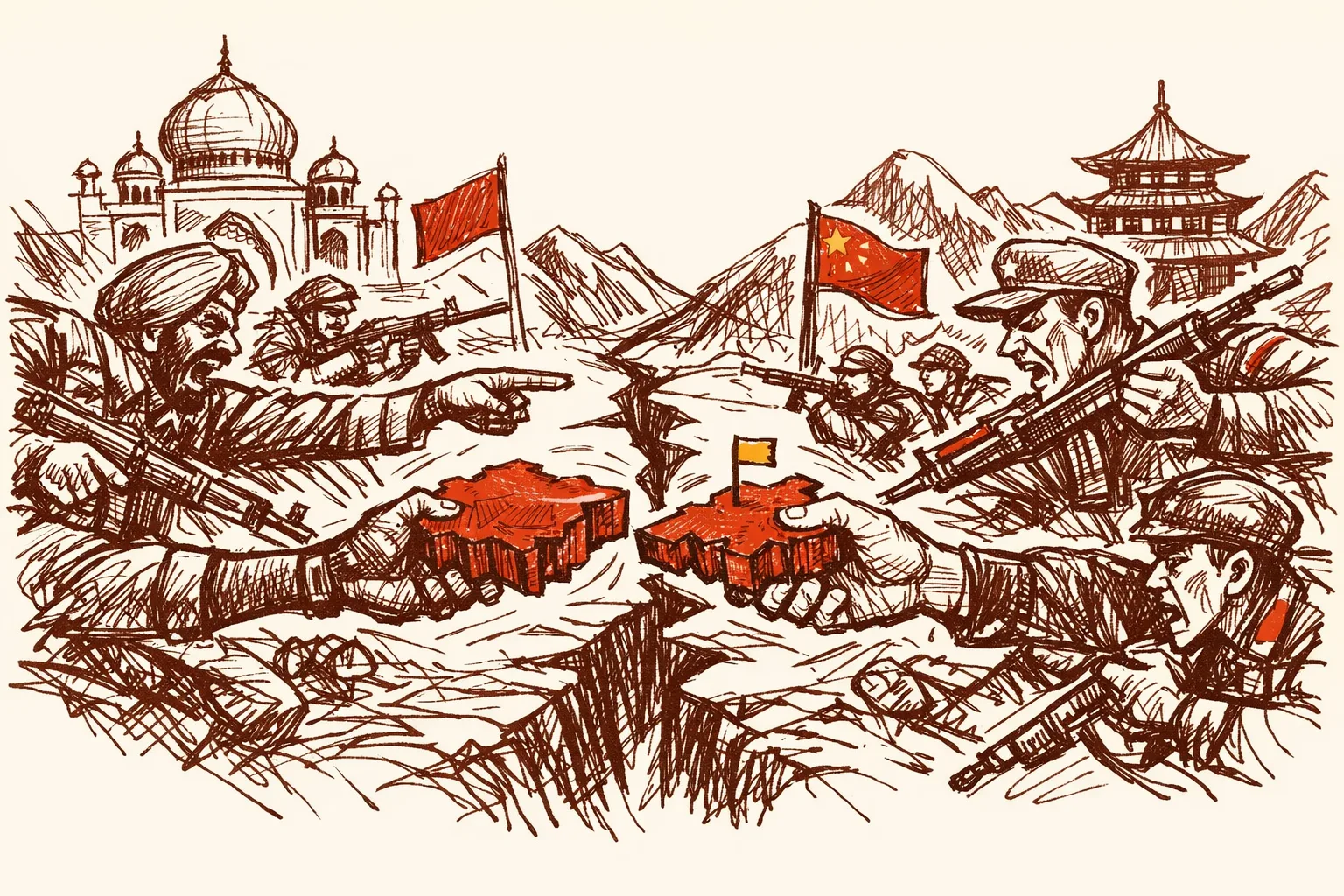
That is what retired General Manoj Naravane, former Army chief, suggested in a recent interview with ThePrint. He said the solution to the border standoff lies in reviving a proposal shared by China in the late 1950s - one that would have New Delhi give up claims on Aksai Chin and Beijing give up claims over Arunachal Pradesh.
The general is a decorated soldier and deserves respect. But this idea is wrong. Not because border talks are bad. Because reviving this specific offer, right now, sends precisely the wrong message to Beijing.
What the Offer Actually Was
During border negotiations in the 1950s, Chinese Premier Zhou Enlai proposed a "package deal": China would recognize India's control over the eastern sector (Arunachal Pradesh) if India conceded the western sector (Aksai Chin) to China.
For Beijing, Aksai Chin was strategically far more important than Arunachal. The road built in the early 1950s linked the two newly-acquired provinces - Xinjiang and Tibet. That road is still the main highway connecting Chinese forces to western Tibet. Aksai Chin is a military lifeline to China, not desert wasteland.
Public opinion in India would not countenance such a deal in 1960. Prime Minister Nehru rejected it. Then the 1962 war happened. The deal was offered again by Deng to Indian Prime Minister Rajiv Gandhi in 1988. Deng wanted India to make minor territorial concessions in the eastern sector in exchange for Beijing's acceptance of the McMahon Line. Minor Chinese territorial concessions to India in the western sector would also be offered. Gandhi did not act on it either.
The offer was made three times. Each time, India said no. Each time, China's position on the ground did not change. China kept Aksai Chin. Its claims on Arunachal kept hardening. The offer was never a genuine gesture of peace - it was a request for India to legitimize what China had already taken.
What Changed After Galwan
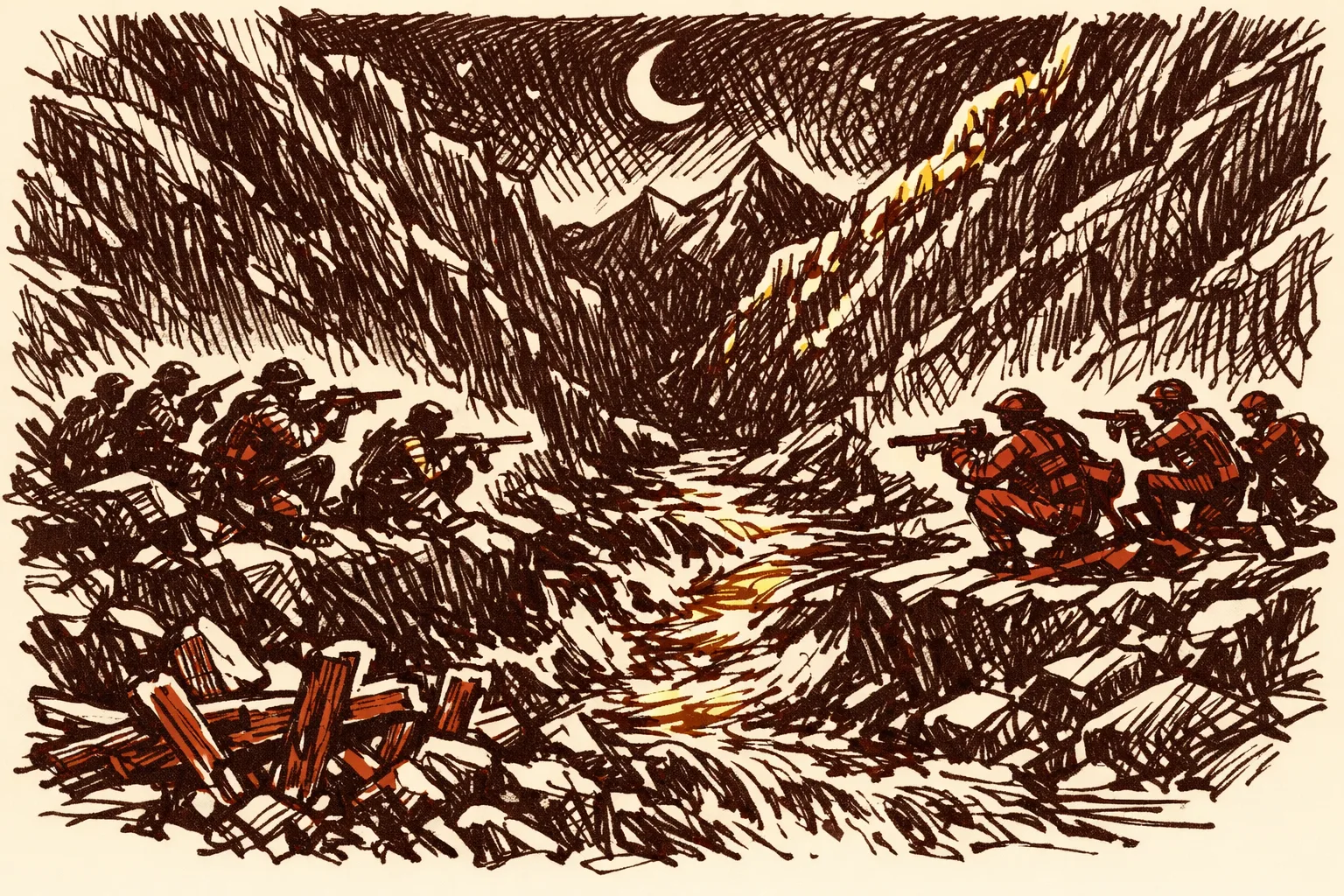
Beginning in May 2020, Chinese and Indian troops engaged in aggressive face-offs and skirmishes at locations along the border, including near the disputed Pangong Lake in Ladakh and near the border between Sikkim and Tibet. In late May, Chinese forces objected to Indian road construction in the Galwan river valley.
At least 20 Indian soldiers, including a commanding officer, along with subedars, havildars and sepoys, were killed in action following a skirmish with Chinese troops. China later acknowledged the loss of at least five of its soldiers, although independent reports suggested Beijing lost around 35-40 soldiers in the clashes.
India's Ministry of External Affairs said the incident happened "as a result of an attempt by the Chinese side to unilaterally change the status quo" in the Galwan Valley.
A country that tests its neighbor with violence and then waits to see what happens next is not one negotiating in good faith.
What Has Already Been Tried
India has tried the diplomatic route multiple times. In 1993, India and China agreed to respect the Line of Actual Control in a bilateral agreement - without actually demarcating the line itself. That agreement held for a while. Then Doklam happened. Then Galwan happened.
Each round of talks produced confidence-building measures. None produced a settled border. Zhou's 1960 proposal was made, in the words of a retired PLA general, "when China was poor, weak, and isolated," while Deng's 1980 offer came when China was looking to reduce its conflicts and become a trading power. China is now the world's second-largest economy with a military budget that dwarfs India's. The strategic calculus has changed completely.
This deal was firmly rejected by Prime Minister Nehru because he was concerned that any concession, even in the west, would only invite further aggression from Beijing all across the frontier. That concern looks prescient today. China did not stop at Aksai Chin. It now claims 90,000 square kilometres of Arunachal as well.
Why Beijing's Claim on Arunachal Is Getting Worse, Not Better
If China genuinely wanted the old package deal, you would expect its position on Arunachal to stay frozen. Instead, it is escalating.
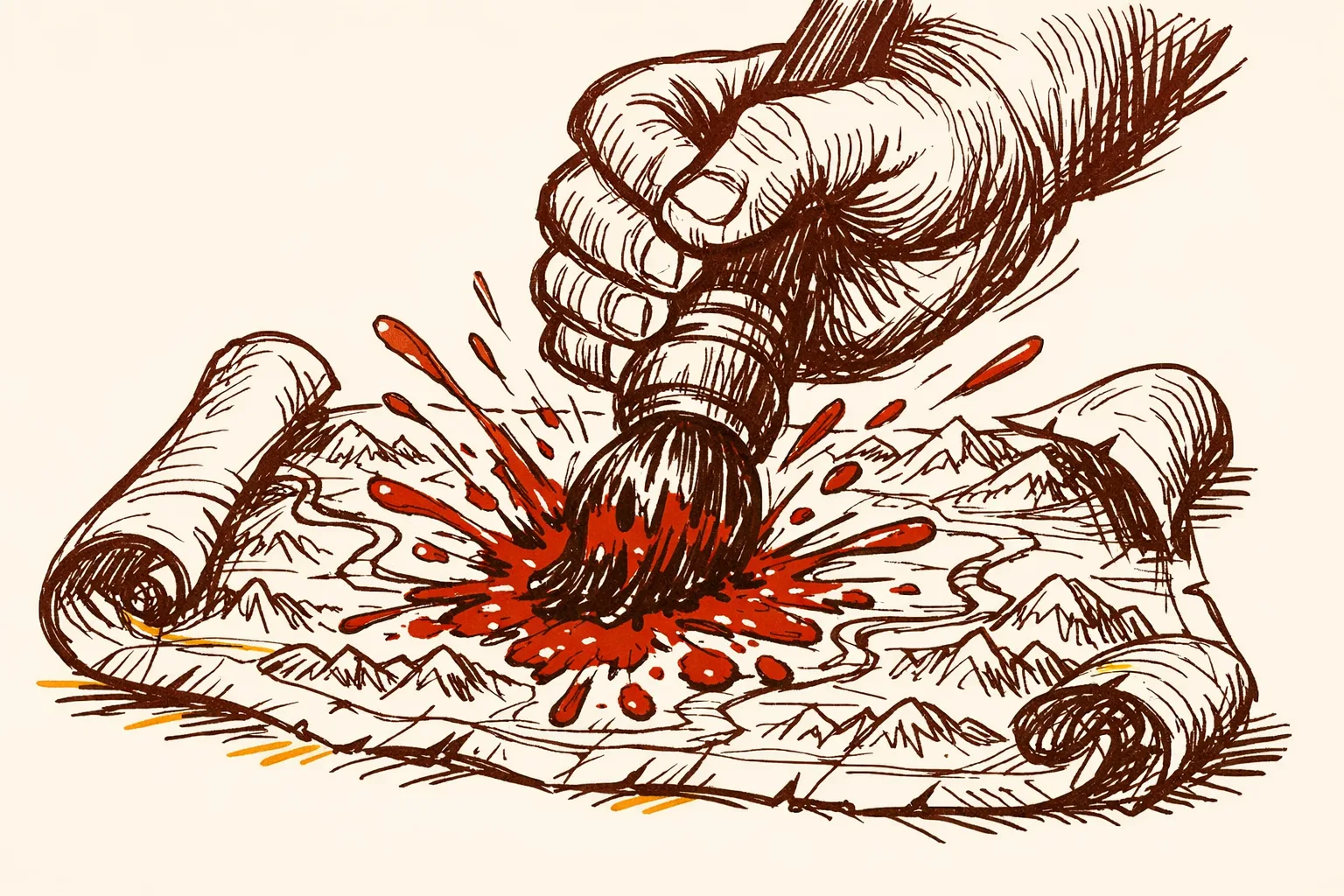
China first issued names for six Arunachal locations in April 2017, followed by lists of 15 in December 2021, 11 in April 2023, 30 in March, and 27 in May. Six separate batches of fake place names in less than a decade. Scholars describe China's approach as "cartographic aggression" - the incremental normalisation of territorial claims through maps and administrative lists, a strategy also deployed in the South China Sea.
China's decision to release these renaming lists is closely tied to India's political and infrastructural activities in the region. Each batch of names has typically followed a high-profile Indian action in Arunachal Pradesh. Modi opens the Sela Tunnel - a new list follows. Modi visits Arunachal - another list appears.
A country that behaves this way has no intention of recognizing Arunachal as Indian. The US Department of Defense's annual report to Congress notes that China's concept of "core interests" has expanded to now include Arunachal Pradesh. Once Beijing labels something a core interest, it does not give it back.
Tawang sits at a height that gives a direct line of sight into the Siliguri Corridor - the strip of land connecting mainland India to its seven northeastern states. Giving up that ground is not a territorial adjustment. It is a strategic concession that weakens India's entire northeast.
The Precedent Problem
Reviving the swap offer now hands Beijing the wrong lesson entirely. China used force at Galwan. India held its ground, took casualties, and eventually secured a partial patrol agreement. If India now opens formal talks about giving China what it wanted - recognition of Aksai Chin - Beijing learns that attacking Indian soldiers produces results.
A Princeton journal analysis noted that when China senses a negative shift in its bargaining position, it is prone to use force to consolidate its position until its borders can be stabilised again. India going back to the swap framework tells Beijing its force worked exactly as intended.
Justice A.G. Noorani summarized India's stance: "If a thief breaks into your house and steals your coat and your wallet, you don't say to him that he can have the coat if he returns the wallet. You expect him to return all that he has stolen from you." That logic is even stronger after Galwan than it was in 1960.
How Other Countries Have Handled This
Russia and China - a warning, not a model. China settled its border with Russia through the 2004 Complementary Agreement. The last unresolved territorial issue between the two countries was settled by the 2004 agreement, under which Russia transferred to China a part of Abagaitu Islet, the entire Yinlong Island, about half of Bolshoy Ussuriysky Island, and adjacent river islets. Supporters of the India-China swap point to this as proof deals are possible.
But look at what happened next. In 2023, China released a new map that depicted both Aksai Chin and Arunachal Pradesh as Chinese territory - alongside Taiwan and maritime zones claimed by Vietnam, the Philippines, and Malaysia. Even after a border deal with Russia, China turned around and put Russian-held islands on a Chinese map the following year. The pattern is territorial creep, not resolution.
Vietnam - standing firm pays off. Vietnam has had armed conflict with China over border and maritime claims. It did not settle by accepting China's terms. It built up its own position, sought international backing, and kept China from consolidating gains. The lesson: holding ground and building position buys better outcomes than accepting China's framing.
What India Is Already Doing Right
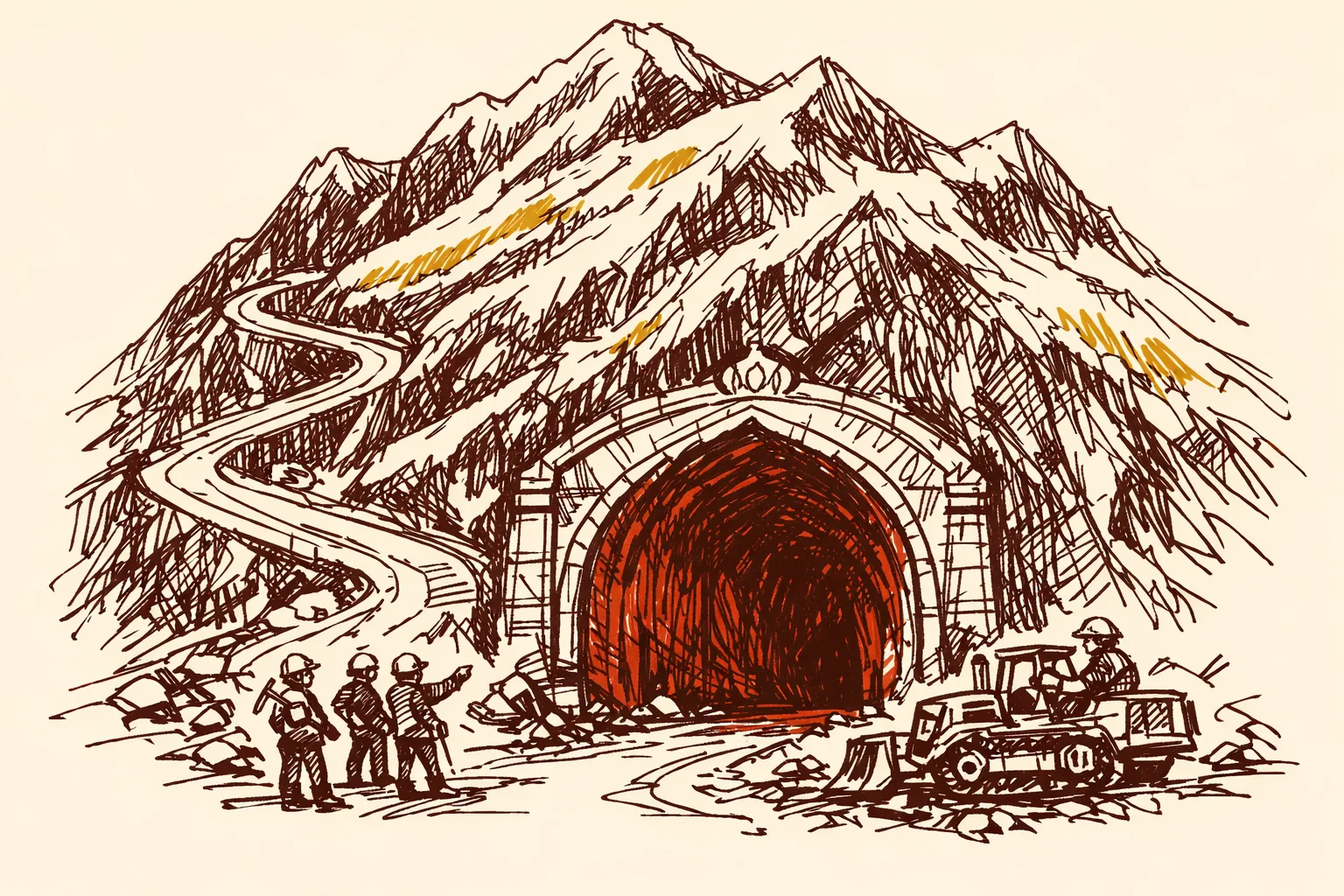
The Sela Tunnel - built at a total cost of Rs 825 crore by the Border Roads Organisation at an altitude of 13,000 feet - provides all-weather connectivity to Tawang, boosting the preparedness of the armed forces and the socio-economic development of the border region.
Since 2020, the Border Roads Organisation has completed over 450 projects worth Rs 16,000 crore. That is the right response to Chinese aggression. Build roads. Build tunnels. Make Arunachal Pradesh harder to take.
Under the budget, India intends to repopulate, upgrade, or establish 500 villages near the zero-line border along the LAC from Ladakh to Arunachal Pradesh. Populated border villages are harder to absorb quietly.
Who Is Accountable
Border policy sits with the Ministry of External Affairs and the Ministry of Defence. The Border Roads Organisation, under the Ministry of Defence, is responsible for road and tunnel construction. The Vibrant Villages Programme is a multi-ministry effort coordinated through the Home Ministry. The National Security Adviser sets the strategic framework for China engagement. Parliamentary oversight through the Standing Committee on External Affairs has historically been weak on border file specifics - nobody gets fired for that gap, and it should be addressed.
What Would It Cost
The government informed Parliament that 2,094 kilometres of roads were constructed along the border at a cost of around $1.8 billion over a five-year period. Three phases of India-China border roads have been approved covering 177 roads of over 10,023 km total length.
The cost of the swap deal itself is not financial. It is strategic. Arunachal Pradesh's 90,000 square kilometres sits above the Brahmaputra plains. Losing that high ground changes India's military posture for a generation.
What Needs to Happen
India should negotiate with China. Dialogue is not the same as accepting a framework designed to legitimize Chinese aggression.
Three things must be true before any border settlement discussion can be serious. First, China must fully disengage from all positions it occupied after April 2020. Second, China must stop the renaming campaign in Arunachal Pradesh. You cannot negotiate a boundary while simultaneously publishing fake names for the territory you claim. Third, any settlement framework must be sector-by-sector and evidence-based - not a package deal that bundles unrelated disputes to force India to trade what it holds for what it has already lost.
General Naravane is right that India needs more China experts. He rightly noted that more China experts are needed in the country and that much of India's knowledge about China is dependent on western literature. India should invest heavily in Mandarin-language analysts, PLA-watchers, and China-focused think tanks. Understanding Beijing's thinking is not the same as accepting Beijing's offer.
FAQs
What is the India-China border swap deal?
The swap deal is a proposal first made by Chinese Premier Zhou Enlai in 1960. China would formally recognize Arunachal Pradesh as Indian. India would formally recognize Aksai Chin as Chinese. It has been offered and rejected multiple times. Former Army Chief Naravane recently suggested India should revisit it.
Why did India reject the swap deal in 1960?
The Indian side regarded the offer as unfair. To the Indian leadership, Arunachal (then NEFA) was uncontested Indian territory, and the Chinese offer to include it in a swap was merely to justify their territorial grab in the western sector.
Has China hardened its position on Arunachal Pradesh since the original offer?
Yes, significantly. With the increase in its military capabilities over time, China has hardened its claim on Arunachal Pradesh through various means, including routinely objecting to visits by Indian leaders and the Dalai Lama to Arunachal Pradesh. China has also released six batches of fake place names for Arunachal locations since 2017.
What did India do after Galwan to strengthen its border position?
In the three years after Galwan, the Border Roads Organisation completed a record 330 infrastructure projects constructed at a cost of Rs 8,737 crore. The Sela Tunnel, opened by PM Modi, now gives troops all-weather access to Tawang for the first time.
Does accepting the swap deal make economic sense for India?
No. Arunachal Pradesh controls terrain that overlooks the Siliguri Corridor - the narrow strip linking mainland India to its seven northeastern states. Any future Indian weakness in that corridor would threaten the economic integration of the entire northeast. The strategic cost far exceeds any diplomatic benefit.
What is China's real motivation for pressing claims on Arunachal Pradesh?
Author and Tibetologist Claude Arpi points out that China "has not always claimed" Arunachal and that its assertion of claims here is to gain leverage over India in a future border settlement. The claim is a bargaining chip, not a genuine historical grievance. That makes it more dangerous to validate, not less.
Can the border dispute ever be resolved?
Yes. But resolution must come from strength, not concession. China has resolved boundary disputes with neighboring countries such as Myanmar, Nepal, and Pakistan. India too has resolved its share of boundary disputes, most notably through the exchange of enclaves with Bangladesh. A genuine, sector-by-sector negotiation grounded in ground realities - not a package deal that rewards aggression - is the only framework worth pursuing.