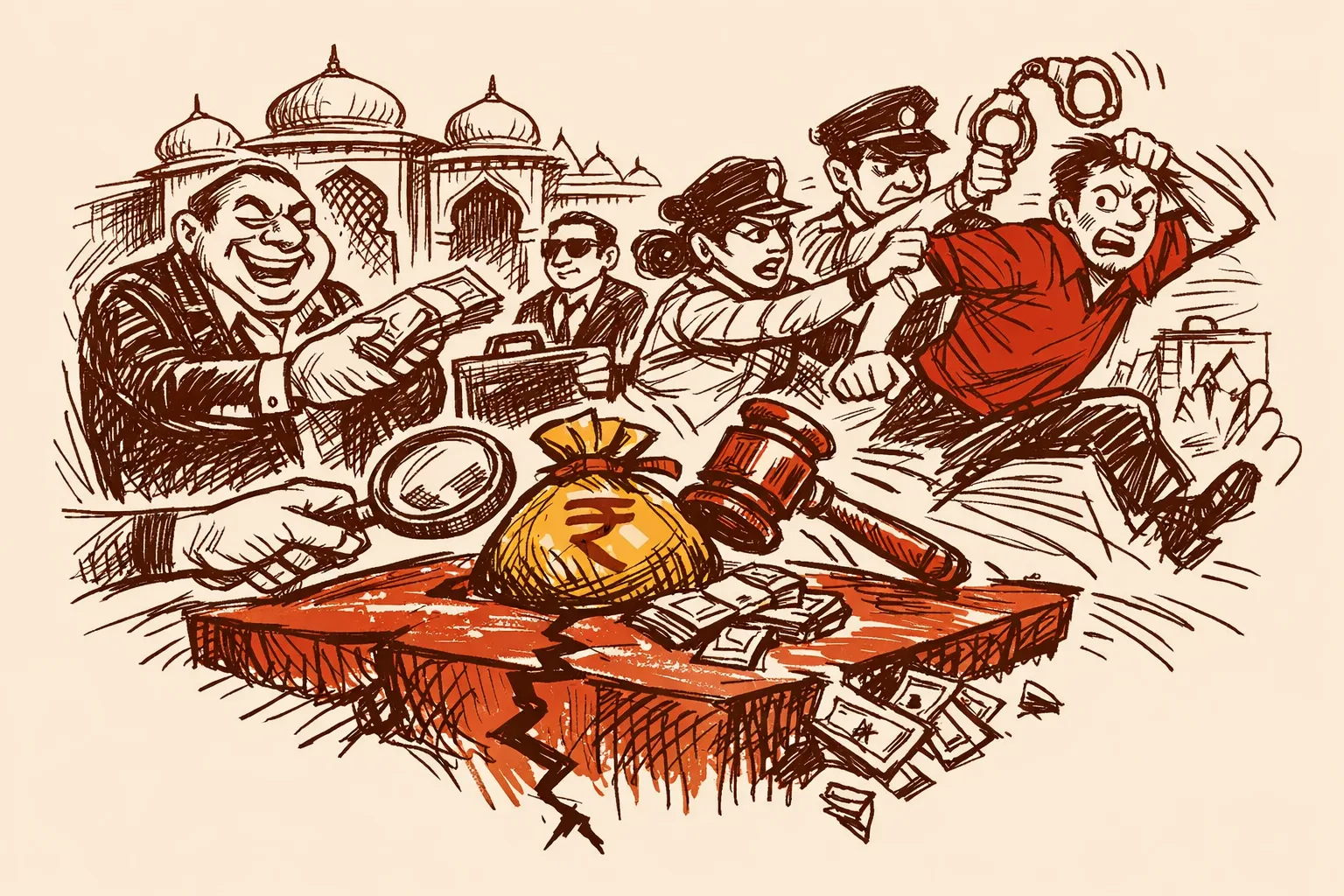
The Bribe You Already Paid Today
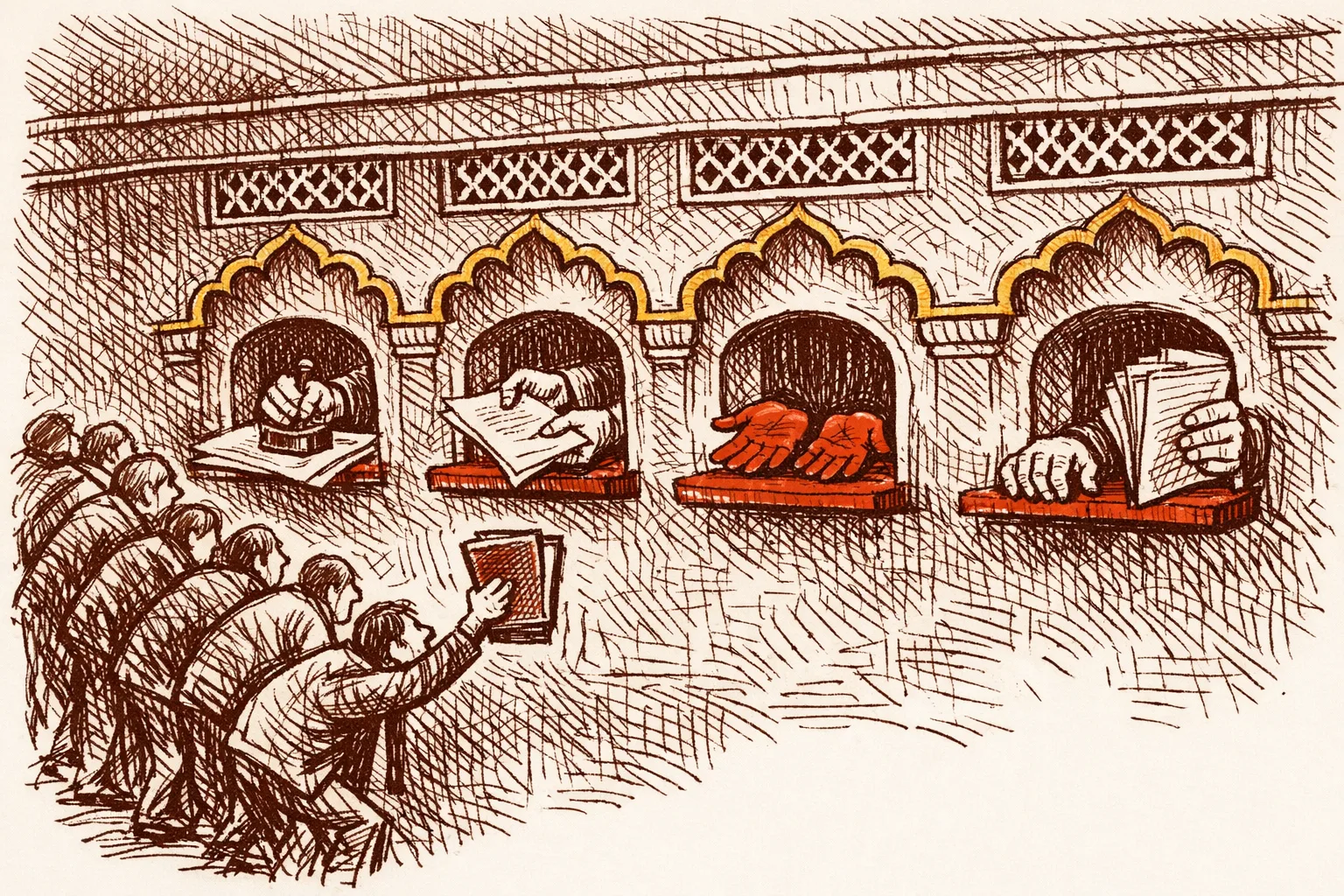
You needed a document stamped. You waited. The officer looked at you a certain way. You understood. You paid. The document was stamped.
Growing up in Chamba, I saw this script play out constantly. Not in dramatic scenes of suitcases and politicians. In small windows. In ordinary offices. The gap between what you were owed and what it actually took to get it was real, and it cost something.
India's economy loses roughly half a trillion US dollars to corruption since independence, according to a World Bank estimate cited by the Global Nonviolent Action Database. Schools, hospitals, and highways were never built.
So when a Western publication declares that India has "stopped pretending corruption bothers us," the question worth asking is: has India given up, or has it changed the battlefield?
Where India Stands Today
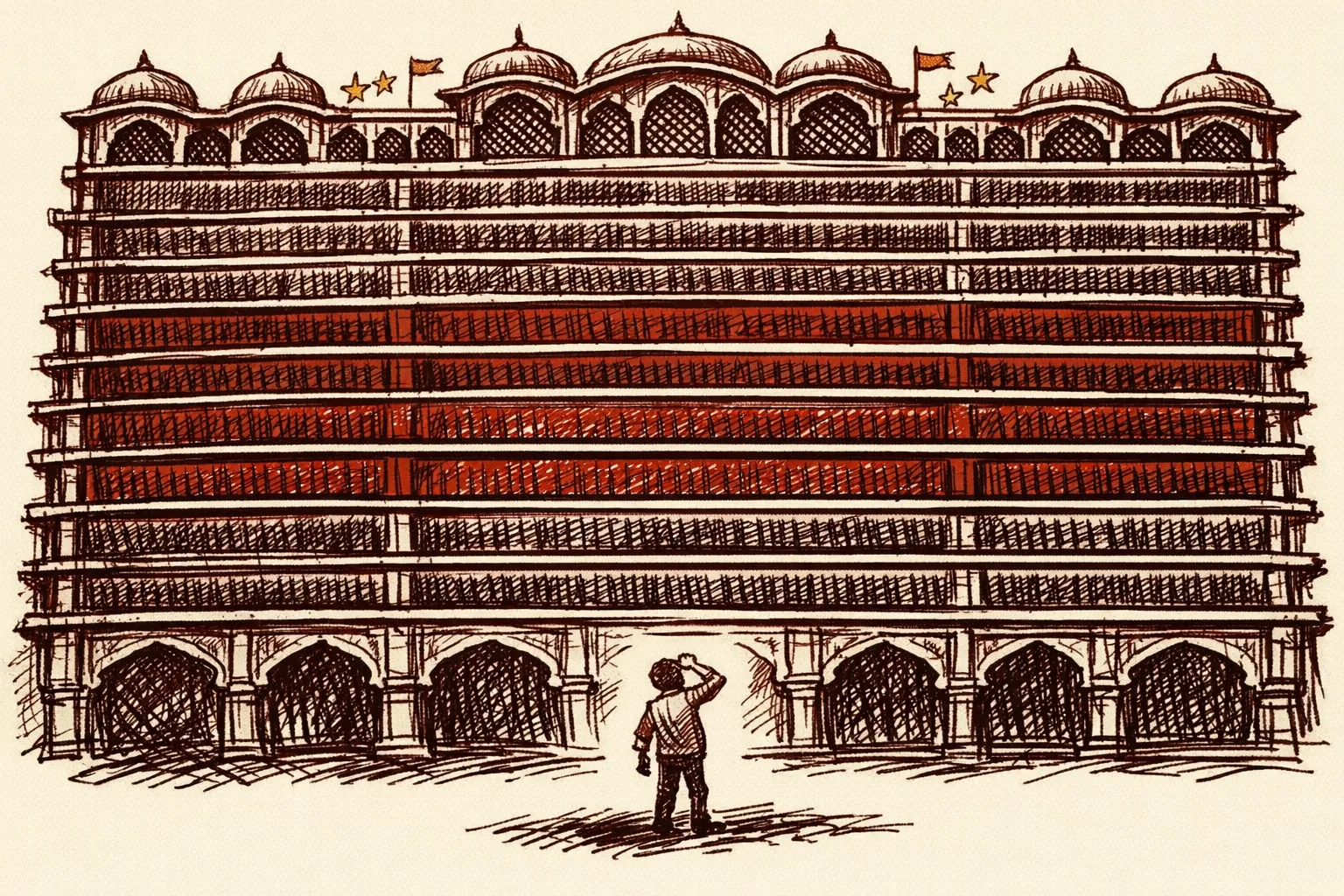
According to Transparency International's Corruption Perceptions Index for the most recent reporting year, India ranks 91st out of 182 countries with a score of 39 out of 100. A score below 50 means the public sector is seen as significantly corrupt. India sits below the global average of 42.
That ranking has moved only marginally across years. The number has not collapsed. It has not surged. India is grinding forward, while others race.
The ranking measures perception, not reality. It surveys experts and business leaders. It does not capture the 523 million bank accounts opened under the Jan Dhan scheme, or the ghost beneficiaries removed from welfare rolls, or the fact that the IMF called India's Direct Benefit Transfer system a "logistical marvel." Perception lags behind delivery.
The Scale of What Was Broken
The Congress-led UPA government of the 2000s produced a catalogue of scandals. The 2G spectrum case involved alleged allocation of telecom licenses at below-market prices, with the Comptroller and Auditor General estimating irregularities worth Rs 1.76 lakh crore. The Commonwealth Games scandal of 2010 saw inflated contracts, diverted funds, and international embarrassment.
The Bofors scandal of the 1980s implicated the Congress government in kickbacks from Swedish arms manufacturer Bofors and cost Prime Minister Rajiv Gandhi's party a general election. The pattern was not a one-off. It was a system. And it ran for decades.
What Has Already Been Tried
Right to Information Act (2005)
India's Right to Information Act gave every citizen the legal right to demand government documents within 30 days. Over 3 million RTI applications are filed annually, according to the Bengaluru Policy Action Council. The Commonwealth Human Rights Initiative found that over 75% of RTI users felt the law improved their access to information.
RTI exposed the 2G scam. It uncovered the Adarsh Housing Society fraud in Mumbai. But compliance has eroded. Down To Earth magazine found that RTI now faces "the highest-ever rate of rejections" and that activists warn the law is becoming "almost defunct." RTI created transparency as a concept. Enforcement never followed.
Anna Hazare and the Lokpal Movement (2011)
In April 2011, activist Anna Hazare began a hunger strike at Jantar Mantar demanding a strong independent anti-corruption ombudsman. It became one of the largest civic uprisings in independent India. Candle-lit marches spread across the country.
Parliament passed the Lokpal and Lokayuktas Act in 2013. But the law was weaker than activists demanded. India's first Lokpal was not appointed until March 2019 - more than five years after the law came into force. Several states still have not set up effective state-level anti-corruption bodies. The Lokpal exists. Nobody is losing sleep over it yet.
Direct Benefit Transfer and the JAM Trinity
The real shift did not come from street protests. It came from plumbing.
The Direct Benefit Transfer system, launched in 2013 and massively expanded after 2014, sends money directly into verified bank accounts instead of through layers of officials. It is built on three pillars: Jan Dhan bank accounts, Aadhaar biometric identity numbers, and mobile connectivity - the JAM Trinity.
Cumulative savings from DBT reached approximately Rs 3.48 lakh crore through leakage prevention, according to government data. Food subsidies alone contributed Rs 1.85 lakh crore of those savings.
In practice: a ghost beneficiary cannot collect a pension because there is no biometric match. A cooking gas subsidy goes directly to the person who needs it, not the dealer who used to skim it. Timely payment of wages under the rural employment guarantee scheme rose from 50% to over 98% after Aadhaar-based payments were introduced. The World Bank noted that DBT delivered food or cash support to 85% of rural households and 69% of urban households.
DBT fixes delivery corruption - the kind ordinary Indians faced every single day. The Aadhaar-backed system is powerful against ghost beneficiaries and identity fraud, though quantity fraud at the last mile remains a challenge.
How Other Countries Fixed This
Singapore - One Agency, Full Authority
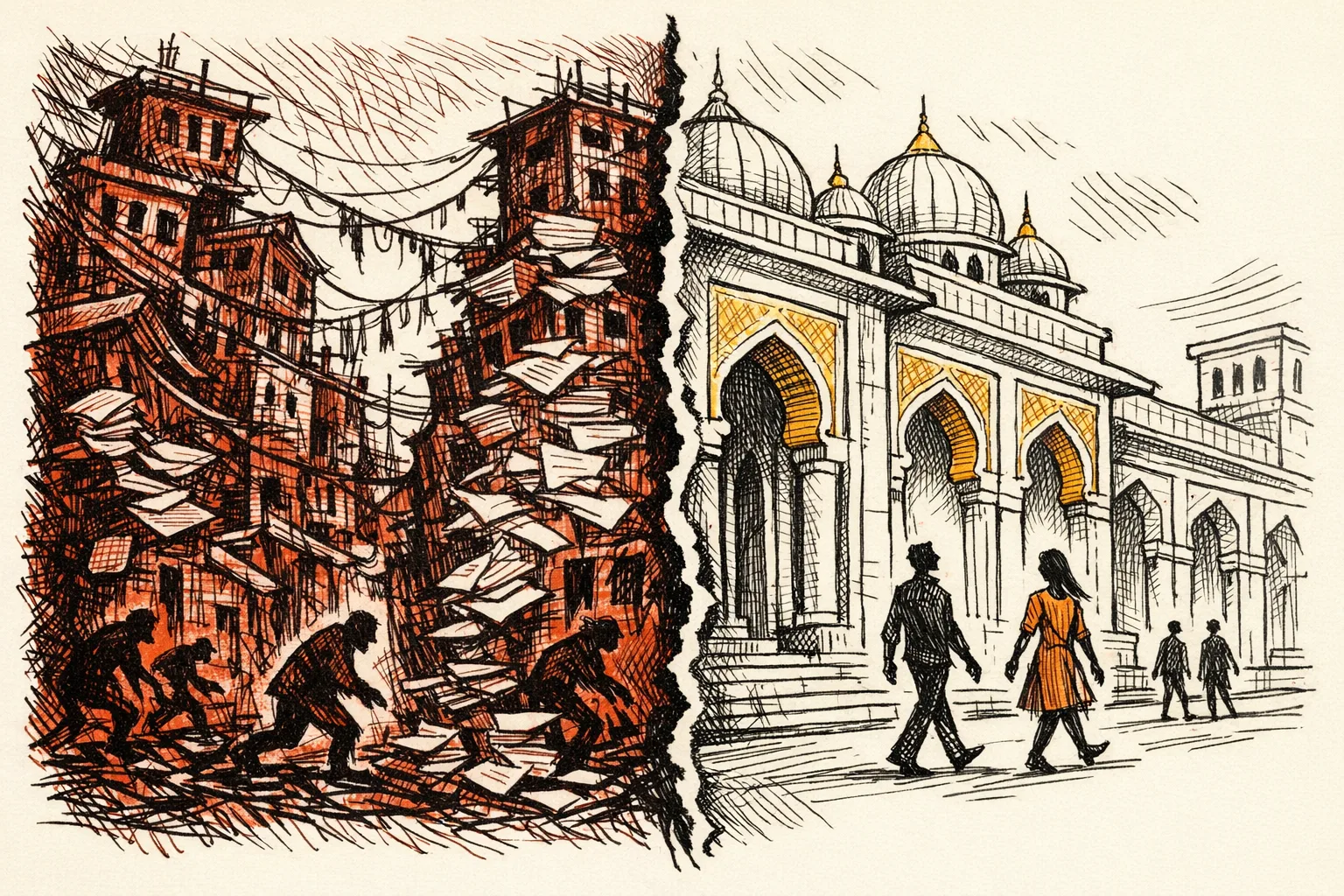
Singapore was a corrupt city in the 1950s. It is now ranked third least corrupt in the world with a score of 84, according to Transparency International. Singapore's Corrupt Practices Investigation Bureau (CPIB) operates under the Prime Minister's Office and achieved a 97% conviction rate in the most recent reporting year. If the Prime Minister refuses to allow an investigation, the bureau director can go directly to the President. There is no political shield.
The Prevention of Corruption Act allows confiscation of all ill-gotten gains on top of prison sentences. Officials who take bribes lose the money, their career, and their freedom.
The lesson for India is not to copy Singapore's small size. The lesson is the mechanism: one bureau with real power, no political cover, and immediate consequences.
Who Is Accountable
India's Central Vigilance Commission handles corruption in central government ministries. The Enforcement Directorate handles money laundering. The CBI handles criminal cases. The Lokpal handles complaints against public servants.
Cases move through multiple agencies. Convictions take years. When punishment is slow, it is not punishment. It is paperwork.
What Would It Cost
The DBT system has already paid for itself. Government data puts cumulative savings at Rs 3.48 lakh crore.
Strengthening the Lokpal - adding staff, creating fast-track courts, and protecting whistleblowers - would require additional budget. Based on comparable law enforcement budgets, a serious anti-corruption enforcement upgrade would likely require a few thousand crore rupees annually - a small number against the lakhs of crore lost to corruption each year.
The math is simple. The political will is the variable.
What Needs to Happen
India has already built the digital infrastructure to eliminate delivery corruption at scale. The task now is accountability reform.
First, the Lokpal needs teeth. Cases must have deadlines. Fast-track courts for corruption cases should be standard everywhere.
Second, public procurement must be digitized end to end. The government's GeM portal is a strong start. Mandatory use across all levels of government - not just central ministries - would close a major loophole.
Third, political finance must be transparent. Every donation above a threshold must be publicly disclosed in real time. No exceptions.