The Chai Stall That Changed Finance
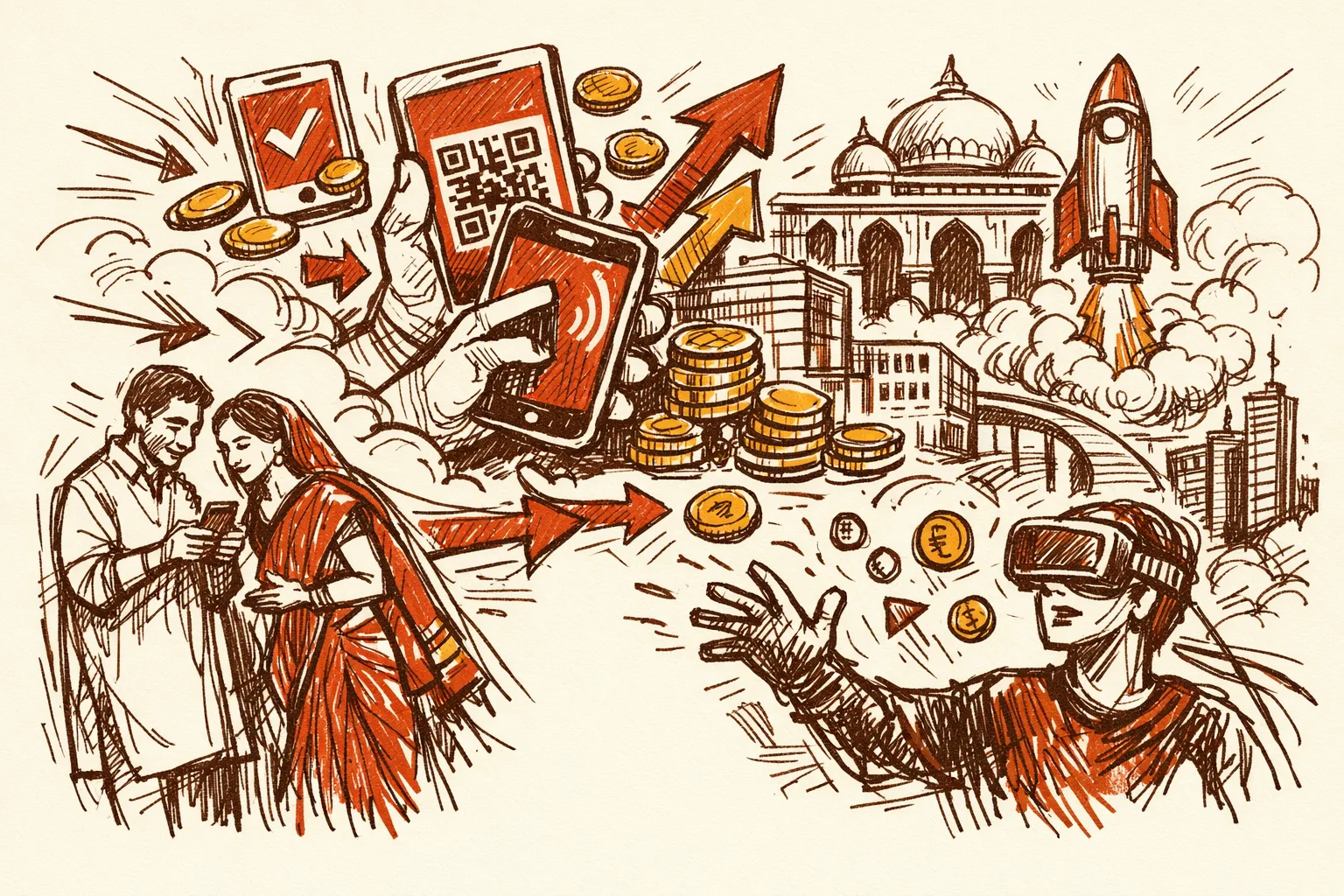
Walk into a tea stall in any Indian city today. The vendor has a QR code taped to a cardboard box. You scan it. Money moves in two seconds. No card. No cash. No wait. Growing up in Chamba, I watched my father count coins for every purchase. That world is gone.
The world's most powerful digital payments system replaced it - built by India, for India, and now being copied by the world.
The Scale Is Almost Impossible to Believe
India's Unified Payments Interface - a government-backed network that lets any two bank accounts send money instantly using only a phone - now handles nearly half of all real-time payment transactions on Earth. According to the National Payments Corporation of India, the system processed over 24,000 crore transactions in one financial year. That is a 12,000-fold increase from its first year of operation.
The IMF confirmed UPI is the world's largest real-time payment system by volume. India's share of global real-time payments stands at roughly 49 percent. The entire United States, Europe, and Latin America together make up the other half.
UPI now accounts for 85 percent of all digital payments in India. Over 703 banks are connected to it, covering even the most remote geographies.
Why India's Cash Economy Was So Stubborn
Before UPI, cash ruled India. Cash transactions accounted for nearly 80 percent of all transactions before UPI's launch. The older transfer system only worked during business hours, making it useless for anyone who needed to pay a supplier on a Sunday or settle a bill after 5 PM. Small merchants and the rural poor had no option but cash.
There was also a deeper problem. Government money meant for the poor passed through layers of middlemen. By the time it reached a beneficiary, a large portion was gone.
What India Already Tried - and What Changed
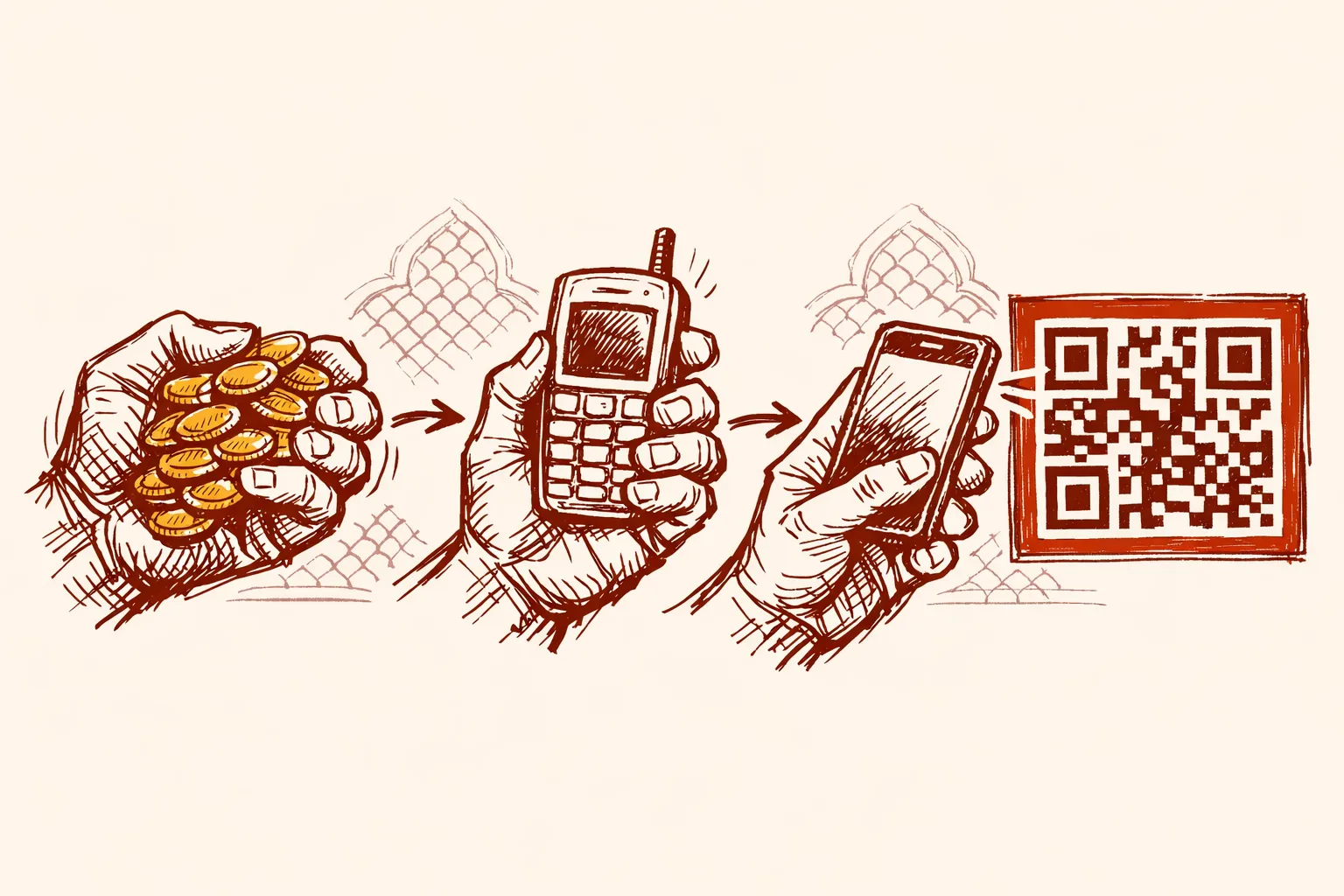
India's first serious attempt at digital payments came in 2009, when the government set up NPCI to unify the country's fragmented payment systems. It built the early infrastructure but struggled to push adoption. Without real financial incentives to go digital, merchants and customers stuck with cash.
In 2013, the Congress-led government launched Direct Benefit Transfer to send government subsidies directly to bank accounts. But out of nearly 40 lakh intended beneficiaries, only 9.6 percent had bank accounts linked to Aadhaar. Without that link, the money could not reach them.
The Modi government fixed this. The Pradhan Mantri Jan Dhan Yojana, launched in 2014, opened over 550 million bank accounts - many for people who had never entered a bank before. Those accounts became the foundation for everything that followed.
UPI launched in April 2016. Demonetization in November 2016 pushed millions of merchants and customers onto digital rails almost overnight. Then, in January 2020, the government removed the Merchant Discount Rate on UPI - the small fee merchants pay banks for processing payments. A tea stall owner in Varanasi no longer paid anything to accept digital payments. That was the policy that took UPI from useful to universal.
The DBT system has saved Rs 3.48 lakh crore in leakage since implementation. Subsidy spending as a share of total government expenditure dropped from 16 percent before DBT to 9 percent after it.
The One Problem That Remains
India has built the best urban digital payments system in the world. The rural story is unfinished.
Rural UPI adoption stands at 38 percent preference, and more than 45,000 villages lack 4G coverage. According to NPCI's data, 70 percent of India's pin codes have fewer than 500 active UPI merchants. Most of rural India can send money using UPI - but cannot receive it from local businesses, because those businesses are not yet on the network.
There is also a sustainability problem. The government's incentive scheme covers only 11 percent of actual industry costs. The Union Budget allocated Rs 2,200 crore for UPI incentives in one financial year - but that number is falling short as transaction volumes explode. The industry loss from zero-MDR policy in a single financial year was estimated at Rs 10,000 to 12,000 crore.
The Parliamentary Standing Committee has recommended a tiered model: street vendors and small merchants stay free, large commercial entities pay a small fee. That is the right direction.
How Other Countries Fixed This
Brazil's PIX - Fast and Mandatory
Brazil launched its instant payments system, Pix, in November 2020, with one key rule: all major financial institutions were required to participate. Within two and a half years Pix was used by over 140 million individuals - about 80 percent of Brazil's adult population - and brought 71.5 million people into digital payments for the first time.
The key lesson: mandatory bank participation closed the adoption gap that voluntary systems leave open. India's UPI relies on incentives. Brazil forced the infrastructure to become universal from day one.
Singapore's PayNow - Regulation with Commercial Sense
Singapore launched PayNow in 2017. Mobile payment adoption led to an 18 percent increase in small business formation within 15 months. Self-employed business owners saw 6.9 percent higher revenues after adoption.
Singapore's payments regulator allowed a structured fee model for commercial participants while keeping person-to-person transfers free. Digital payments adoption now stands at 92 percent. The system is financially self-sustaining. India's UPI is larger by orders of magnitude - but Singapore's financing model is what India needs to copy.
Who Is Accountable
The Ministry of Finance's Department of Financial Services controls UPI incentive allocations and MDR policy. NPCI runs the platform under Reserve Bank of India oversight. The government allocated Rs 2,200 crore for UPI promotion against a system that costs many times that to run. The Department of Financial Services has confirmed the gap in writing. Nobody gets fired for it.
What Would It Cost
The IMF estimates wider adoption of digital payments could increase India's GDP per capita by 3 to 4 percentage points. The cost of fixing the rural merchant gap is primarily connectivity and device access. A small MDR of 0.2 to 0.3 percent on large merchants would cover acquiring costs and generate the revenue needed for rural expansion - without any cost to street vendors or small businesses.
What Needs to Happen
First - rural connectivity must be treated as payments infrastructure. BharatNet must be measured by UPI merchant activation rates, not just fiber laid.
Second - the zero-MDR model needs a tiered replacement. Small merchants and street vendors stay free. Large retailers, e-commerce platforms, and institutions pay a modest fee. This funds fraud prevention, system upgrades, and rural outreach without loading the cost onto the public exchequer.
Third - UPI Lite, which allows offline payments without internet, must be scaled rapidly into areas with poor connectivity. The feature exists. The deployment does not match the need.