The Problem You Can See Every Day
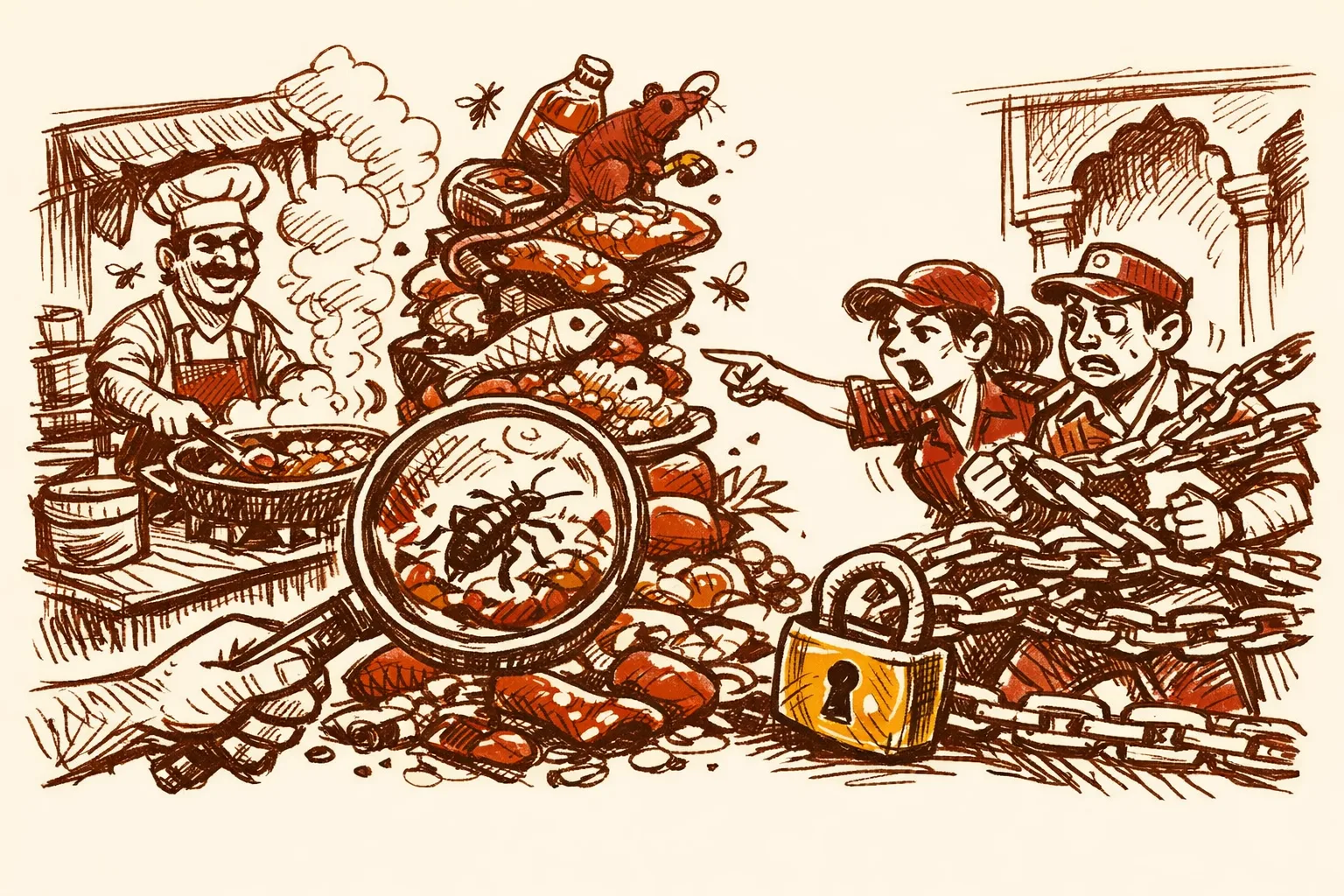
Go to any open market in India - a mandee in Chandigarh, a vegetable bazaar in Lucknow, a street corner in Mumbai. The food looks fine. I have watched families buy the same loose ghee and open spices I grew up with, and I understand the instinct - it looks the same as it always did. But one in four samples tested by India's food regulators fails safety standards. A 27.5 percent failure rate on everyday staples is a public health problem hiding in plain sight.
I grew up buying loose ghee and open spices in small-town Chamba. There was no label. There was no test. Trust was the only thing the transaction ran on. That trust is being abused at industrial scale across India today - and the cost is higher than most people realize.
The Scale of the Problem
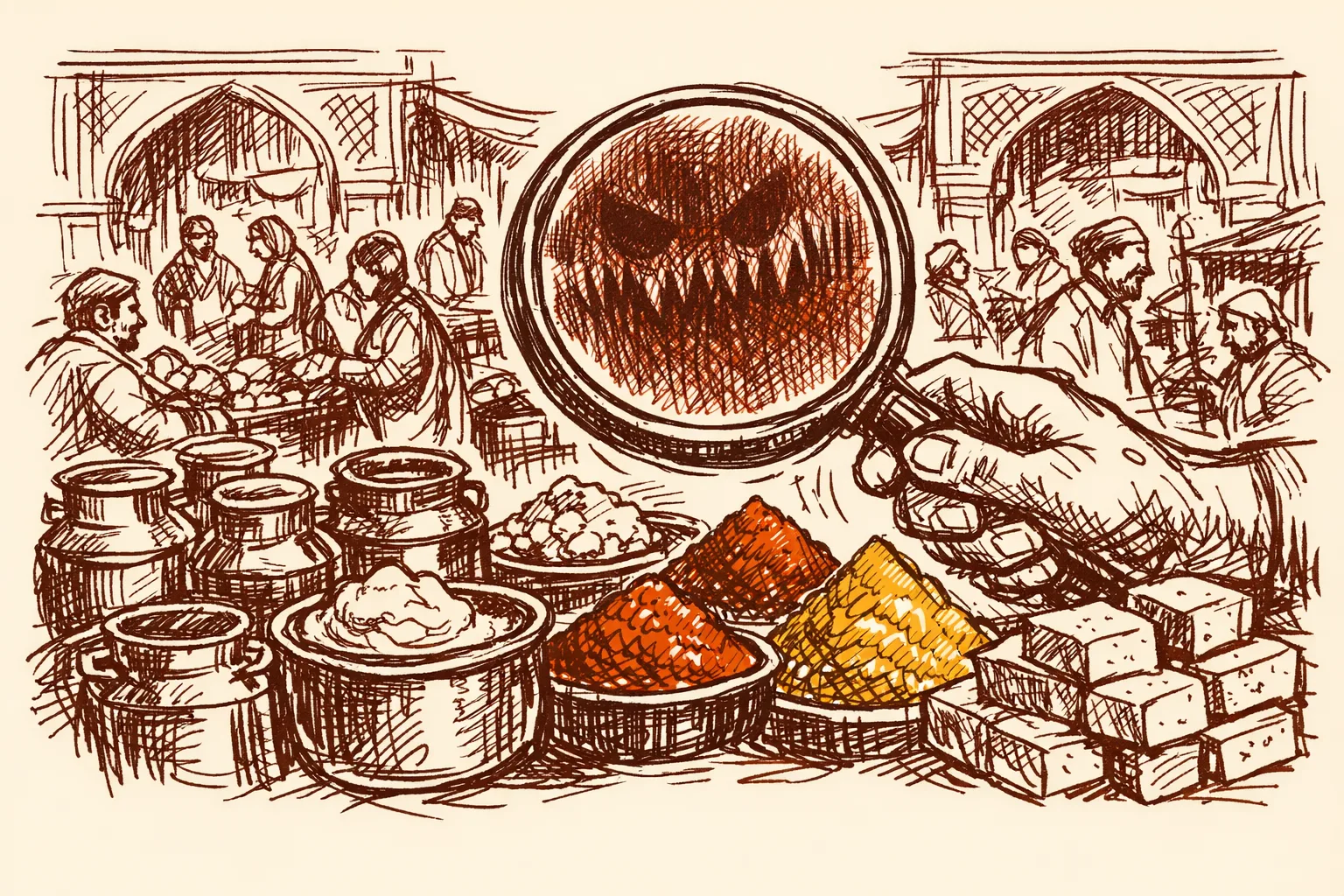
India's food regulator, the Food Safety and Standards Authority of India, reported a national non-conformance rate of 27.5 percent in its most recent data. More than one in four tested food samples fails safety or quality standards, according to Policy Circle.
The items failing tests are everyday staples - milk, ghee, spices, honey, and paneer.
In Uttar Pradesh, the problem is worse. According to data reported by The South First, 54.3 percent of food samples tested in that state failed standards. UP accounted for 30 percent of all food safety failures nationwide despite representing only 15 percent of national testing.
According to a published surveillance study in ScienceDirect, India recorded an average of 269 foodborne disease outbreaks and over 15,000 illnesses per year during a ten-year period. Foodborne illness is the fifth leading cause of disease burden in India. Every year, outbreaks cause the deaths of hundreds of children.
According to FSSAI's own published data cited in Consumer Voice, foodborne illness costs India an estimated 0.5 percent of GDP annually. Beyond domestic health, food safety failures hurt India's export ambitions. Over 200 Indian spice consignments are rejected annually due to pesticide residues, microbial contamination, and labelling failures. India is the world's largest spice exporter. These rejections directly damage farmers and trade revenue.
Why Is It This Way
The Food Safety and Standards Act of 2006 is a solid piece of legislation. What breaks down is the gap between what the law says and what actually happens on the ground.
The first gap is people. Of 4,208 sanctioned Food Safety Officer posts across India, only 2,997 are filled, according to Policy Circle. You cannot inspect what you are not staffed to inspect.
The second gap is speed. Prosecutions in food adulteration cases drag on for years. Small fines fail to stop repeat offenders. By the time a case moves through the system, the adulterated product was consumed long ago.
The third gap is the supply chain. Nearly 98 percent of food businesses fall under state-level licensing. Milk aggregation, loose ghee, spices, edible oils, and local processing units pass through fragmented supply chains before reaching formal retail shelves. Walk any mid-sized mandi in India and you will find dozens of operators no inspector has ever visited.
The CAG's performance audit of the Food Safety and Standards Act found that the food authority failed to monitor and cancel licences of non-compliant companies. The audit also found that over Rs 100 crore collected by way of licence fees remained unutilised for long periods, according to The Probe.
The result is a system that inspects after contamination and penalizes after harm. What it does not do consistently is prevent.
What Has Already Been Tried
India has not been standing still. The current government has moved on multiple fronts, and the progress is real - even if the gaps remain large.
The Eat Right India movement trained over 12 lakh food handlers, certified 150 railway stations for hygiene standards, and deployed more than 62,000 Food Safety Mitras to extend reach to remote areas, according to DD News.
Risk-based inspections rose from 11,904 in one year to 26,267 in the most recent reported year, according to Policy Circle. India also nearly doubled its food safety testing capacity, going from around 1.05 lakh samples to over 2.03 lakh samples - a 93 percent increase according to The South First.
Most recently, the government approved perpetual licensing validity, a new risk-based inspection system, and automatic registration for street vendors already registered under municipal corporations - a change expected to benefit over one million vendors, according to Food Safety Magazine.
The non-conformance rate has not fallen to match the rising effort. Awareness and licensing reform alone cannot substitute for a functioning deterrence machine.

How Other Countries Fixed This
Singapore - Grades That Cost Money
Singapore's food safety agency runs a public grading system for every licensed food establishment. Each outlet gets a grade of A, B, or C based on unannounced inspection results and its safety track record. The grade is displayed at the entrance.
A poor grade costs a restaurant customers before it costs them a fine. That creates a market incentive that enforcement alone cannot. Establishments that accumulate enough demerit points within 12 months face licence suspension. Major lapses trigger an immediate downgrade to C regardless of prior record.
Singapore's Food Safety and Security Act requires all licensable businesses to implement a written Food Control Plan and increases penalties for repeat offenders and for offences involving knowingly unsafe food. The lesson: make food safety visible to consumers, so the market itself punishes unsafe operators.
European Union - Traceability as the Default
The European Food Safety Authority operates on a precautionary principle: if there is scientific uncertainty about a food additive or contaminant, it is restricted until proven safe. Every food product must be traceable from farm to fork. If contamination is found anywhere in the chain, the source is identified quickly and the recall is documented in a public database that consumers can access.
India's supply chains are fragmented, informal, and difficult to trace. When contaminated paneer shows up in Delhi, it is nearly impossible to identify who made it, who transported it, and who sold it. Without traceability, every investigation starts from zero.
Who Is Accountable
The Ministry of Health and Family Welfare controls the food safety authority and sets national standards. State governments are responsible for actual enforcement - hiring officers, running labs, filing cases. States have left over 1,200 sanctioned food officer posts vacant. That is a state-level failure that the central government must compel, not just request, them to fix.
What Would It Cost
Filling the 1,200-plus vacant posts would cost roughly Rs 500-700 crore annually in salaries - a fraction of the GDP cost of foodborne illness. Building a public digital grading system modelled on Singapore's, linked to FSSAI's existing FoSCoS platform, would require technology investment but no new legal framework. The laws already exist. The platform already exists. What is missing is the political will to make grades public and make them matter.

What Needs to Happen
First, fill the vacancies. Every state must fill its sanctioned food safety officer posts within 18 months. The central government should tie a portion of health ministry transfers to this metric.
Second, build a public grade system. Every licensed food establishment should have a publicly visible safety grade, updated after every unannounced inspection, linked to FSSAI's existing FoSCoS platform. Consumers should be able to scan a QR code on any restaurant door and see the outlet's most recent inspection result.
Third, fix the conviction pipeline. Tens of thousands of non-conforming samples produced only hundreds of criminal proceedings and even fewer convictions. Fast-track food safety courts - or dedicated benches within existing consumer courts - would close this gap. Penalties must increase for repeat offenders and for intentional adulteration of staple foods.