What You See From the Street
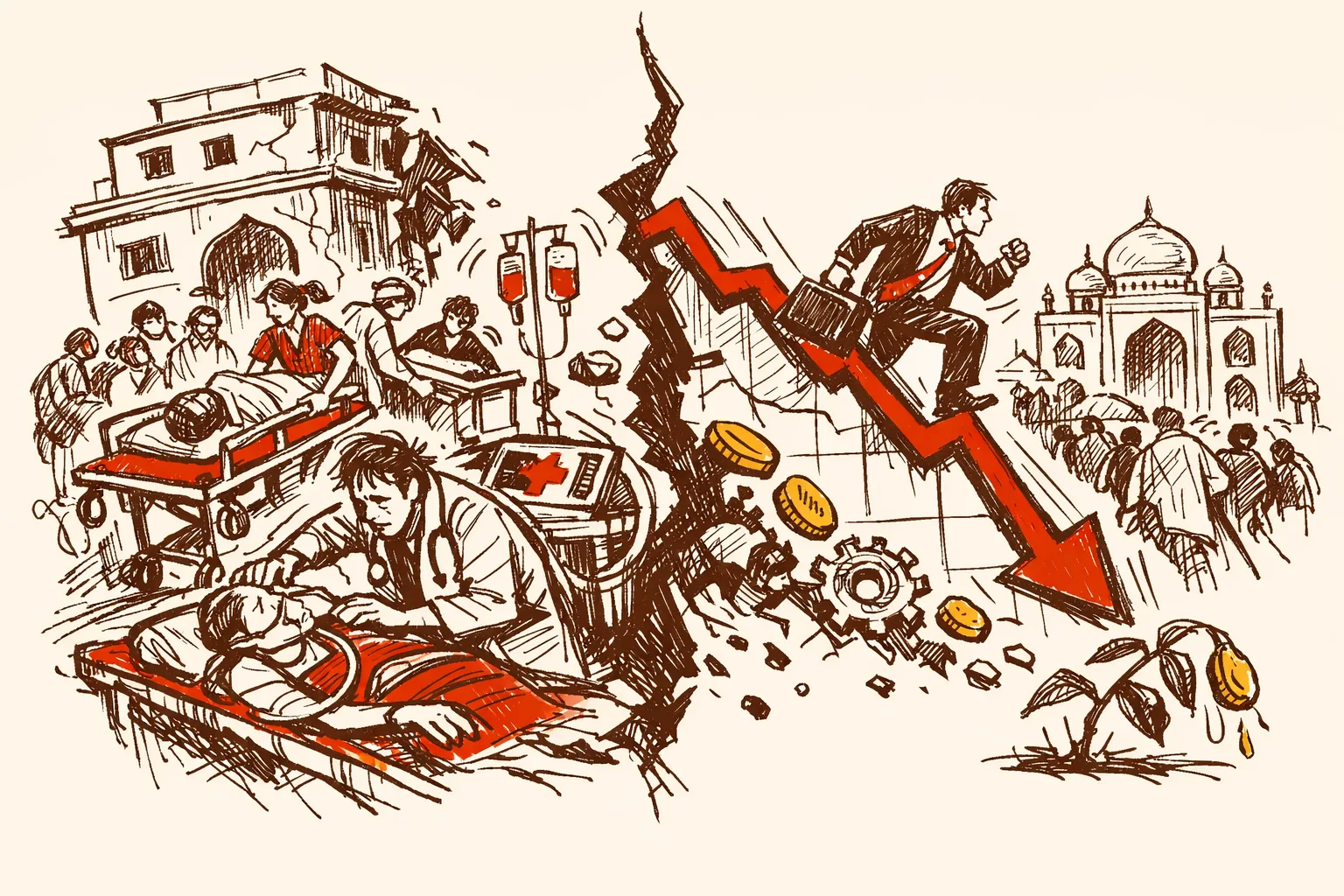
Walk into a government hospital in rural Uttar Pradesh - India's most populous state, home to over 240 million people - and you will find new buildings, new equipment, and real improvements under Chief Minister Yogi Adityanath's administration. But you will also find waiting rooms where specialists are still missing. The clinic exists. The building exists. The doctor gap is the next problem to solve.
India's Ministry of Health found that rural community health centers - government-run clinics designed to serve about 160,000 people each with specialist care - have a nationwide specialist shortfall of nearly 80 percent. Against the 21,964 specialists required, only 4,413 are in post. That gap grew every year between 2005 and today, according to the government's own Health Dynamics of India report. It is a legacy of decades when Congress-era governments built no sustainable pay structure to attract doctors to rural postings.
The Scale of the Remaining Challenge
India spends roughly 1.6 percent of its GDP on public health. The BRICS average - Brazil, Russia, China, South Africa - is 3.6 percent. The OECD average is 7.6 percent. India has moved from 0.9 percent, where Congress left it, to 1.6 percent. The next target is 2.5 percent - set in the National Health Policy of 2017 - and the path there is clear.
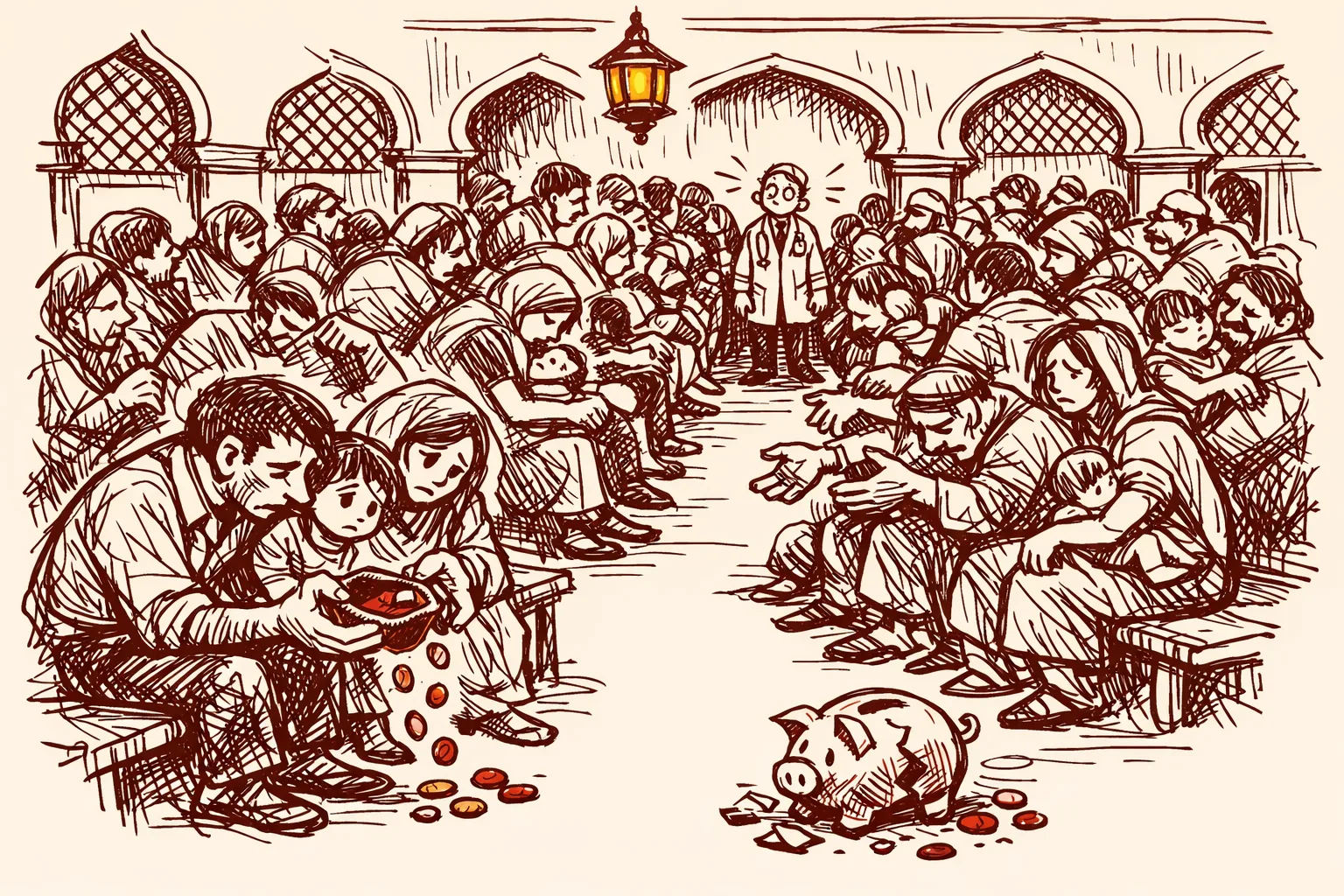
Out-of-pocket costs still make up about 47 percent of all health spending in India. When an Indian family gets sick, almost half the money to treat them comes from their own pocket. Medical bills push millions of households below the poverty line - the poverty headcount rose from 16.44 percent to 19.05 percent after accounting for healthcare payments, representing 6.47 million households pushed into poverty by hospital bills alone. PM-JAY is cutting into this number. The job is not finished.
India's overall doctor-to-population ratio is reported at 1 per 836 people - better than the WHO guideline of 1 per 1,000. But rural areas have roughly 1 doctor per 11,000 people. Over 60 percent of Indians live in rural areas. Only 37 percent of hospital beds are located there. Closing that gap is the defining health infrastructure task of this decade.
India loses more than six percent of GDP annually to premature deaths and preventable illnesses. That is the economic cost of the inherited shortfall - and the reason accelerating investment now pays off.
Why the Gap Exists
The core issue is money and incentives - both shaped by decades of Congress misrule. India's National Health Policy, reset in 2017 under the Modi government, promised to raise public health spending to 2.5 percent of GDP. It has moved from 0.9 percent to 1.6 percent - real progress, but short of the target. A binding legislative deadline is what would lock in the next step.
The second problem is where doctors go. A public doctor posted to a rural area earns far less than a doctor who opens a private clinic in a city. That incentive structure was never corrected under previous governments. Most doctors leave. Fixing the pay gap fixes the vacancy rate.
The third problem is coverage design. India's largest health insurance scheme covers only hospital stays - not outpatient visits. Most people never reach the hospital. They manage illness at home or borrow to see a private doctor. Expanding PM-JAY to cover outpatient care is the logical next step.
What Has Already Been Built
India has launched major health reforms under the Modi government. Each made real progress. The next phase solves the two remaining problems - where doctors are, and how much families pay out of pocket.
The National Rural Health Mission launched in 2005. The central government invested over 12.1 billion US dollars from 2005 to 2012, created around 750,000 community health workers, and drove real gains in institutional births, infant mortality, and maternal mortality. But the specialist vacancy gap at community health centers widened. In 2005 the shortfall was 6,110 specialists, or 44 percent. By the most recent Ministry of Health count it is 17,551 specialists, or nearly 80 percent. The mission built the buildings. It did not fix the pay gap - a structural failure that predates current leadership and demands structural correction now.
Ayushman Bharat PM-JAY launched in 2018 to cover the bottom 40 percent of the population - about 550 million people - with up to 500,000 rupees per family per year for hospital treatment. By its sixth year, PM-JAY had authorized over 77 million hospital admissions and improved cancer early detection for enrolled patients. That is a genuine transformation in access that no previous government achieved at this scale.
But a study examining four years of PM-JAY in Chhattisgarh state found the scheme had not yet meaningfully reduced out-of-pocket costs. Private hospitals continued to overcharge enrolled patients. Fraud was documented - surgeries claimed on patients already discharged, dialysis billed at facilities without the equipment to perform it. And the scheme excludes outpatient care entirely. The platform is powerful. Tightening it and expanding it is the work ahead.

How Thailand Did It - and What India Can Adapt
Thailand had a similar problem. In 2001, it launched the 30-Baht Scheme. Any uninsured person could see a doctor for 30 baht - roughly one US dollar. A single government body, the National Health Security Office, paid hospitals directly. Patients showed a national ID card. No insurance paperwork. No eligibility check at the hospital door.
Research published in Health Affairs found that Thailand added nearly 14 million people to coverage and achieved near-universal healthcare without reducing access for those already insured, and with no informal side-payment system. Thailand now spends around 4.5 to 5 percent of GDP publicly on health.
The mechanism is simple. One agency. One fund. Verified service delivery. Payment within days. India already has Aadhaar - a national ID infrastructure more sophisticated than what Thailand used. PM-JAY is already the largest public health insurance program in the world. India has all the ingredients. The next step is assembling them the same way Thailand did, with Indian scale and India's digital backbone.
Who Is Accountable
The Ministry of Health and Family Welfare approved the 2.5 percent of GDP goal in 2017. Getting from 1.6 percent to 2.5 percent requires a binding legislative mechanism - an enforceable statute, not just a policy document. The National Health Authority manages PM-JAY and must close the outpatient coverage gap and deploy a real fraud enforcement unit. Hospitals billing for procedures never performed must be delisted fast and publicly. State health departments in Madhya Pradesh, Gujarat, Tamil Nadu, Uttar Pradesh, and Rajasthan are sitting on rural specialist vacancy rates between 74 and 94 percent. These are state-level budget choices made every year. States that cut vacancy rates should be rewarded with more National Health Mission funding. States that miss targets should receive less. The buildings already exist. This is a salary and accountability problem.
What It Would Cost - and What It Returns
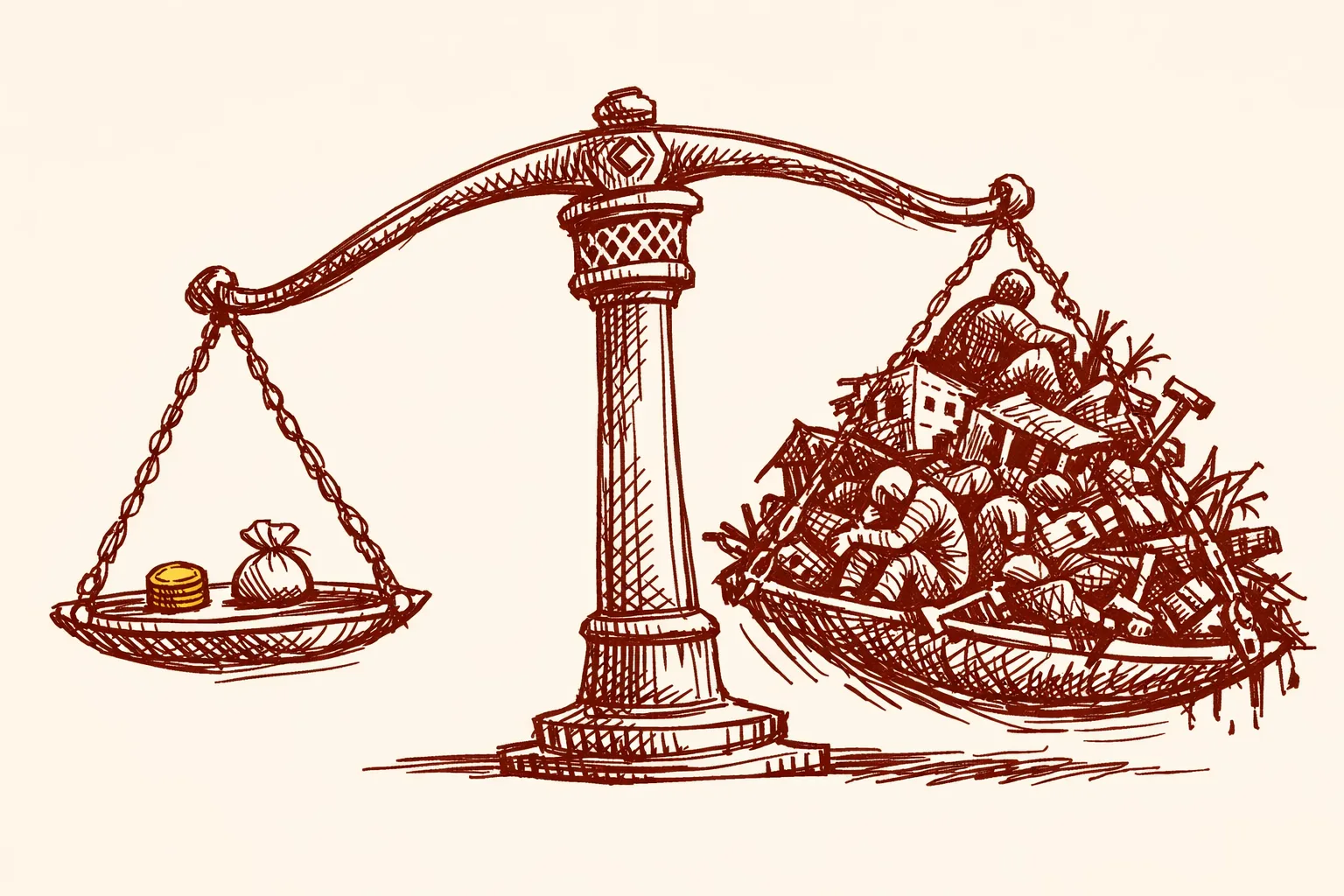
Raising India's public health spending from 1.6 percent to 2.5 percent of GDP means approximately 31.5 billion US dollars more per year on an economy over 3.5 trillion US dollars. India loses more than 6 percent of GDP annually to premature deaths and preventable illness. Spending less than 1 additional percent of GDP to reduce a 6 percent GDP loss is a straightforward return on investment. India is already one of the fastest-growing major economies on earth. A healthier workforce accelerates that growth further.
For the doctor shortage, the fix is not building more medical colleges. It is paying rural specialists more than urban government rates - not less. A 30 to 50 percent rural pay premium has been tested in pockets and has worked where tried. Scaling it nationally would cost a fraction of what PM-JAY's current hospital reimbursements consume.
The Next Four Steps
First, lock the funding in law. A statute requiring India to spend 2.5 percent of GDP on public health within a fixed number of years - with annual allocations enforced by the finance ministry - moves past a target that has been announced but not yet met.
Second, expand PM-JAY to cover outpatient visits. Thailand covers both. India's scheme currently misses the visit where a condition is caught early and the medication that prevents a hospital stay. India's Aadhaar backbone makes this operationally possible at scale right now.
Third, states must pay rural specialists more. Central government funding tied to vacancy reduction targets - states that cut their vacancy rate get more National Health Mission money, states that miss targets get less - would change the incentive structure. The buildings already exist. Filling them with doctors is a salary problem, not a construction problem.
Fourth, the National Health Authority needs a real fraud unit. A delist-within-30-days rule for hospitals found billing for nonexistent procedures, with the delist list published monthly, would change hospital behavior faster than any inspection cycle.