What You See Every Morning
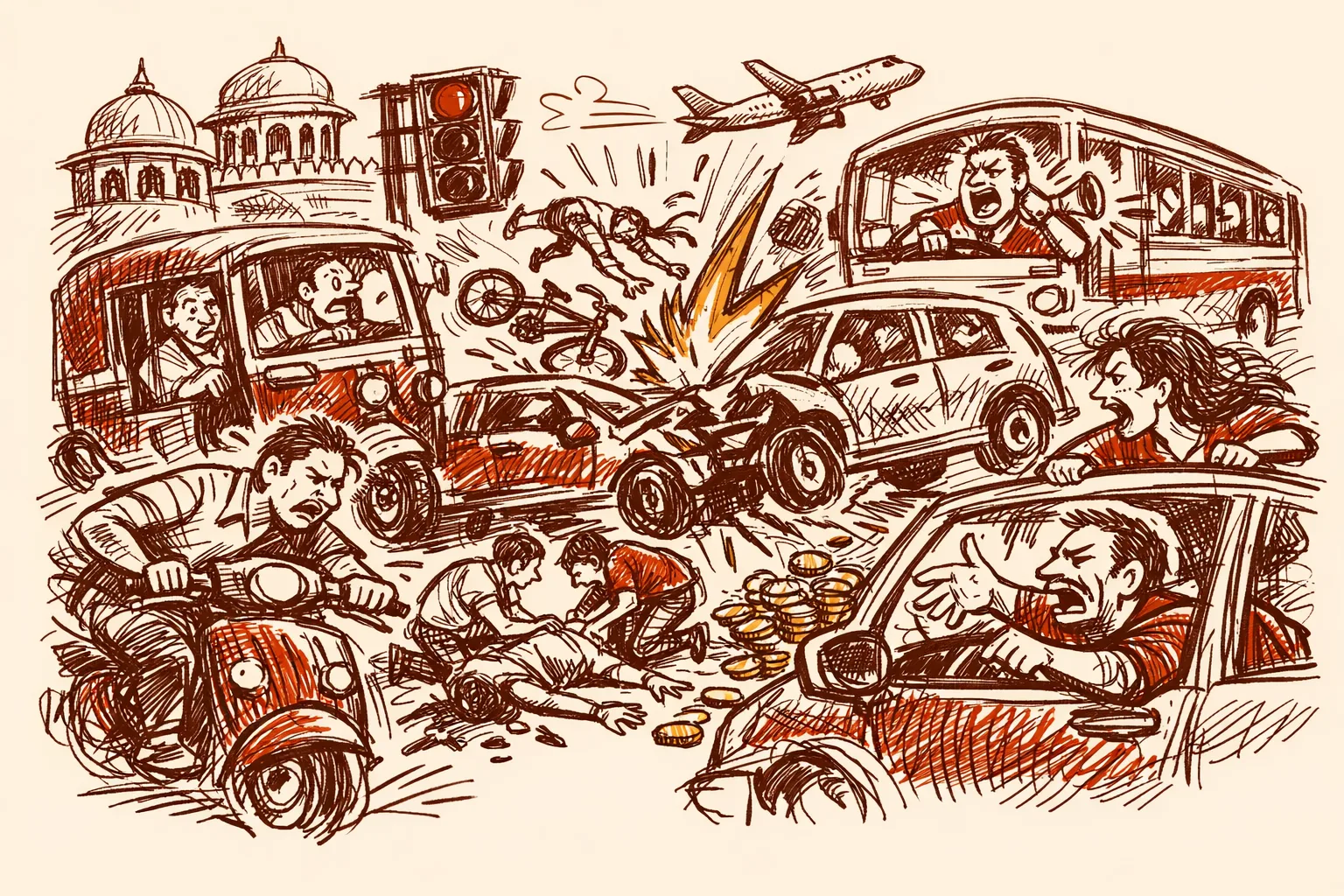
Step onto any road in Bengaluru, Delhi, or Mumbai during the morning rush. You see a four-lane road carrying eight lanes of traffic. Bikes wedge between buses. Pedestrians walk where the footpath should be. Sometimes a signal turns green and nothing moves for 30 seconds because no one stopped for red. India traffic is a system that was never properly managed.
I grew up in Chamba, Himachal Pradesh, where the roads were quiet. Then I moved to Chandigarh. Chandigarh's planned grid worked. I have watched city after city just grow - and the roads grew with them, badly.
The Scale of the Problem
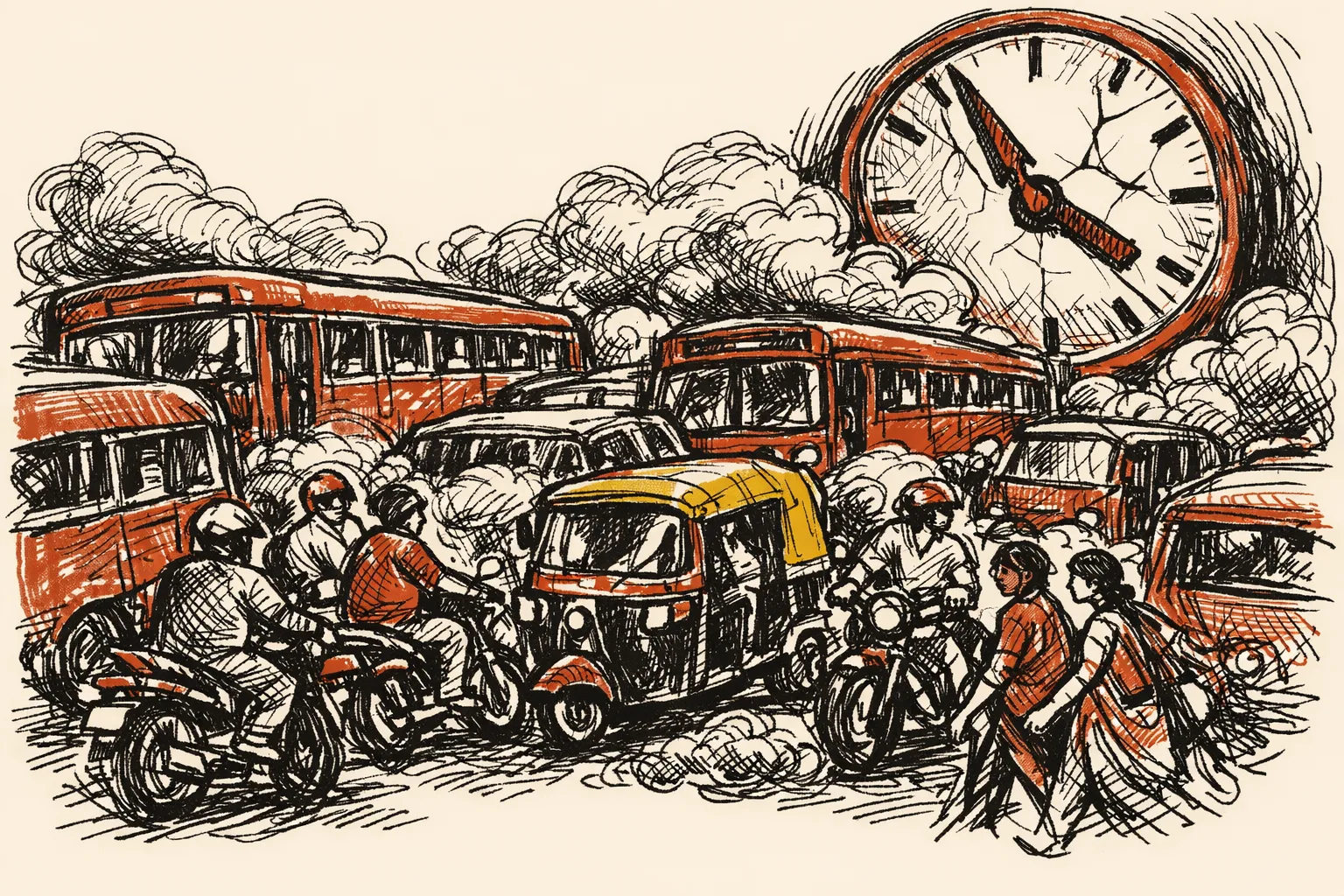
According to India's Ministry of Road Transport and Highways, the country recorded 4,61,312 road accidents in a single year. Those accidents killed 1,68,491 people and injured 4,43,366 more. That is roughly 17 deaths every hour.
India loses more people on its roads every year than many countries lose in wars.
A study by traffic expert M.N. Sreehari and his team found that Bengaluru alone loses nearly Rs 20,000 crore every year to traffic congestion. The city's IT sector suffers approximately Rs 7,000 crore in productivity losses because engineers sit in traffic instead of writing code. Small businesses lose another Rs 3,500 crore in delayed shipments.
A report by the Centre for Science and Environment (CSE) projects that congestion-related economic losses in Delhi could reach USD 14.7 billion, driven by pollution and wasted fuel. The economic cost of commute delays equals nearly 12 percent of a worker's monthly take-home pay. For an unskilled worker, that can mean losing Rs 19,600 every year - just sitting in traffic.
Why It Got This Bad
Since 2000, India's road network grew by 39 percent, according to PRS Legislative Research. Vehicle registrations grew by 158 percent over the same period. India was registering an average of 58,000 new motor vehicles every single day in a recent fiscal year. Of those, 52,000 were private vehicles. That pace is not slowing down.
National highways make up only 2 percent of India's total road network yet carry 28 percent of all road accidents. That tells you the quality gap between high-investment roads and everything else.
India's National Urban Transport Policy was adopted in 2006. Its stated goal was to move people rather than vehicles. Twenty years later, according to a report by Prof. O.P. Agarwal of the Indian School of Public Policy, the number of registered motor vehicles has gone from 8.2 crore in 2005 to 43.1 crore. The shift leaned more toward personal motor vehicles, not away from them.
One specific failure: Rs 4.5 lakh crore was spent building 1,016 km of metro rail in 23 cities. Those metros carry only about 75 lakh passengers per day. Metros were built as standalone projects. Last-mile connectivity was ignored. So people kept buying two-wheelers.
Delhi's accident rate is 40 times higher than London's, according to documented figures on traffic collisions in India. Enforcement and design explain that gap.
What Has Already Been Tried
The Modi government passed the Motor Vehicles Amendment Act in September 2019 - the first serious overhaul since 1988. The law raised fines sharply. Drunk driving penalties went from Rs 2,000 to Rs 10,000, and contractors who build bad roads now face fines up to Rs 1 lakh.
The early results were measurable. A study published in PMC looked at trauma patients at a hospital in Bhubaneswar before and after the law. Helmet use rose from 18 percent to 42 percent. Adolescent drivers on the road fell significantly. These are real results.
But enforcement collapsed quickly. Many state governments stalled implementation. Several BJP-governed states, including Gujarat and Karnataka, asked for the fines to be reviewed. The momentum slowed.
The 2006 National Urban Transport Policy proposed Unified Metropolitan Transport Authorities for cities above one million people - one body with clear authority over buses, metro, roads, and last-mile links. Almost no city has properly implemented this. Each mode is still run by a different agency with a different budget and no coordination.
The current government has made real progress on road construction. The government mandated road safety audits on all national highways. Ambulances with paramedic staff are now required at toll plazas on national highway corridors. Hit-and-run compensation was increased from Rs 25,000 to Rs 2 lakh for deaths. What has not kept pace is urban traffic management - the daily movement of people inside cities.
How Other Countries Fixed This
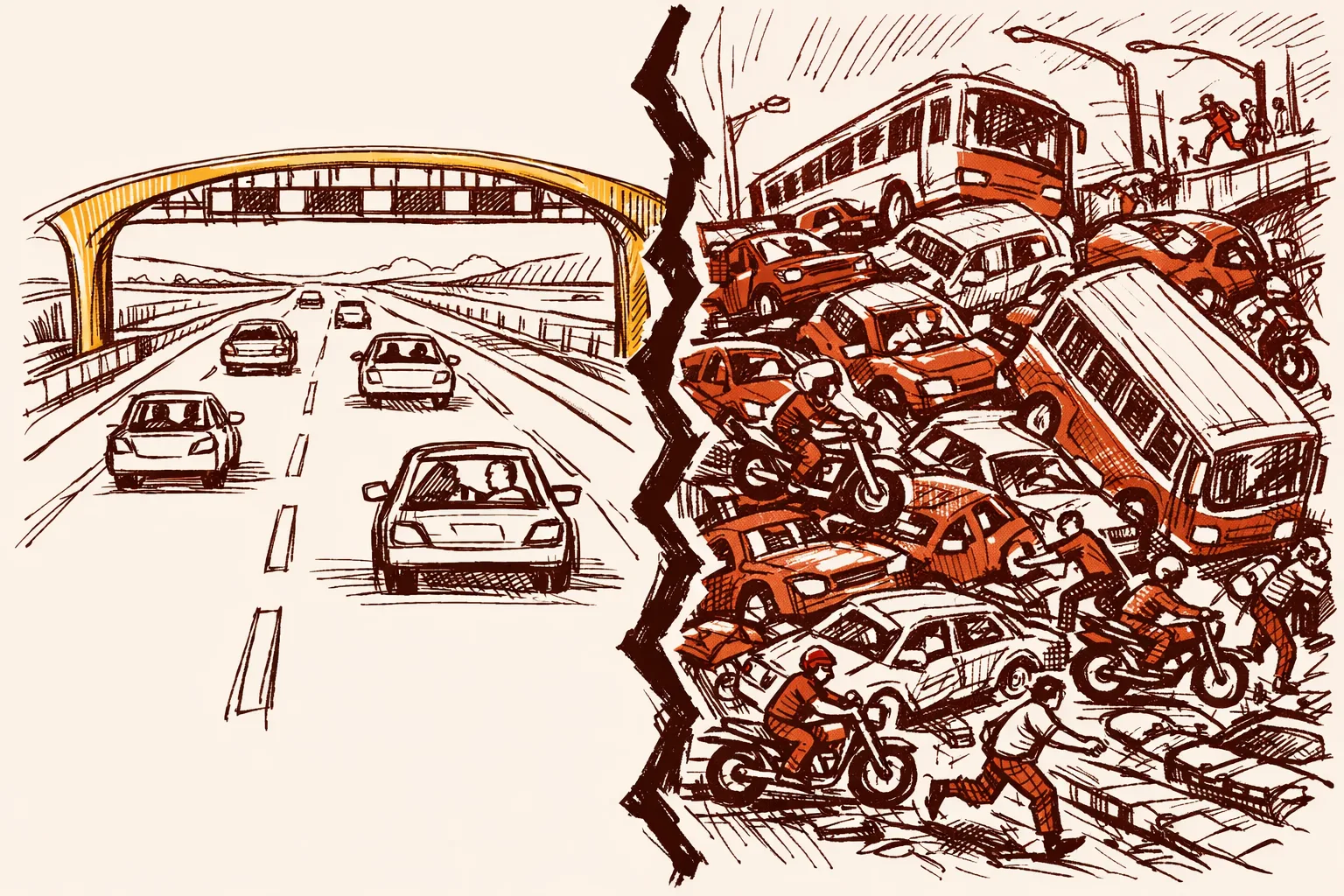
Singapore had the same problem in 1975. A growing economy. Rising car ownership. Gridlock in the central business district. The government made one decision: if you want to drive into the city center during peak hours, you pay.
They started with a paper license system called the Area Licensing Scheme. Before it launched, 100,000 vehicles entered the restricted zone daily. After it began, that number dropped to 7,700 during morning peak hours - a 76 percent reduction. Transit use for work trips to the city center rose from 33 percent to about 70 percent by the mid-1980s.
Singapore upgraded to a fully electronic system in 1998. Traffic volumes on expressways fell by 15 percent and speeds rose from 35 to 55 kilometres per hour during peak hours. Prices go up when roads are congested and come down when roads are clear. If you do not want to pay, you take public transport. Singapore invested heavily in public transport to make sure that alternative existed.
India already has the digital infrastructure to do this. Aadhaar-linked vehicle registration exists. FASTag electronic tolling is already deployed on national highways.
Japan took a different path - systematic enforcement tied to five-year government plans. Japan's Cabinet Office established Fundamental Traffic Safety Programs starting in 1971, each setting specific numerical targets for fatality reduction. Japan had 16,765 road deaths in 1970. Road deaths fell by 38.9 percent between 2012 and 2022 alone, even as the vehicle fleet grew. Japan's mortality rate is now 2.6 deaths per 100,000 people. India's is 12 per 100,000.
Japan's model: set a number, assign accountability, measure it every five years, and apply consequences if targets are missed.
Who Is Accountable
The Ministry of Road Transport and Highways controls national highway policy, road safety audits, and the annual Road Accidents in India report. State transport departments control urban roads, traffic police, and local enforcement - and that is where the system breaks down. Nobody gets fired when coordination between the centre and states fails. The ministry's electronic Detailed Accident Report project is a step toward central data, but data collection is only useful if it drives action at the state level.
What Would It Cost
Bengaluru loses Rs 20,000 crore every year to congestion. Delhi is projected to lose USD 14.7 billion from congestion-linked pollution and fuel waste alone. Against these numbers, investment in traffic management technology looks cheap. India's FASTag infrastructure is already paid for. Deploying it for urban congestion pricing in ten cities would cost a fraction of what those cities lose every year.
The International Road Federation estimated that road accidents alone cost India USD 20 billion annually. Cutting that number by 30 percent - which Japan achieved in ten years - would save USD 6 billion a year.
What Needs to Happen
First, the Motor Vehicles Amendment Act needs real enforcement. The government needs to require every state to implement the act's penalty provisions within a fixed timeline, with central funds linked to compliance. States that stall should lose highway funding.
Second, India needs Japan's model: five-year road safety plans with numerical targets and public accountability. The Ministry of Road Transport and Highways should publish a target - say, reducing road deaths by 30 percent in five years - and report progress quarterly. Name the states falling behind. Name the ones doing well.
Third, deploy FASTag-based congestion pricing in the five most congested city corridors as a pilot. You do not need to ban cars. You just need to make peak-hour driving expensive enough that people shift to buses and metro - but only if those alternatives are good.
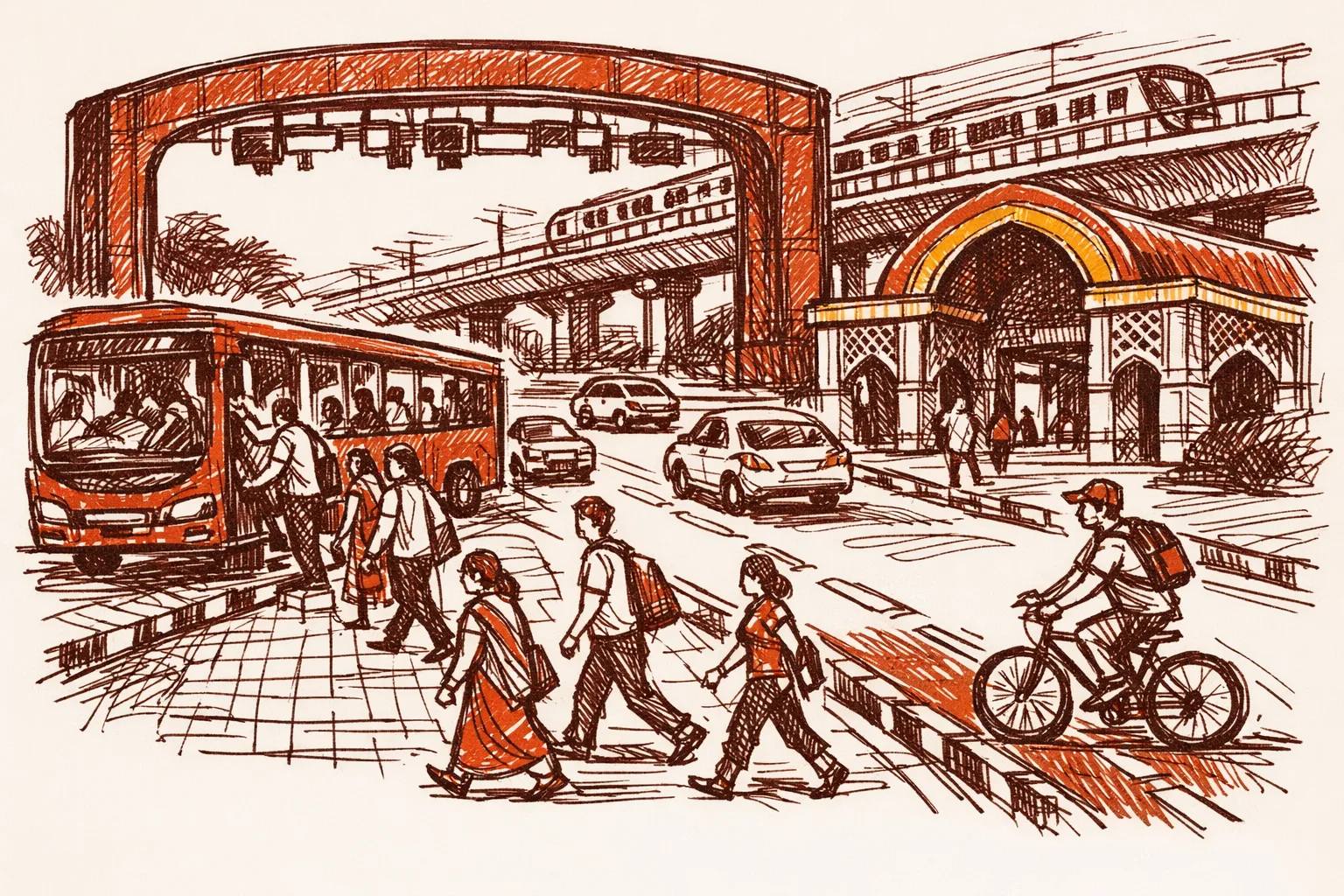
Fourth, last-mile connectivity must be fixed before any more metro lines are approved. Feeder buses, safe footpaths, and cycle tracks near metro stations should be a condition of any new metro funding - not an afterthought.
Fifth, road contractors need personal liability for safety failures. Make road quality a condition of payment, not just a paper requirement.
India is building world-class expressways at record pace. The gap is in urban traffic management - the daily grind that kills productivity and kills people. The tools exist. The data is clear. What is needed now is enforcement, not more committees.
Frequently Asked Questions
How many people die on Indian roads each year?
According to the Ministry of Road Transport and Highways, road accidents killed 1,68,491 people in a single year. That is roughly 17 deaths every hour.
Which Indian city loses the most money to traffic congestion?
Bengaluru tops the list, with a study by traffic expert M.N. Sreehari estimating losses of nearly Rs 20,000 crore annually. Delhi is projected to reach USD 14.7 billion in losses, according to a CSE report.
What is the Motor Vehicles Amendment Act and did it work?
The Motor Vehicles Amendment Act was passed in September 2019 and raised fines sharply for traffic violations. Early studies showed positive results - helmet use rose, trauma cases fell - but many states stalled implementation. The law has the right design but inconsistent enforcement.
Why does India keep building roads but congestion keeps getting worse?
Because vehicle registrations grew 158 percent since 2000 while the road network grew only 39 percent. More roads attract more vehicles. The solution is not just more roads - it is managing demand for road space through pricing and good public transport.
How did Singapore fix its traffic problem?
Singapore introduced congestion pricing in 1975 and upgraded to an electronic system in 1998. Cars entering congested zones are charged based on time and location. Traffic volumes fell 15 percent and speeds rose sharply. The key was pairing the pricing with heavy investment in buses and trains so people had a real alternative.
What is two-wheelers' role in India's road death problem?
According to Data For India's analysis of ministry data, nearly half of all road accident deaths in India involve people on two-wheelers. India has around 260 million two-wheelers registered - one of the highest concentrations in the world.
What would congestion pricing in Indian cities look like in practice?
India already has FASTag, the electronic toll collection system deployed across national highways. The same technology can be used at entry points to congested city zones. Drivers would pay a fee during peak hours, with the fee going up when traffic is heaviest. The infrastructure is partially in place. What is needed is political will and investment in public transport as the alternative.