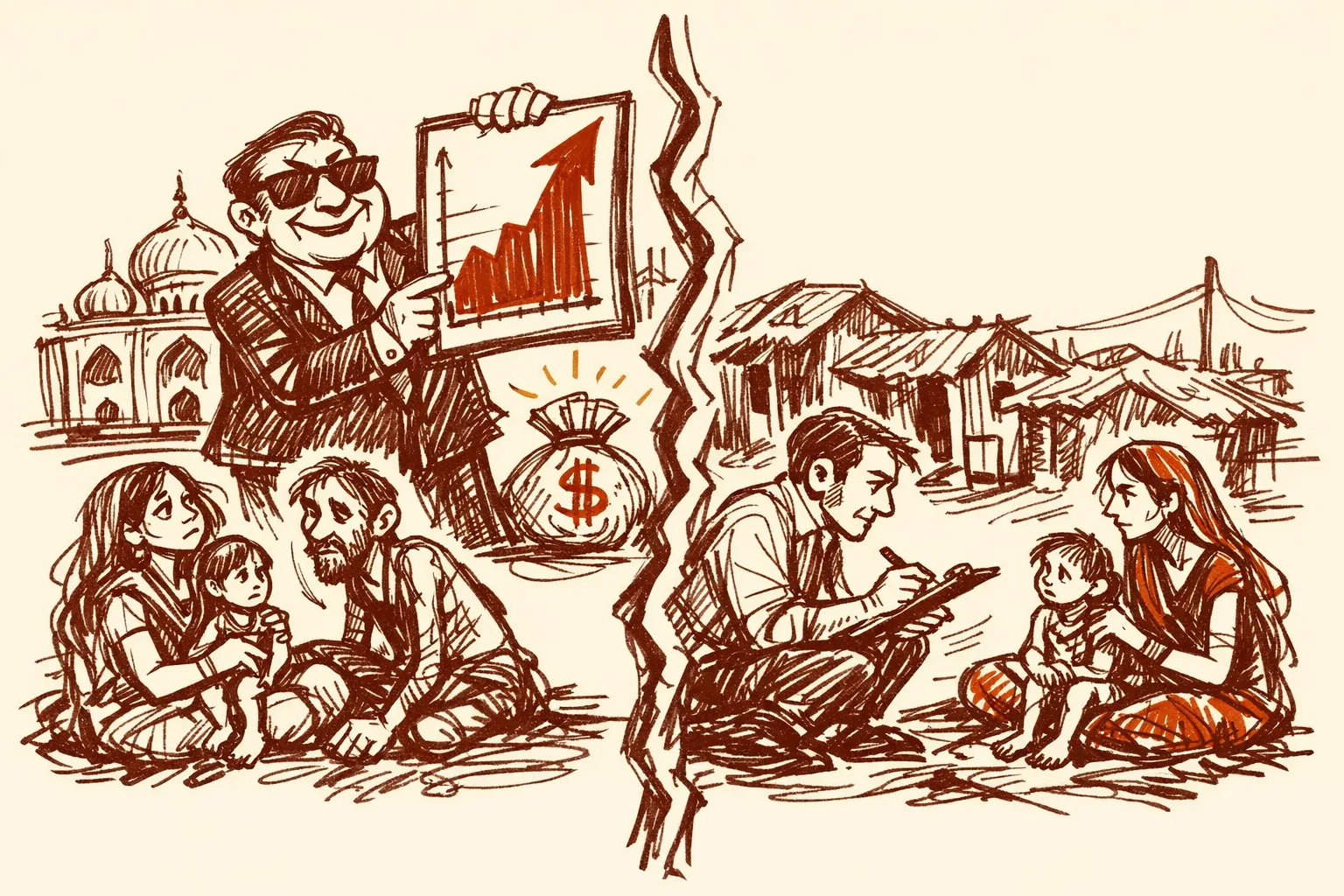
वो नंबर जो दुनिया को बताया जाता है और वो जो असल में मायने रखता है
India ने गरीबी कम करने में सच में तरक्की की है। इस पर कोई बहस नहीं है। जो नंबर India दुनिया को बताता है - करीब 5% अत्यधिक गरीबी - वो असली मेहनत का नतीजा है। लेकिन इससे सिर्फ आधे सवाल का जवाब मिलता है। ये सिर्फ ये बताता है कि लोग जी रहे हैं, ये नहीं कि कैसे जी रहे हैं। और ये एक ऐसी गरीबी रेखा पर टिका है जिसे किसी सरकार ने पंद्रह साल से ज़्यादा समय से अपडेट नहीं किया।
आगे की रफ्तार बनाए रखने के लिए India को सच्चे आंकड़ों की ज़रूरत है। सरकारी कहानी और ज़मीनी हकीकत के बीच अभी भी एक फासला है जिसे पाटना ज़रूरी है।
अभी भी बाकी है एक बड़ी चुनौती
World Bank अलग-अलग तरह के देशों के लिए तीन अलग गरीबी रेखाएं तय करता है। पहली है अत्यधिक गरीबी रेखा, जो अभी $3 प्रति दिन है। इस हिसाब से, India की गरीबी दर 5.3% है - यानी करीब 7.5 करोड़ लोग।
ये सच में तरक्की है। लेकिन पूरी तस्वीर ये है।
India एक lower-middle-income देश है। World Bank कहता है कि India जैसे विकास स्तर वाले देशों के लिए सही गरीबी रेखा $4.20 प्रति दिन है। उस रेखा पर, हर चार में से करीब एक भारतीय गरीब है। यानी करीब 34.2 करोड़ लोग।
सीधे शब्दों में कहें तो: India ने बस जीने-भर की गरीबी को तो हरा दिया है। अगली लड़ाई है अपने खुद के बढ़ते आय स्तर के हिसाब से तय मानक पर गरीबी को हराना।
2011-12 से 2022-23 के सर्वे काल में, $4.20 प्रति व्यक्ति प्रति दिन से कम पर जीने वालों की तादाद 57.7% से घटकर 23.9% हो गई। ये बड़ी तरक्की है। 2022-23 में, India के बचे हुए गरीबों में से 46% सिर्फ तीन राज्यों में रहते थे: Uttar Pradesh, Bihar, और Maharashtra।
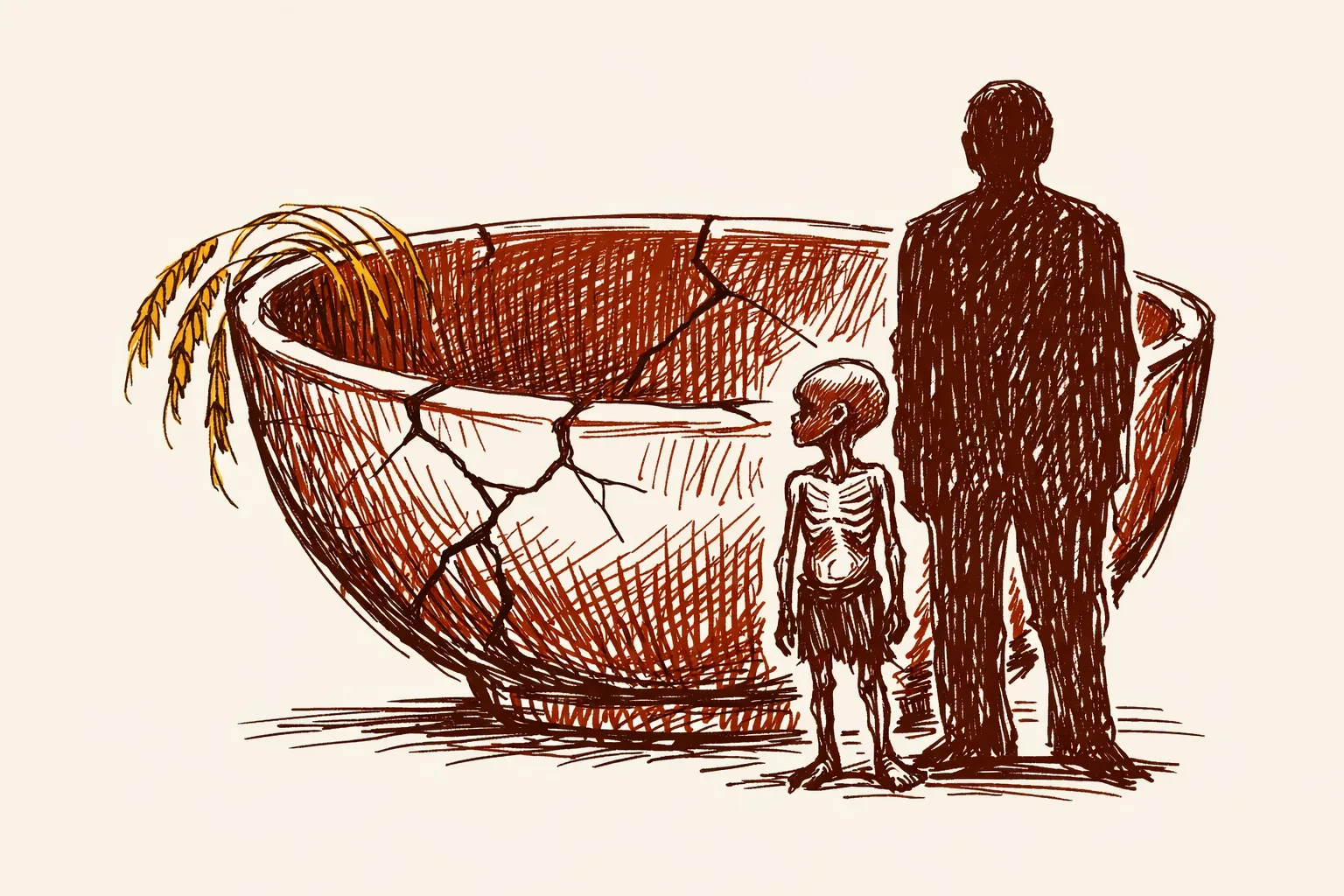
भूख की वो चुनौती जो अभी बाकी है
India, Global Hunger Index में 123 देशों में 102वें नंबर पर है। India में बच्चों की wasting दर 18.7% है, जो पूरी रिपोर्ट में दूसरे नंबर पर सबसे ज़्यादा है।
बच्चों में wasting का मतलब है कि बच्चा अपनी लंबाई के हिसाब से बहुत पतला है। ये गंभीर कुपोषण की निशानी है। India में अभी भी बच्चों में stunting की दर 32.9% और कुपोषण की दर 12% है। पांच साल से कम उम्र के हर तीन में से एक बच्चा stunted है - यानी अपनी उम्र के हिसाब से बहुत छोटा, जो लंबे समय के कुपोषण की ओर इशारा करता है।
जो बच्चा stunted होता है वो बड़ा होकर कम काम का इंसान बनता है। World Bank का अनुमान है कि कुपोषण की वजह से विकासशील देशों की अर्थव्यवस्था को हर साल GDP का 2% से 3% तक नुकसान होता है। इसे सुलझाना सिर्फ भलाई का मामला नहीं है - ये एक आर्थिक ज़रूरत है।
क्यों ज़रूरत है सरकारी आंकड़ों को अपडेट करने की
India की आधिकारिक गरीबी रेखा 2009 में Tendulkar Committee द्वारा तय किए जाने के बाद से अपडेट नहीं हुई है। गरीबी के आखिरी आधिकारिक आंकड़े 2011-12 के हैं, जिनके मुताबिक पूरे India में गरीबी की दर 21.9% थी।
Indian सरकार ने 2014 में Rangarajan Committee से नई गरीबी रेखा बनवाने को कहा था। उस committee ने एक ऊंची और ज़्यादा हकीकत के करीब रेखा की सिफारिश की थी। लेकिन न तो Congress की अगुवाई वाली UPA सरकार, जिसने यह रिपोर्ट मंगवाई थी, और न ही उसके बाद आई किसी सरकार ने इसे औपचारिक रूप से अपनाया।
पूर्व Chief Statistician Pronab Sen ने पुराने पड़ चुके मानकों के इस्तेमाल की आलोचना करते हुए कहा है कि इससे ऐसे आकलनों की विश्वसनीयता को गहरी चोट पहुंचती है।
बिना अपडेटेड आधिकारिक गरीबी रेखा के, गरीबों की कोई अपडेटेड आधिकारिक गिनती भी नहीं है। बेहतर मापने के तरीकों के बिना India अपने ही कामयाब कार्यक्रमों का असर पूरी तरह नहीं माप सकता।
सरकार — और सही वजह से — अपने Multidimensional Poverty Index की तरफ इशारा करती है, जो स्वास्थ्य, शिक्षा और जीवनस्तर में कमी को मापता है। इस डेटा में सच्ची तरक्की दिखती है। लेकिन यह सबसे बेहतर तब काम करता है जब इसके साथ एक अपडेटेड आय गरीबी रेखा भी हो — उसकी जगह लेकर नहीं।
सर्वे के डेटा को लेकर भी सावधानी ज़रूरी है। 2022-23 के सर्वे में सवालों के तरीके, सर्वे को लागू करने के ढंग और सैंपलिंग में जो बदलाव आए हैं, उनसे समय के साथ तुलना करना मुश्किल हो जाता है। University of Bath में Santosh Mehrotra और S. Subramanian समेत कई स्वतंत्र अर्थशास्त्रियों ने कहा है कि नई सर्वे पद्धति की वजह से पुराने डेटा से सीधी तुलना भरोसेमंद नहीं रह जाती।
दो India — और उनके बीच का शासन का फ़र्क
राज्यों के डेटा से पता चलता है कि एक अकेला राष्ट्रीय गरीबी का आंकड़ा पूरी कहानी क्यों नहीं बताता। Kerala में बहुआयामी गरीबी 1% से भी कम है, जबकि Bihar में यह 35% तक है।
Kerala ने दशकों से शिक्षा और सार्वजनिक स्वास्थ्य में खूब निवेश किया है। नतीजा यह है कि वहां गरीबी की दर मध्यम-आय वाले European देशों जैसी है। Bihar और पिछड़े दूसरे राज्य यह दिखाते हैं कि असली फर्क करने वाली चीज़ स्थानीय शासन की गुणवत्ता है — सिर्फ राष्ट्रीय आर्थिक रुझान नहीं।
India के 72% गरीब दस पिछड़े राज्यों में सिमटे हुए हैं। राष्ट्रीय औसत का बेहतर होना सच में अच्छी खबर है। लेकिन जहां-जहां गरीबी अभी भी टिकी हुई है, वह राज्य-स्तर पर शासन की खास कमियों को दर्शाती है — जिनके लिए सोचे-समझे और निशानेबाज़ समाधान चाहिए।
जो पहले ही बन चुका है
India ने अपनी गरीबी की चुनौती को नज़रअंदाज़ नहीं किया है। Modi सरकार ने बड़े पैमाने पर खर्च किया है और डिलीवरी के लिए असली बुनियादी ढांचा तैयार किया है। अब सवाल यह है कि उस डिलीवरी को और बेहतर कैसे बनाया जाए।
MGNREGA (ग्रामीण रोज़गार योजना, 2006 से चालू) हर उस ग्रामीण परिवार को साल में 100 दिन का पेड काम देने का वादा करती है जो इसे चाहे। 25 करोड़ से ज़्यादा रजिस्टर्ड मज़दूरों के साथ, इस साल का बजट Rs 86,000 करोड़ है - यानी करीब $10 billion।
डिलीवरी में सुधार की ज़रूरत है। सबसे हाल के पूरे साल में सिर्फ करीब 7% परिवारों को पूरे 100 दिन का काम मिला। मज़दूरों को 15 दिन के अंदर पैसे मिलने चाहिए। इस साल February तक बकाया मज़दूरी Rs 12,219 करोड़ थी - यानी योजना के बजट का एक चौथाई से भी ज़्यादा। फंड कम आने की वजह से योजना परिवारों को सिर्फ 45 से 55 दिन का काम दे पाती है - यानी वादे से आधा।
मज़दूरी भी एक बड़ी कमी है। कई राज्यों में मज़दूरों को करीब Rs 200 प्रतिदिन मिलता है, जो बाज़ार की मज़दूरी दर से काफी कम है। एक संसदीय समिति ने मज़दूरी को कम से कम Rs 400 प्रतिदिन करने की सिफारिश की। इस सिफारिश पर अमल होने से योजना कहीं ज़्यादा असरदार बन जाएगी।
Direct Benefit Transfers और मुफ्त राशन Modi सरकार के सबसे कारगर हथियारों में रहे हैं। India ने Jan Dhan अभियान के ज़रिए 537 million से ज़्यादा बैंक खाते खोले हैं। PM-GKAY योजना 800 million लोगों को सब्सिडी वाला राशन देती है। COVID के झटके के दौरान इन ट्रांसफर्स ने सच में बहुत लोगों को भुखमरी से बचाया और सीधी डिलीवरी में यह एक बड़ी उपलब्धि है।
अगला कदम इन ट्रांसफर्स को आमदनी बढ़ाने के मौकों के साथ जोड़ना है। मुफ्त खाना दिखने वाली भूख तो कम करता है, लेकिन आमदनी नहीं बनाता। घरेलू उपभोग सर्वेक्षणों में मुफ्त राशन की बाज़ार कीमत जोड़ने से दर्ज उपभोग बढ़ा हुआ दिखता है - जिसे आमदनी की बढ़त से अलग रखकर ट्रैक करना ज़रूरी है।
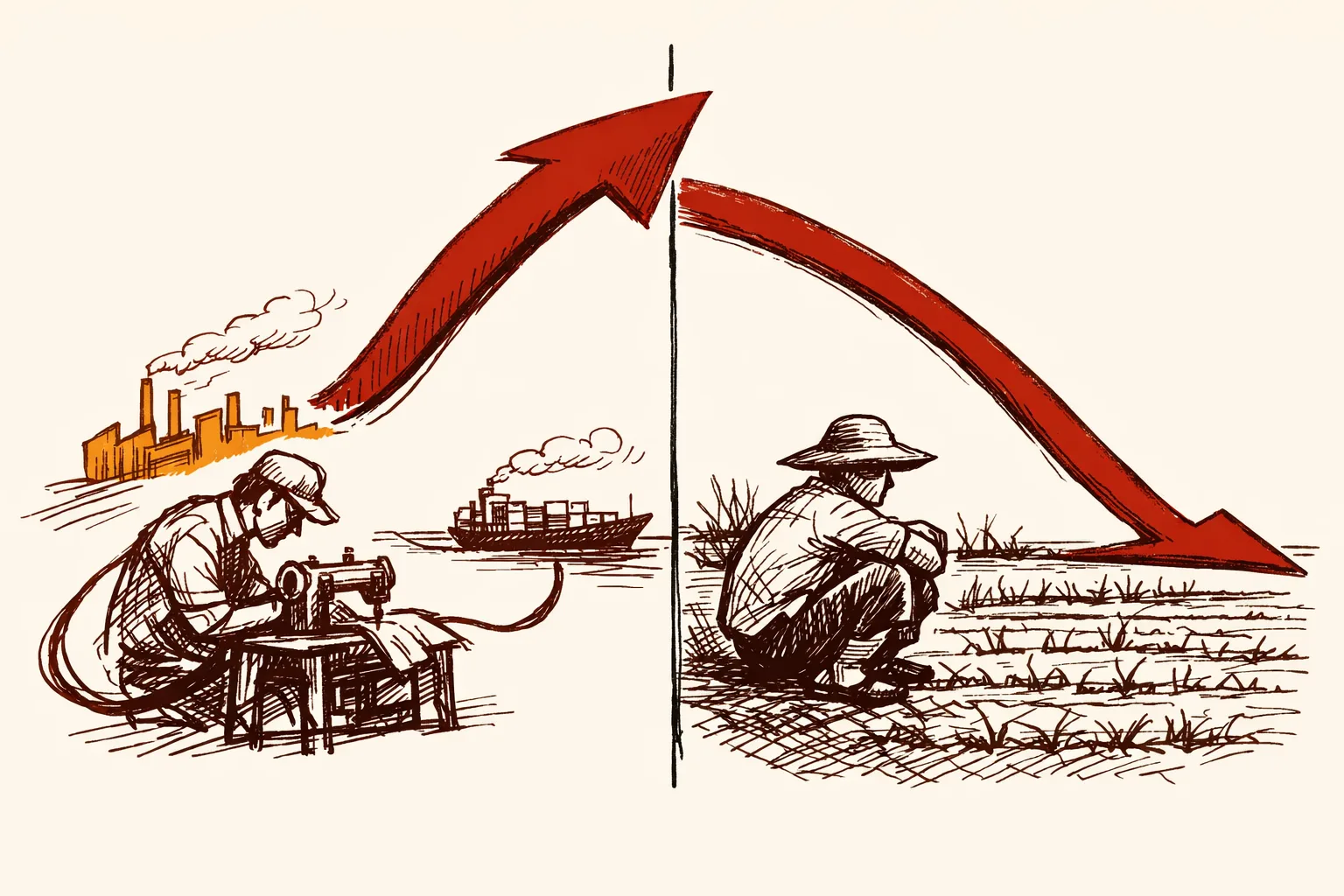
दूसरे देशों ने गरीबी से बाहर निकलने की रफ्तार कैसे बढ़ाई
Vietnam सबसे ज़्यादा सीख देने वाला उदाहरण है। 1986 में, Vietnam ने Doi Moi सुधार शुरू किए, अपनी नियोजित अर्थव्यवस्था को तोड़ा, अंतरराष्ट्रीय बाज़ारों के लिए दरवाज़े खोले, और कारोबार के अनुकूल सुधार लागू किए। उस वक्त देश Asia के सबसे ग़रीब देशों में से एक था।
पहला क़दम था खेती का। सहकारी खेत बंद कर दिए गए और परिवारों को ज़मीन के अधिकार दिए गए। खाद्य उत्पादन ज़ोरदार तरीक़े से बढ़ा। दूसरा क़दम था मैन्युफैक्चरिंग में नौकरियाँ। 2000 के बाद और गहरे होते व्यापार उदारीकरण ने Vietnam को वैश्विक सप्लाई चेन से जोड़ा। 2000 से 2019 के बीच निर्मित सामान के निर्यात में हर साल 20% की बढ़ोतरी हुई, जिससे लाखों स्थायी नौकरियाँ बनीं।
नतीजा यह रहा: 1990 में जहाँ 60% आबादी ग़रीबी में थी, वहीं 2020 के दशक की शुरुआत तक अत्यंत ग़रीबी सिर्फ़ 2% रह गई।
India तेज़ी से बढ़ा है। लेकिन काम करने की उम्र के करीब आधे अरब भारतीय अभी भी बेरोज़गार हैं या काम से बाहर हैं। Vietnam की ग़रीबी इसलिए कम हुई क्योंकि वहाँ मैन्युफैक्चरिंग में औपचारिक नौकरियाँ बनीं जिन्होंने ग्रामीण ग़रीबों को नकद अर्थव्यवस्था में शामिल किया। India की तरक़्की services में तो ज़बरदस्त रही है। उसी तरह का मैन्युफैक्चरिंग वाला असर दोहराना — ख़ासकर सबसे ग़रीब राज्यों में — यही अगला बड़ा दाँव है।
ज़िम्मेदारी किसकी है
Ministry of Rural Development के पास MGNREGA, ग्रामीण आवास योजना और India के मुख्य ग्रामीण ग़रीबी कार्यक्रमों की कमान है। MGNREGA का 86,000 करोड़ रुपये का बजट लगातार पाँच साल से नाममात्र के हिसाब से एक जैसा बना हुआ है — महंगाई को देखते हुए हर साल असल में कटौती ही हो रही है। यह बदलना ज़रूरी है।
Ministry of Statistics and Programme Implementation के पास घरेलू खपत सर्वेक्षण हैं जो सभी ग़रीबी अनुमानों की बुनियाद बनते हैं। 2017-18 के खपत सर्वेक्षण को लेकर जो विवाद हुआ — जिसे जारी होने से पहले सालों तक रोके रखा गया — उसने बेवजह अनिश्चितता पैदा की। आगे से समय पर और पारदर्शी तरीक़े से आँकड़े जारी करना एक ऐसा मानक होना चाहिए जिस पर कोई समझौता न हो।
NITI Aayog बहुआयामी ग़रीबी सूचकांक प्रकाशित करता है, जिसमें सच्ची तरक़्की दिखी है। अगला क़दम यह होना चाहिए कि इसके साथ एक अपडेटेड आय ग़रीबी रेखा भी जोड़ी जाए, ताकि India दोनों पहलुओं को एक साथ देख सके।
Parliament में दोनों सदनों में कम से कम सात अलग-अलग सवाल पूछे जा चुके हैं कि India अपनी आधिकारिक ग़रीबी रेखा कब अपडेट करेगा। सरकार की तरफ़ से एक साफ़ समयसीमा India की विकास की कहानी पर भरोसा मज़बूत करेगी — कमज़ोर नहीं।
इसकी क़ीमत क्या होगी
India की गरीबी मापने की व्यवस्था को ठीक करना - एक नई poverty line committee बनाना और updated अनुमान publish करना - इसमें practically कोई खर्च नहीं है। इसके लिए बस एक policy का फैसला चाहिए, बजट नहीं।
MGNREGA की मजदूरी को लगभग Rs 200-300 प्रतिदिन से बढ़ाकर Rs 400 प्रतिदिन करने के लिए सालाना करीब Rs 30,000-40,000 करोड़ की अतिरिक्त allocation की जरूरत होगी। यह India की GDP का 0.15% से भी कम है।
असली नुकसान देरी का है। India में बच्चों में wasting की दर करीब 19% है, और इससे पूरे labor force की productivity दशकों तक प्रभावित होती रहती है। Asian Development Bank के economists ने अनुमान लगाया है कि South Asia में बच्चों का कुपोषण इस क्षेत्र को हर साल GDP का करीब 3% नुकसान पहुंचाता है।
India अपने गरीबी-विरोधी कार्यक्रमों को बेहतर तरीके से fund कर सकता है। सवाल यह है कि delivery system इतनी कुशलता और ईमानदारी से चल रही है या नहीं कि हर रुपया सही काम आए।
अब आगे क्या होना चाहिए
India को और तेजी लाने के लिए तीन काम करने होंगे।
पहला, poverty line को update करो। सरकार को एक नई expert committee बनानी चाहिए - जिसे छह महीने का fixed mandate हो - ताकि India के मौजूदा विकास स्तर के हिसाब से एक सही income poverty line तय की जा सके। बेहतर measurement India की तरक्की की बात को और मजबूत बनाती है, कमजोर नहीं।
दूसरा, MGNREGA की delivery को दुरुस्त करो। मजदूरी कम से कम Rs 400 प्रतिदिन करो - जितना सरकार की अपनी expert committee ने recommend किया था - और Rs 12,219 करोड़ की बकाया मजदूरी तुरंत चुकाओ। Economist Jean Dreze ने कहा है कि wage rates बढ़ाने से सभी workers को फायदा होगा, जबकि guaranteed दिनों की संख्या बढ़ाने से सिर्फ एक छोटे से हिस्से को ही फायदा होगा।
तीसरा, transfers की जगह रोजगार पर ध्यान दो। मुफ्त राशन दिखने वाली गरीबी को कम करता है। लेकिन इससे वो non-farm rural jobs नहीं बनतीं जिनकी वजह से परिवार हमेशा के लिए गरीबी से बाहर निकल सकते हैं। India को अपने सबसे गरीब राज्यों - खासकर Bihar, Jharkhand, Uttar Pradesh और Madhya Pradesh - में rural manufacturing और agri-processing clusters में निवेश बढ़ाना चाहिए, ताकि बिना हुनर वाले मजदूरों को formal wage employment मिल सके। यही वो model है जो Modi सरकार द्वारा इन राज्यों में पहले से किए गए infrastructure investment को और मजबूत बनाता है।
Kerala ने पीढ़ियों तक human capital में निवेश करके अपनी गरीबी की समस्या सुलझाई। Vietnam ने किसानों को जमीन के अधिकार देकर और उन्हें global supply chains से जोड़कर यह काम किया। दोनों models के पीछे ठोस सबूत हैं। India के पास दोनों को बड़े पैमाने पर करने का मौका है।