A Cartoon Gets Blocked. A Law Gets Broken.
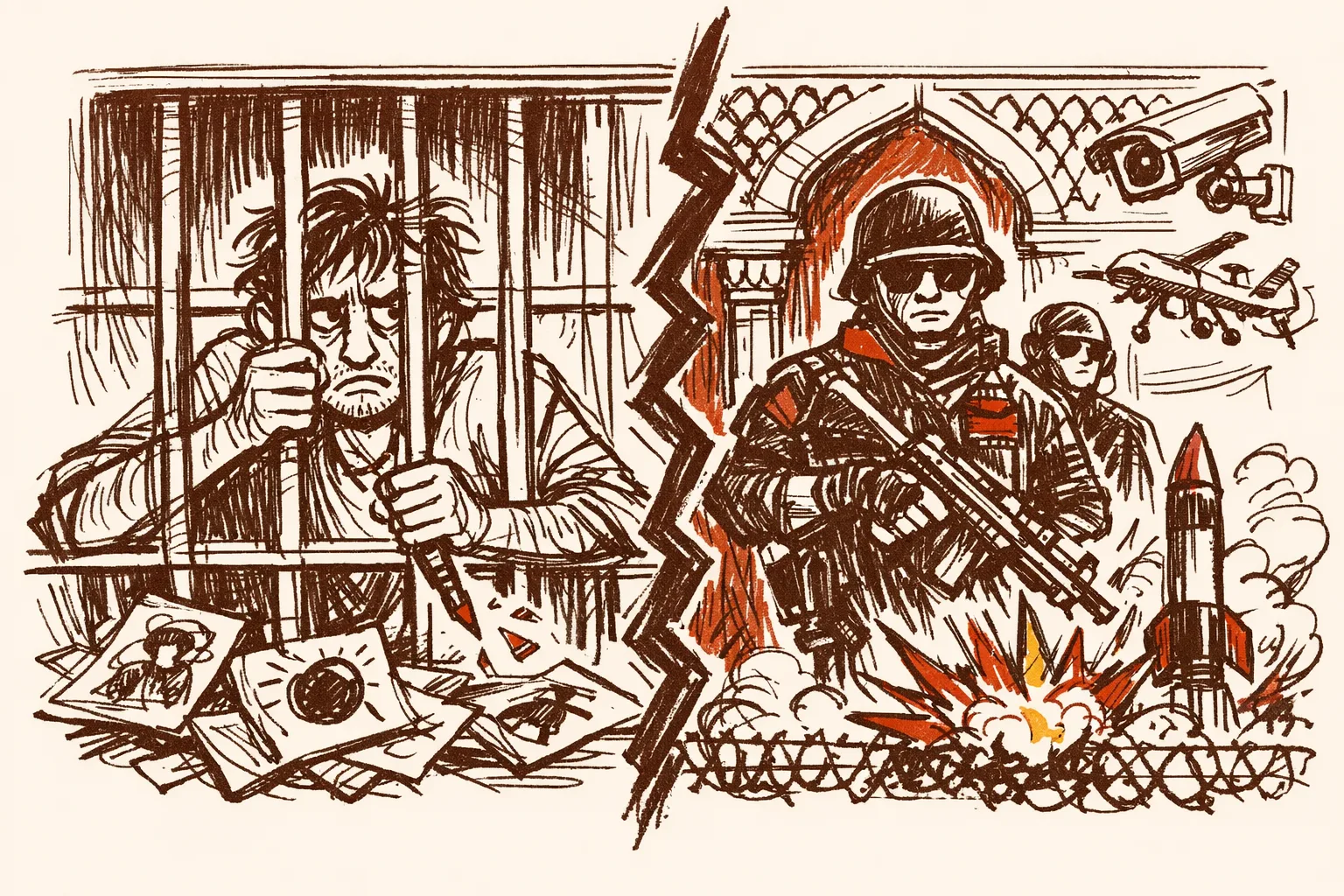
In March, cartoonist Satish Acharya posted two drawings on X, the social media platform. The cartoons criticized India's diplomatic posture. No violence. No incitement. A cartoon. Nothing that threatened any person. Within days, both were withheld in India on government orders, under Section 69A of the Information Technology Act.
According to AltNews, the crackdown went further. A user named Poonam wrote that a worm had more spine than the Prime Minister. That post was blocked. Another user called a foreign trip "totally useless." Also blocked. Governments block opinions they dislike.
I grew up in Chamba, where people spoke plainly about politicians and nothing bad happened. A government strong enough to run the world's fifth-largest economy should be strong enough to ignore a cartoon.
What Section 69A Actually Says
Section 69A of the Information Technology Act gives the central government power to block any online content it finds necessary for national security, public order, or sovereignty. The law was added in 2008 and upheld by the Supreme Court in the landmark Shreya Singhal v. Union of India case in 2015.
The Supreme Court was clear: blocking orders must be written down, narrowly tailored, and open to challenge in court. Section 69A is constitutional because of its safeguards. Remove the safeguards and you remove the constitutional basis.
The law also has a strict confidentiality clause. Blocking orders under Section 69A are secret. Internet service providers cannot disclose them. The user often only learns their post is blocked through an automated email from the platform. No prior notice. No hearing.
That secrecy is the problem. The Supreme Court approved the power to block content. A system where no one can see why that power is being used is not what the Court approved.
The Scale Has Grown Fast
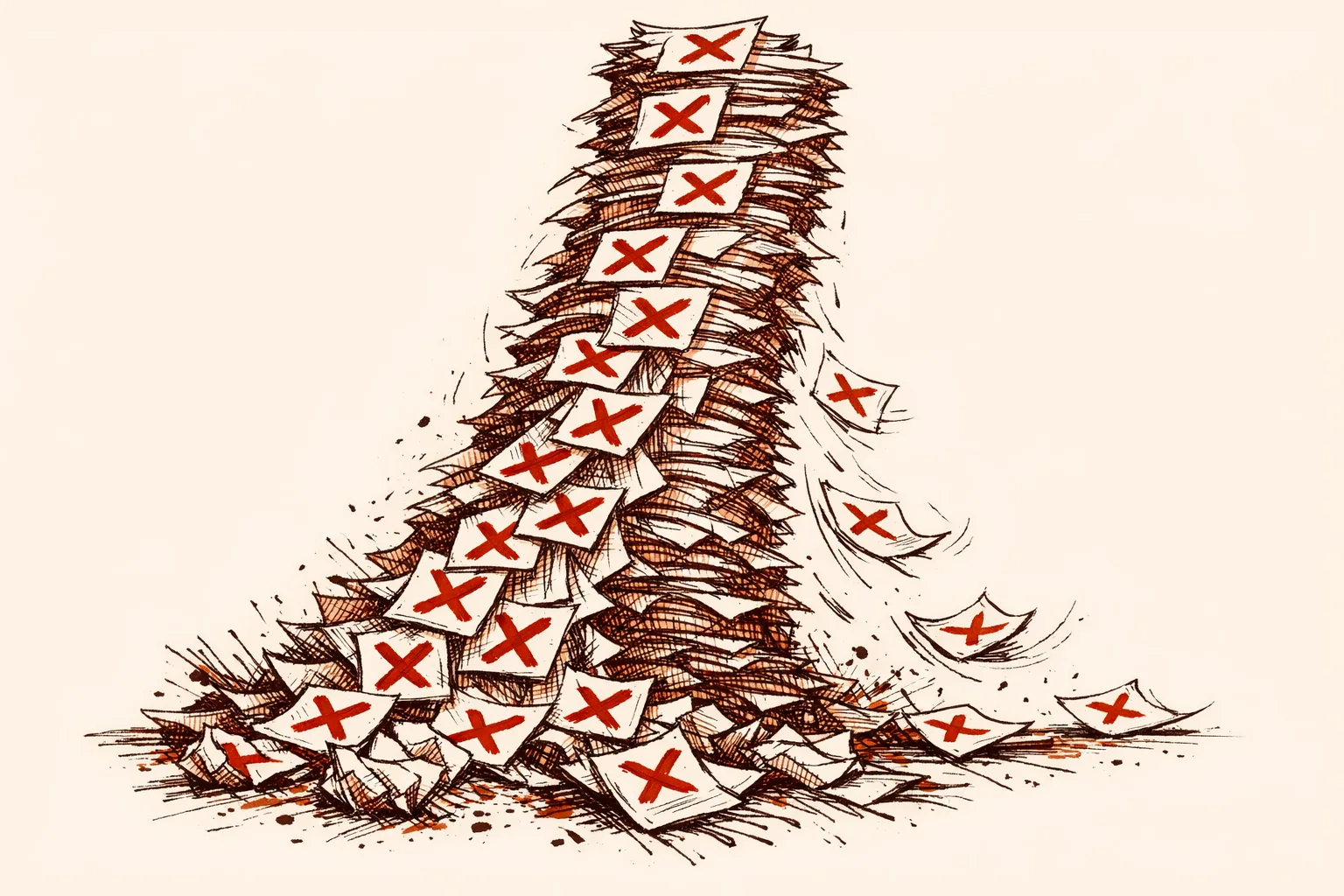
According to disclosures from the Ministry of Electronics and Information Technology, 6,096 accounts, websites, and URLs were blocked under Section 69A in one year, rising to 6,775 the following year, then 7,502 the year after. That is more than 20 orders per day, on average.
According to AltNews, recent orders have blocked political satire, criticism of government spending, and commentary on foreign policy. The Internet Freedom Foundation has called this pattern "secret and inaccessible censorship" that undermines the safeguards the Supreme Court specifically required. In March, memes and satire critical of the government were caught in takedown sweeps alongside legitimately harmful content.
The government has also built a second system called the Sahyog portal, run by the Ministry of Home Affairs. According to Al Jazeera, this portal allows different ministries to demand takedowns under a different provision of the IT Act, one that has not yet been reviewed by courts, creating a parallel censorship mechanism that bypasses the safeguards the Supreme Court already imposed on Section 69A.
What This Actually Costs India
India has more than 800 million internet users. It is building a digital economy that will need global trust, foreign investment, and international partnerships. India's press freedom rank has fallen to 151 out of 180 countries on the Reporters Without Borders index. That number is contested, but when investors and partners in the EU, Japan, or the United States look at India's digital governance, they look at these signals.
India wants to be seen as the democratic alternative to China's authoritarian model. That argument requires that India's own democracy function visibly. Every opaque blocking order is a free press release for Pakistan's information war against India.
What Has Already Been Tried
India has faced this problem before and partially solved it.
Section 66A of the IT Act criminalized sending messages deemed "grossly offensive" or "causing annoyance" online. Police used it widely. According to the Internet Freedom Foundation's research, 681 cases were filed under Section 66A while the law existed. After the Supreme Court struck it down as unconstitutional in 2015, police filed 1,307 more cases under a law that no longer existed. In 2021, the People's Union for Civil Liberties had to return to the Supreme Court asking it to force states to stop. The Court had to issue fresh orders directing state governments to tell their own police forces to stop arresting people under a provision ruled unconstitutional six years earlier.
Nobody got fired. The law was not the failure.
Section 69A has better safeguards on paper than Section 66A did. But the same pattern is repeating: broad language, opaque execution, no public accountability, and a list of targets that has expanded far beyond the original intent.
How Other Countries Fixed This
Germany: Force Transparency, Not Just Compliance
Germany passed the Network Enforcement Act in 2017 to handle illegal content online. The law required social media platforms to remove clearly illegal content within 24 hours and all illegal content within seven days. According to the Library of Congress, platforms that receive more than 100 complaints must publish public reports every six months detailing how many pieces of content were removed, why, and how quickly. Users must be told when their content is taken down and given a right to appeal.
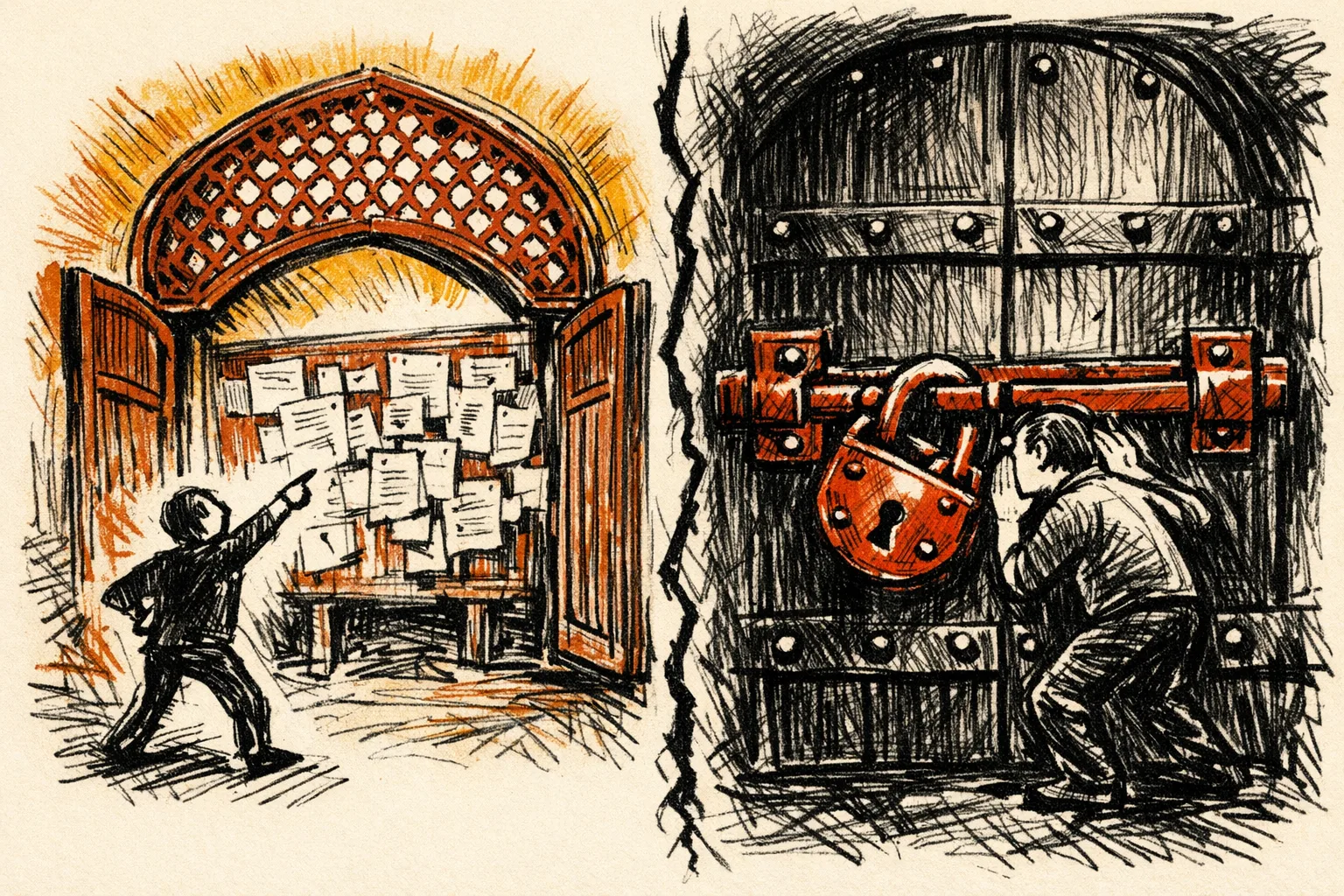
The mechanism India needs from this model is not the fines. It is the mandatory public reporting. Germany's law made the behavior of platforms visible to the public. India's Section 69A makes the behavior of the government invisible even to the people it affects.
The European Union: A Public Database of Every Removal
The EU's Digital Services Act goes further. According to the European Commission, it created a public Transparency Database that collects the reasons for every content moderation decision made by major platforms, in near real-time. Users have the right to know why their content was removed and can appeal to independent dispute settlement bodies. In just one recent period, users challenged over 165 million content moderation decisions and had them reversed in nearly 30% of cases.
The power to block content is not the problem. Exercising that power invisibly is.
Who Is Accountable
Section 69A orders flow through the Ministry of Electronics and Information Technology. The review committee that is supposed to approve blocking orders sits within MeitY. The Sahyog portal is operated by the Indian Cybercrime Coordination Centre under the Ministry of Home Affairs. There is no independent body reviewing whether orders meet the legal standard. There is no public registry of what has been blocked and why. The person whose post is blocked has no reliable way to challenge the order because they are often not told which order caused the block.
What Would It Cost
Creating a public registry of blocking orders - excluding only those involving active national security investigations - would cost very little. India already has the digital infrastructure. UPI, Aadhaar, and the Digital India stack prove that. A registry of blocking orders is a disclosure requirement for an existing system. Political will is the only thing missing.
What Needs to Happen
The answer is not to weaken Section 69A. Real threats exist online. Separatist content, Pakistan-linked propaganda, and coordinated incitement are real and active. The government was right to use Section 69A to ban Chinese apps after Galwan and to block Pakistani propaganda accounts after the Pahalgam attack. That power must stay.
What must change is how that power is exercised.
First, every Section 69A order should be logged in a public registry within 30 days of issuance. Orders involving active security investigations can be redacted. But the fact that a block occurred, and the general category of reason, should be public.
Second, the person or platform whose content is blocked must be notified and given a path to challenge the order. This is already required under the Blocking Rules. It is not happening. MeitY should be required to report quarterly on how many notices were sent and how many appeals were filed and resolved.
Third, the Sahyog portal must be brought within the same procedural framework as Section 69A. Running a parallel takedown system that bypasses Supreme Court-mandated safeguards is evasion, not governance.
Fourth, Parliament should define "public order" and "sovereignty" in the context of online speech with greater precision. The current vagueness is what allows a cartoon to be treated the same as a terrorist recruitment video.
A strong India does not need to hide what it blocks or why. Opacity does not protect national security. It erodes the institutional credibility that national security depends on. The threat to India's democratic standing does not come from a cartoonist. It comes from treating a cartoonist as a threat.