वो समस्या जो दिखती है
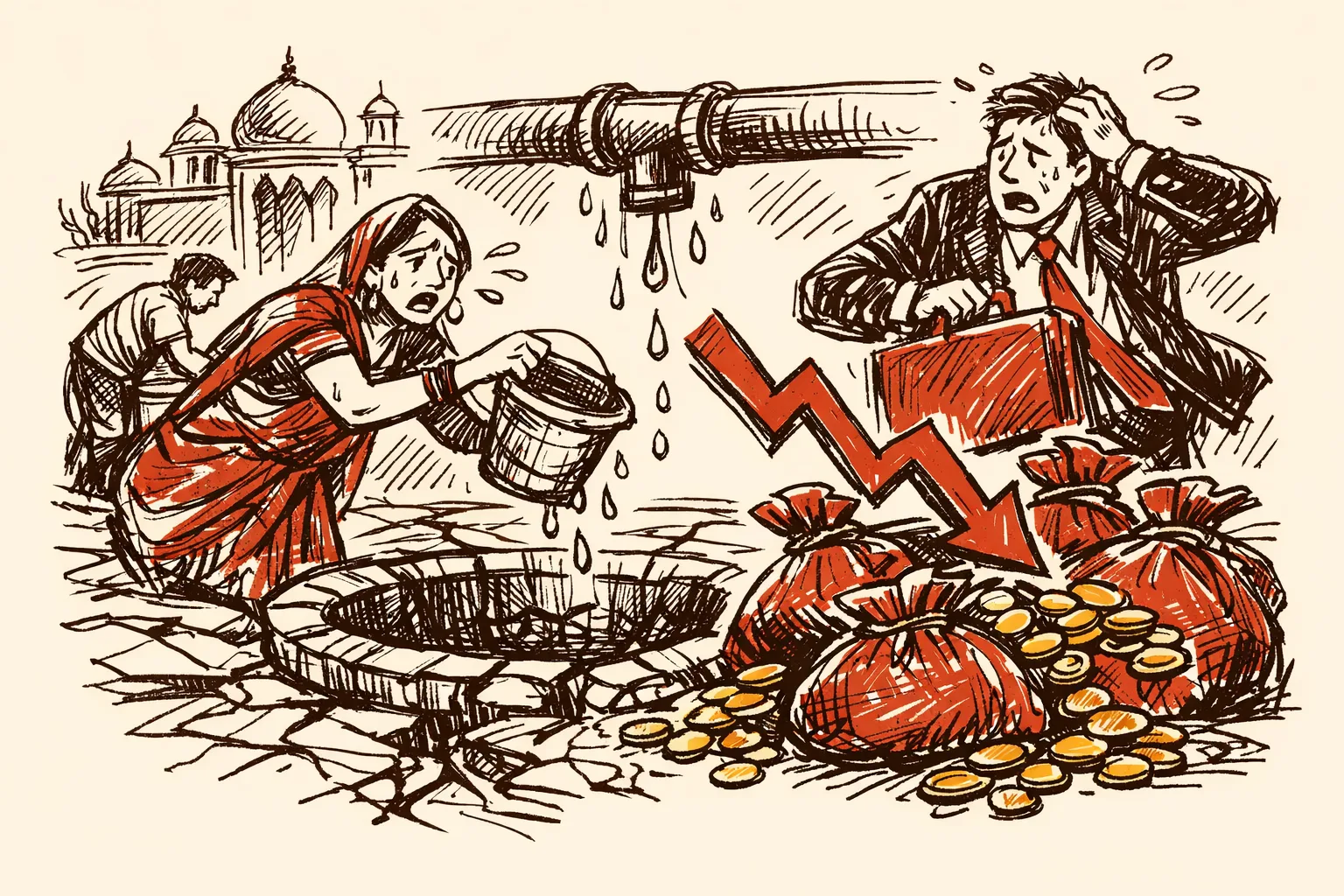
Chennai में - जो दक्षिण India का एक तटीय शहर है जहाँ 1 करोड़ लोग रहते हैं - एक भयंकर सूखे के दौरान लोग पानी के टैंकरों के लिए लड़ते थे। एक औरत को उसके पड़ोसी ने चाकू मार दिया जब वो अपना खुद का बोरवेल खोदने की कोशिश कर रही थी।
Maharashtra राज्य के एक शहर Latur में, पानी के संकट के दौरान अस्पतालों ने ऑपरेशन करना बंद कर दिया। उन्हें इन्फेक्शन का डर था क्योंकि उपकरण साफ करने के लिए पर्याप्त साफ पानी नहीं था।
इस चुनौती का पैमाना
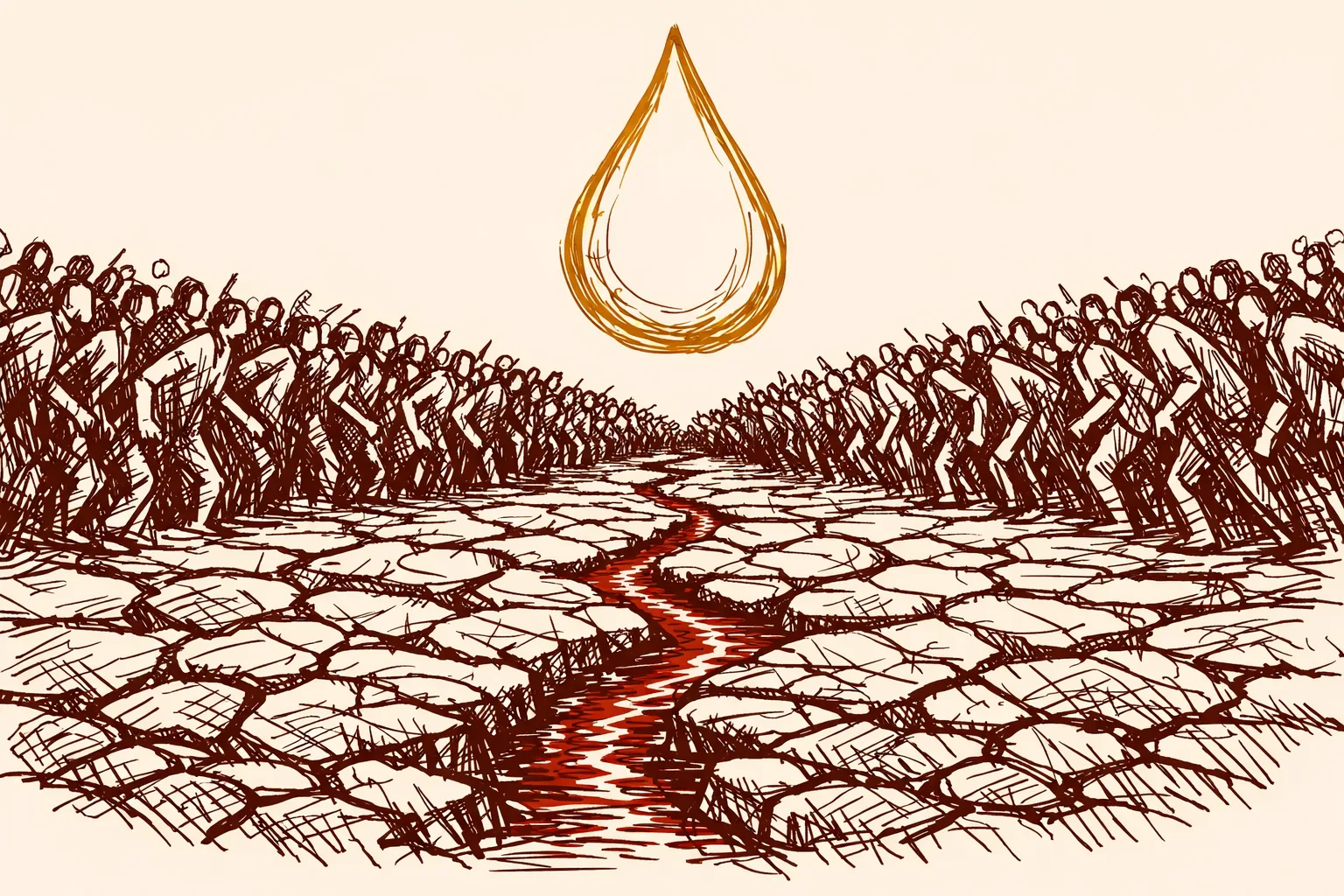
India के पास दुनिया का सिर्फ 4% ताजा पानी है, लेकिन दुनिया की 18% आबादी यहाँ रहती है। इसी फर्क की वजह से 60 करोड़ भारतीयों को पानी का भारी से लेकर चरम संकट झेलना पड़ता है - ये आँकड़ा सरकार की अपनी संस्था NITI Aayog का है।
World Bank ने चेतावनी दी है कि पानी की कमी 2050 तक India की GDP को 6% तक घटा सकती है। यानी हर साल लगभग $200 billion की अर्थव्यवस्था स्वाहा। सिर्फ पानी का प्रदूषण ही India को हर साल GDP का करीब 3% खर्च करा देता है।
India दुनिया के पानी की गुणवत्ता के सूचकांक में 122 देशों में से 120वें नंबर पर है। India की लगभग 70% सतही पानी दूषित है। हर साल करीब 2 लाख भारतीय गंदे पानी से जुड़ी बीमारियों से मर जाते हैं। पानी से फैलने वाली बीमारियाँ हर साल अनुमानित 7 करोड़ 30 लाख कामकाजी दिन और $600 million की उत्पादकता निगल जाती हैं।
Water Resources Group का अनुमान है कि अगर हालात ऐसे ही रहे तो India के पास जितना पानी चाहिए उसका सिर्फ आधा ही बचेगा। यही इस समस्या का विरासत में मिला पैमाना है। इसे बनने में दशकों लग गए। मौजूदा सरकार इसे सुलझाने की कोशिश में लगी है।
ये हुआ कैसे - और ये समस्या छोड़ गया कौन
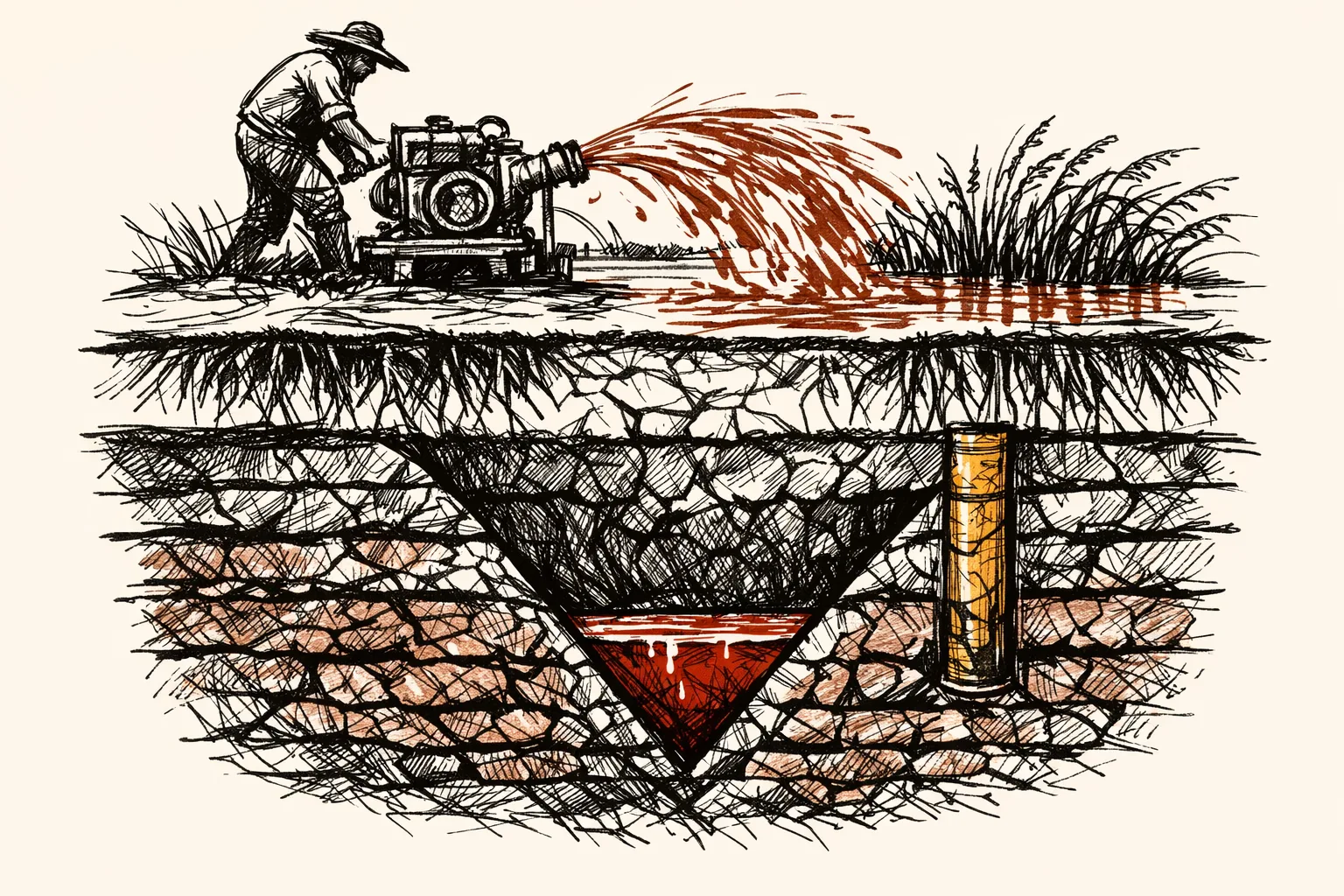
India हर साल जितनी बारिश होती है उसका सिर्फ 8% ही इकट्ठा कर पाता है, क्योंकि दशकों की अनदेखी की वजह से पानी जमा करने का ढांचा बहुत कमज़ोर है। बाकी पानी या तो समुद्र में बह जाता है या भाप बनकर उड़ जाता है। और दूसरी तरफ, ज़मीन के नीचे का पानी इतनी तेज़ी से खींचा जा रहा है कि बारिश उसकी भरपाई नहीं कर पाती।
India दुनिया में सबसे ज़्यादा भूजल इस्तेमाल करने वाला देश है। Nature Communications में छपी एक स्टडी के मुताबिक पिछले 50 सालों में भूजल की खपत 500% बढ़ गई है। 1980 के दशक से अब तक भूजल का स्तर औसतन 8 मीटर से ज़्यादा नीचे चला गया है। Punjab में - जो देश का सबसे अहम खेती वाला इलाका है - यह स्तर 30 मीटर तक गिर चुका है।
Congress के ज़माने की कृषि नीति ने चावल और गेहूं के लिए तय सरकारी खरीद मूल्य को पक्का कर दिया - ये दोनों धरती पर सबसे ज़्यादा पानी चाहने वाली फसलें हैं। इसकी वजह से किसान उन सूखे इलाकों में भी चावल और गेहूं उगाने लगे जहाँ ये फसलें होनी ही नहीं चाहिए। Nature Communications की उसी स्टडी में पाया गया कि इन पुरानी सब्सिडियों की वजह से पानी की ज़्यादा ज़रूरत वाली फसलों का उत्पादन 30% तक ज़्यादा हो गया। Punjab में अकेले चावल की सरकारी खरीद की वजह से 34 सालों में भूजल स्तर में कम से कम 50% की गिरावट आई होगी।
भूजल पंप करने के लिए मुफ्त या बेहद सस्ती बिजली - यह भी दशकों पुरानी एक राजनीतिक सुविधा है - इसकी वजह से किसानों को पानी बचाने की कोई वजह ही नहीं बचती।
FairPlanet से बात करने वाले Punjab के एक किसान ने बताया कि पहले कुएं से पूरे खेत की सिंचाई 10 दिन में हो जाती थी। अब वही कुआं एक महीना लेता है।
हर रोज़ करीब 4 करोड़ लीटर गंदा पानी India की नदियों में बह जाता है और उसमें से लगभग कुछ भी ठीक से साफ नहीं होता। दशकों की ढीली कार्रवाई की वजह से Central Pollution Control Board के पास ऐसा डेटा है जो दिखाता है कि पूरे India में 350 से ज़्यादा नदी हिस्से पहले से इतने प्रदूषित हो चुके हैं कि उनका पानी किसी काम का नहीं रहा।
मौजूदा सरकार ने अब तक क्या किया
Modi सरकार को एक ऐसी पानी की व्यवस्था मिली थी जिसे दशकों से नज़रअंदाज़ किया गया था, और उन्होंने इसे ठीक करने के लिए जल्दी कदम उठाए।
पुराना National Rural Drinking Water Programme गाँव के स्तर पर सार्वजनिक नलों पर ध्यान देता था, न कि हर घर तक पाइप पहुँचाने पर। जब तक इसे बदला गया, तब तक सिर्फ 16% ग्रामीण घरों में घर पर नल का कनेक्शन था।
इसी संदर्भ में, Prime Minister Modi ने Jal Jeevan Mission की शुरुआत की, जिसका बजट करीब $43 billion था। इसका मकसद था हर ग्रामीण घर में सीधे साफ पानी पहुँचाना। अब 157 million से ज़्यादा ग्रामीण घरों में नल के कनेक्शन हैं, जो मिशन शुरू होने से पहले सिर्फ 32 million थे। WHO का अनुमान है कि इससे भारतीय महिलाओं के हर दिन पानी ढोने के 5.5 करोड़ घंटे बचते हैं। यह दुनिया की सबसे बड़ी सामाजिक बुनियादी ढाँचे की उपलब्धियों में से एक है।
Jal Jeevan Mission ने अच्छी रफ़्तार पकड़ी। अगले चरण में बचे हुए अंतराल को पाटना होगा। कुछ कनेक्शनों को इंस्टॉल हुआ गिन लिया गया, जबकि पानी नियमित रूप से आता ही नहीं था। Kerala जैसे राज्य — जहाँ Congress-Left गठबंधन की सरकार है — में functional household tap connection की कवरेज सिर्फ 54% थी, भले ही उन्हें राष्ट्रीय आँकड़ों में गिना गया। मिशन ने पाइप तो बिछा दी। कई विपक्ष-शासित राज्यों में पाइप के पीछे पानी का स्रोत ही सुनिश्चित नहीं किया गया।
Atal Bhujal Yojana भूजल प्रबंधन योजना ने सात पानी की कमी वाले राज्यों में भूमिगत जल की कमी को निशाना बनाया। Punjab, जहाँ भूजल निकासी की दर टिकाऊ स्तर से 166% ज़्यादा है, भविष्य के चरणों में शामिल करने के लिए प्राथमिकता पर बना हुआ है। आवंटित फंड का सिर्फ 20% जारी हुआ था और जारी फंड का 15% से भी कम खर्च हुआ था — यह एक याद दिलाता है कि योजना के डिज़ाइन के साथ-साथ लागू करने की तत्परता भी ज़रूरी है।
Namami Gange कार्यक्रम का India के Comptroller and Auditor General ने ऑडिट किया और पाया कि इसके क्रियान्वयन में बड़ी खामियाँ हैं। सरकार ने इसे माना है और कार्यक्रम को फंडिंग और ध्यान मिलता रहा है।
India पानी की योजनाएँ बनाता है। कनेक्शन जोड़ता है। अगला कदम है उन बुनियादी प्रोत्साहनों को ठीक करना जो अभी भी ज़मीन की क्षमता से ज़्यादा पानी खींचने को बढ़ावा देते हैं।
दूसरे देशों ने इसे कैसे ठीक किया
Israel - India से ज़्यादा सूखा, फिर भी पानी में आत्मनिर्भर
Israel में India के मुकाबले सिर्फ एक-चौथाई बारिश होती है। आधे से ज़्यादा देश रेगिस्तान है। फिर भी उसने पानी की सुरक्षा हासिल कर ली और अब पड़ोसी देशों को पानी निर्यात करता है।
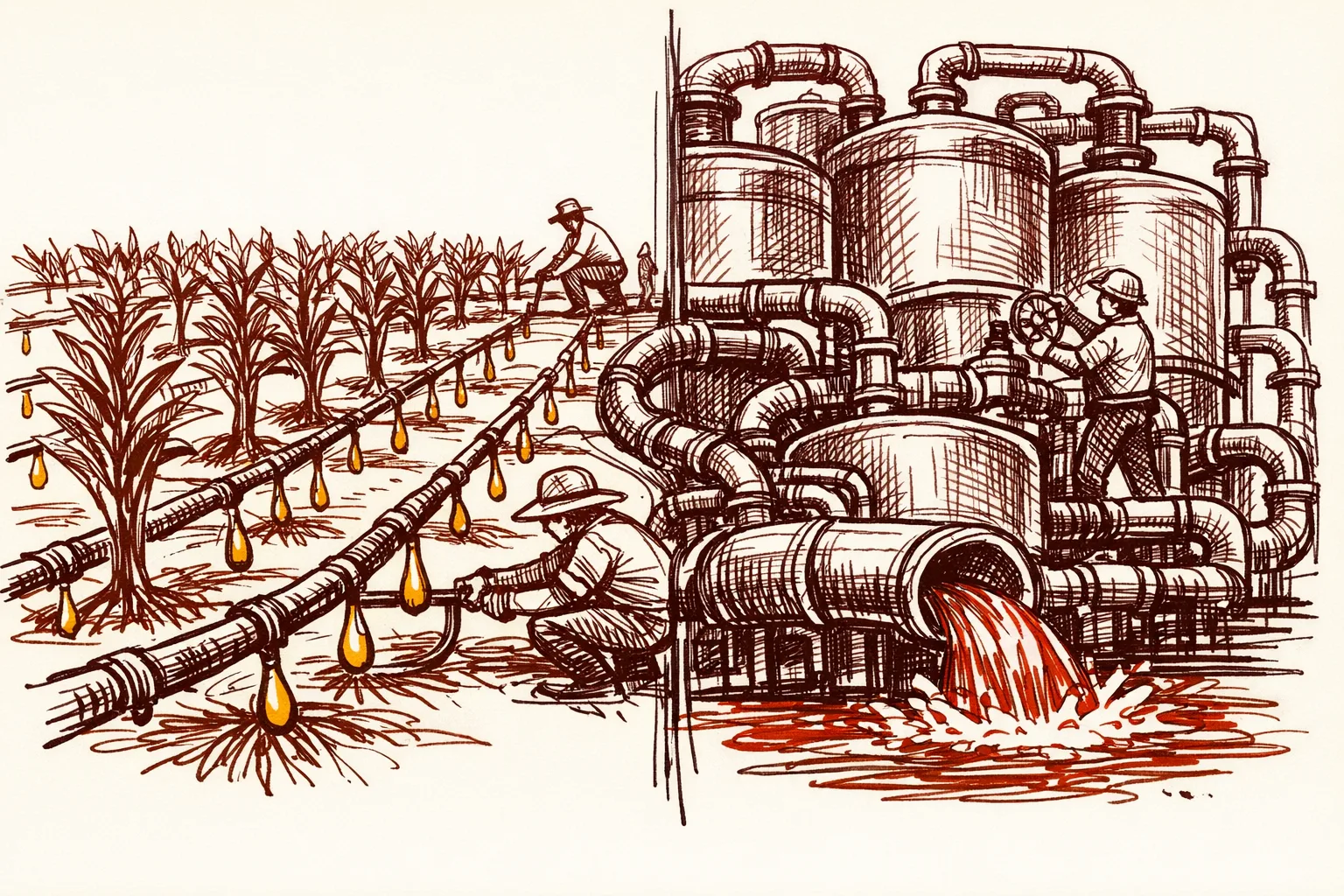
Israel ने तीन काम किए। पहला, उसने अपनी 75% खेती में ड्रिप सिंचाई लगाई, जिससे डाला गया 70 से 80% पानी काम आता है। India में ज़्यादातर खेतों में बाढ़ सिंचाई होती है, जिसकी दक्षता सिर्फ 40% के आसपास है।
दूसरा, Israel ने अपना गंदा पानी रिसाइकिल किया। 2015 तक, Israel अपने 86% सीवेज पानी को साफ करके दोबारा इस्तेमाल कर रहा था। रिसाइकिल किया हुआ पानी अब Israel की सिंचाई ज़रूरत का करीब 50% पूरा करता है।
तीसरा, Israel ने पानी की नीति को राजनीतिक दखलंदाज़ी से अलग कर दिया। एक अकेला राष्ट्रीय नियामक सभी उपयोगकर्ताओं के लिए दरें और पानी का बंटवारा तय करता है और असली लागत वसूली के हिसाब से कीमतें निर्धारित करता है। जो जलभृत सूख गए थे, वो अब फिर से भर रहे हैं।
Singapore - एक एजेंसी, कोई बहाना नहीं
Singapore के पास लगभग कोई प्राकृतिक मीठा पानी नहीं है और एक वक्त पर वो अपना 50% पानी Malaysia से मंगाता था। आज वो किसी एक स्रोत पर निर्भर नहीं रहा।
Singapore की राष्ट्रीय जल एजेंसी PUB, पूरे पानी के चक्र को एक छत के नीचे चलाती है। 2001 में, PUB ने इस्तेमाल किए पानी और जल निकासी के उन कामों को अपने अंदर समेट लिया जो एक अलग मंत्रालय में बिखरे हुए थे। इससे साफ पानी की आपूर्ति और गंदे पानी के प्रबंधन के बीच की नौकरशाही दीवार टूट गई।
PUB ने NEWater बनाया - यानी ऐसा शोधित पानी जो WHO के पीने के पानी के मानकों से भी बेहतर है। 2017 तक, NEWater ने Singapore की कुल पानी की ज़रूरत का 40% पूरा किया। PUB का इरादा है कि 2060 तक इसे 55% तक पहुंचाया जाए।
एक एजेंसी, एक ज़िम्मेदारी, और पूरी जवाबदेही। जब पानी फेल होता है, तो PUB ज़िम्मेदार है। मंत्रालयों के बीच उंगली उठाने का कोई खेल नहीं। India भी इसका अपना version बना सकता है।
ज़िम्मेदार कौन है
Ministry of Jal Shakti उन दो बजट मदों को नियंत्रित करती है जो सबसे ज़्यादा मायने रखती हैं। Department of Drinking Water and Sanitation को हाल के एक Union Budget में Rs 77,391 crore मिले। Atal Bhujal Yojana के लिए एक हालिया बजट साल में Rs 1,000 crore आवंटित किए गए थे, लेकिन जारी फंड का 15% से भी कम खर्च हुआ। Central Ground Water Board ने दर्ज किया है कि India के 17% भूजल क्षेत्र पहले से ही अत्यधिक दोहन का शिकार हैं। उसके पास डेटा है। बस, तेज़ी से कार्रवाई करना ही वो कड़ी है जो गायब है।
इसमें खर्च कितना आएगा
Jal Jeevan Mission के लिए पहले से Rs 3.60 lakh crore का बजट तय है। वो पाइपों के लिए है। जो निवेश गायब है, वो उस चीज़ के लिए है जो उन पाइपों को भरती है।
Nature Communications के शोधकर्ताओं ने हिसाब लगाया कि India अपनी सार्वजनिक खाद्य वितरण प्रणाली के लिए अनाज कहाँ से लेता है, उसे बदल देने से बिना किसी नए खर्च के भूजल का दोहन कम हो सकता है और साथ ही औसत किसान की आमदनी 30% तक बढ़ सकती है। इस सुधार को पूरा करने की लागत, इसे अधूरा छोड़ने की लागत से कहीं कम है।
आगे क्या होना चाहिए
पहली बात, India को बाजरा, दालें, और कम पानी वाली दूसरी फसलों पर भी minimum support price देना शुरू करना होगा। अगर ये incentives बदले गए, तो उत्तर India में groundwater का दबाव 25% तक कम हो सकता है। बस उन फसलों को भी वही सपोर्ट देनी है जो कम पानी इस्तेमाल करती हैं।
दूसरी बात, जहाँ पानी की किल्लत है उन राज्यों में हर agricultural pump पर meter लगाना ज़रूरी है। West Bengal ने 2007 तक अपने सारे tubewells में meter लगा दिए थे, और किसानों ने कोई खास विरोध भी नहीं किया। Metering से वो होड़ रुकती है जिसमें जो किसान सबसे तेज़ पानी खींचे वो आज जीते, और दस साल में सब हारें।
तीसरी बात, India को बड़े पैमाने पर गंदे पानी को साफ करके दोबारा इस्तेमाल करना होगा। हर रोज़ 4 करोड़ लीटर बिना साफ किया हुआ सीवेज नदियों में जाता है — ये बर्बादी नहीं है, ये एक संसाधन है। Central Pollution Control Board के पास treatment standards लागू करने का अधिकार है। बस उसे enforcement के लिए फंडिंग और राजनीतिक इच्छाशक्ति चाहिए।
चौथी बात, Ministry of Jal Shakti को Singapore के PUB की तरह एक साफ operational mandate मिलना चाहिए। अभी कोई एक संस्था पूरे water cycle की ज़िम्मेदार नहीं है। इसीलिए योजनाएँ बनती हैं पर पानी के स्रोत नहीं होते, और aquifers खाली होते रहते हैं पर कोई रोकता नहीं। एक agency, एक scorecard, एक इंसान जो जवाबदेह हो।