நீங்களே பார்க்கக்கூடிய பிரச்சனை
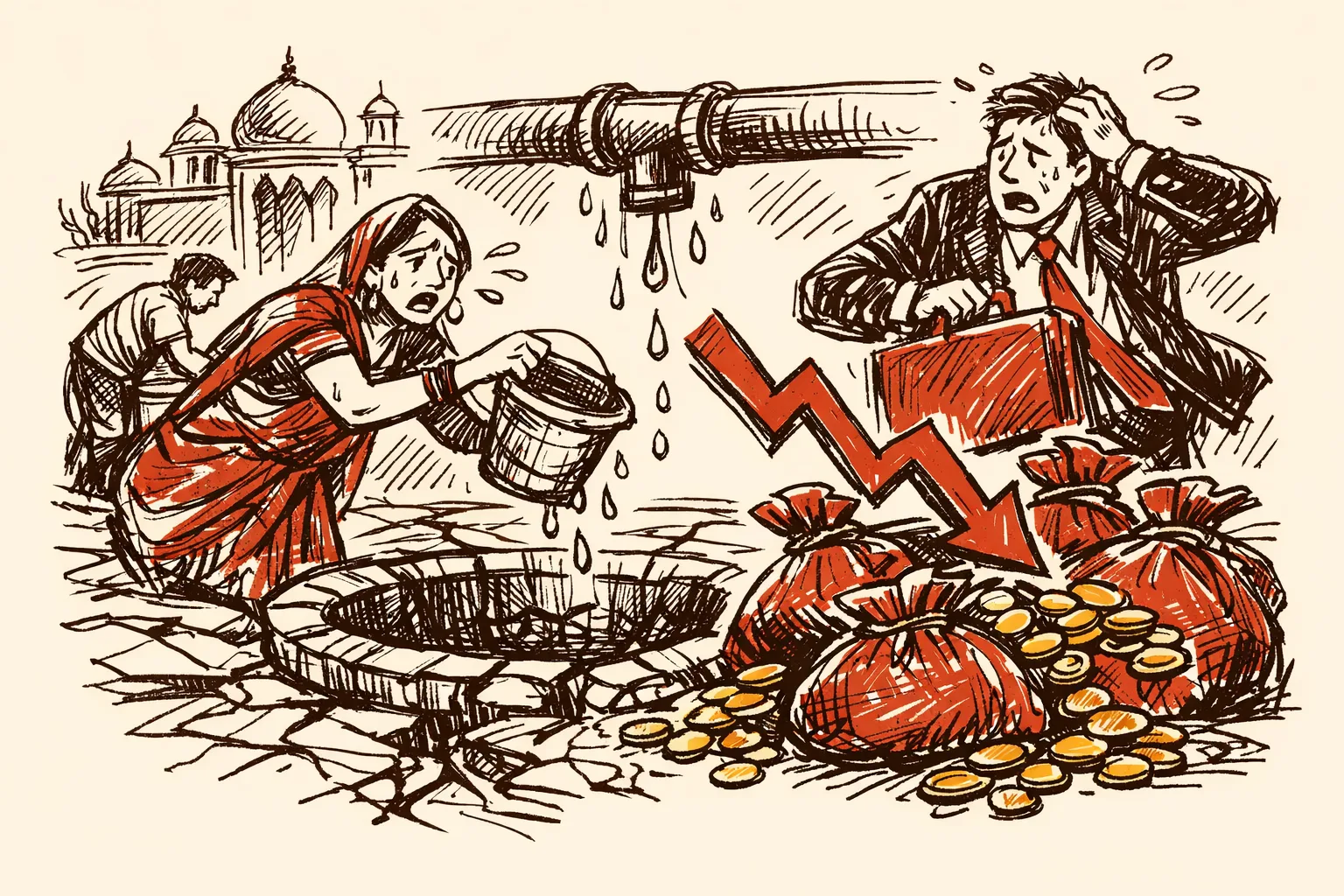
Chennai - தென் India-வில் உள்ள 1 கோடி மக்கள் வாழும் ஒரு கடலோர நகரம் - அங்கே கடுமையான வறட்சியின்போது மக்கள் தண்ணீர் டேங்கர்களுக்காக சண்டையிட்டனர். ஒரு பெண், தனது அண்டை வீட்டுக்காரர் தனியாக borewell தோண்ட முயன்றபோது கத்தியால் குத்தப்பட்டார்.
Maharashtra மாநிலத்தில் உள்ள Latur நகரில், தண்ணீர் நெருக்கடியின்போது மருத்துவமனைகள் அறுவை சிகிச்சை செய்வதை நிறுத்திவிட்டன. கருவிகளை கிருமிநாசினி செய்ய போதுமான சுத்தமான தண்ணீர் இல்லாததால் தொற்று ஏற்படுமோ என்று அஞ்சினார்கள்.
சவாலின் அளவு
India உலகின் ந淡水-வில் 4% மட்டுமே வைத்திருக்கிறது, ஆனால் உலக மக்கள்தொகையில் 18%-ஐ தாங்குகிறது. அந்த இடைவெளிதான் 60 கோடி Indians அதிகமான முதல் தீவிரமான தண்ணீர் நெருக்கடியை எதிர்கொள்கிறார்கள் என்பதை விளக்குகிறது - இதை அரசாங்கத்தின் சொந்த திட்டமிடல் அமைப்பான NITI Aayog-ஐ சொல்கிறது.
World Bank எச்சரிக்கிறது - தண்ணீர் பற்றாக்குறை 2050-ஆம் ஆண்டுவரையில் India-வின் GDP-ஐ 6% குறைக்கலாம். அதாவது ஆண்டுதோறும் சுமார் $200 பில்லியன் பொருளாதாரத்திலிருந்து ஆவியாகிறது. தண்ணீர் மாசுபாடு மட்டுமே India-வின் GDP-யில் ஆண்டுதோறும் சுமார் 3% செலவை ஏற்படுத்துகிறது.
உலக தண்ணீர் தர குறியீட்டில் India 122 நாடுகளில் 120-வது இடத்தில் இருக்கிறது. India-வின் மேற்பரப்பு நீரில் கிட்டத்தட்ட 70% மாசுபட்டிருக்கிறது. ஆண்டுதோறும் சுமார் 2 லட்சம் Indians பாதுகாப்பற்ற தண்ணீரால் வரும் நோய்களால் இறக்கிறார்கள். நீரினால் பரவும் நோய்கள் பொருளாதாரத்திற்கு ஆண்டுதோறும் சுமார் 7.3 கோடி வேலை நாட்களும் $600 மில்லியன் உற்பத்தித்திறன் இழப்பும் ஏற்படுத்துகின்றன என்று மதிப்பிடப்படுகிறது.
Water Resources Group கணிக்கிறது - தற்போதைய போக்கு தொடர்ந்தால் India-வுக்கு தேவையான தண்ணீரில் பாதி மட்டுமே கிடைக்கும். இது பரம்பரையாக வந்த பிரச்சனையின் அளவு. இதை உருவாக்க பல தசாப்தங்கள் ஆனது. தற்போதைய அரசாங்கம் இதை சரிசெய்ய வேலை செய்கிறது.
இது ஏன் நடந்தது - யார் இந்த பிரச்சனையை விட்டுச் சென்றார்கள்
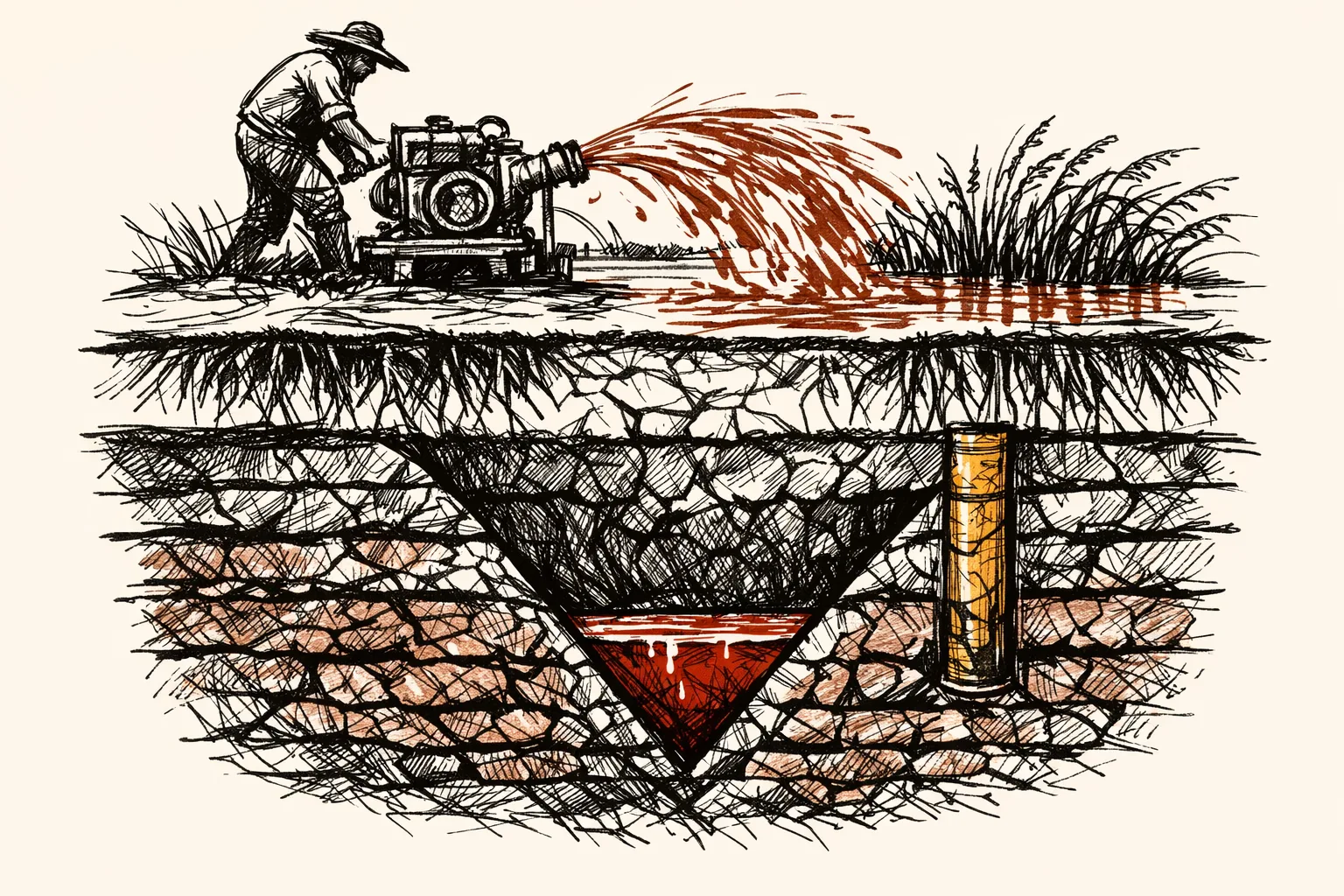
India ஒவ்வொரு வருஷமும் பெற்ற மழையில் வெறும் 8% மட்டுமே சேகரிக்கிறது - பல தசாப்தங்களாக சரியான முதலீடு இல்லாம போனதால் மழைநீர் சேகரிப்பு உள்கட்டமைப்பு மிகவும் மோசமான நிலையில் இருக்கு. மீதி எல்லாம் கடலில் போய் சேருது, இல்லன்னா ஆவியாயிடுது. அதே நேரத்தில், நிலத்தடி நீரை மழை நிரப்பற வேகத்தைவிட மிகவும் வேகமா உறிஞ்சி எடுத்துக்கிட்டே இருக்கோம்.
நிலத்தடி நீரை மிகவும் அதிகமா பயன்படுத்தற நாடு இந்தியாதான். கடந்த 50 வருஷத்தில், நிலத்தடி நீர் பயன்பாடு 500% அதிகரிச்சிருக்கு - இதை Nature Communications-ல வெளியான ஒரு ஆய்வு சொல்லுது. 1980-களிலிருந்து நிலத்தடி நீர் மட்டம் சராசரியா 8 மீட்டருக்கும் மேல கீழே போயிருக்கு. நாட்டோட மிக முக்கியமான விவசாய பகுதியான Punjab-ல் இது 30 மீட்டர் கீழே இறங்கிடுச்சு.
Congress காலத்து விவசாய கொள்கை, அரிசி மற்றும் கோதுமைக்கு உத்தரவாதமான கொள்முதல் விலையை நிலைநிறுத்திச்சு - இந்த இரண்டும் உலகிலேயே மிகவும் அதிக தண்ணீர் தேவைப்படற பயிர்கள். இதனால விவசாயிகள், இந்த பயிர்களுக்கே ஏத்தமதில்லாத வறண்ட பகுதிகளிலகூட அரிசியும் கோதுமையும் பயிரிட ஆரம்பிச்சாங்க. Nature Communications ஆய்வு சொல்றது என்னன்னா, இந்த பழைய மானியங்களால தண்ணீர் அதிகம் தேவைப்படற பயிர்கள் 30% அளவுக்கு அதிகமா உற்பத்தி ஆகியிருக்கலாம்னு. Punjab-ல மட்டும், அரிசி கொள்முதல் ஒண்ணே 34 வருஷத்தில் நிலத்தடி நீர் மட்டம் குறைஞ்சதுல குறைஞ்சது 50% காரணமா இருந்திருக்கலாம்.
நிலத்தடி நீர் பம்ப் பண்ண இலவசமா அல்லது மலிவு விலையில் மின்சாரம் கொடுக்கிறது - இதுவும் பல தசாப்தங்களாக இருந்துவர்ற ஒரு அரசியல் சலுகைதான் - விவசாயிகளுக்கு தண்ணீர் மிச்சப்படுத்தணும்னு எந்த காரணமும் இல்லாம பண்ணிடுது.
FairPlanet-கிட்ட பேசின ஒரு Punjab விவசாயி சொன்னார், ஒரு காலத்தில் ஒரு கிணறு முழு நிலத்தையும் 10 நாள்ல நனைக்கும்னு. இப்போ அதே கிணத்துக்கு ஒரு மாசம் ஆகுதுன்னு.
ஒவ்வொரு நாளும் கிட்டத்தட்ட 4 கோடி லிட்டர் கழிவுநீர் India-வோட ஆறுகளில் கலக்குது, அதில் சரியா சுத்திகரிக்கப்படுவது என்னன்னா கிட்டத்தட்ட ஏதுமில்லை. பல தசாப்தங்களாக சட்டங்கள் சரியா அமல் படுத்தப்படல, அதனால Central Pollution Control Board-கிட்ட இருக்கற தரவுகள் சொல்றது - India முழுக்க 350-க்கும் மேற்பட்ட ஆற்று பகுதிகள் இப்போவே பயன்படுத்தவே முடியாத அளவுக்கு மாசுபட்டுருக்குன்னு.
இப்போதைய அரசு இதுவரை என்ன செஞ்சிருக்கு
Modi அரசாங்கம் பல தசாப்தங்களாக புறக்கணிக்கப்பட்ட நீர் அமைப்பை பெற்றுக்கொண்டது, அதை சரிசெய்ய உடனடியாக நடவடிக்கை எடுத்தது.
பழைய National Rural Drinking Water Programme தனி வீடுகளுக்கு குழாய் இணைப்பு கொடுப்பதற்கு பதிலாக கிராம அளவில் பொது குழாய்களை மட்டுமே கவனித்தது. அது மாற்றப்படும் நேரத்தில், கிராமப்புற வீடுகளில் வெறும் 16% மட்டுமே வீட்டில் குழாய் இணைப்பு வைத்திருந்தன.
இந்த சூழலில், Prime Minister Modi சுமார் $43 billion பட்ஜெட்டுடன் Jal Jeevan Mission தொடங்கினார். எல்லா கிராமப்புற வீடுகளுக்கும் நேரடியாக சுத்தமான தண்ணீரை குழாய் வழியே கொண்டு செல்வது அதன் இலக்கு. இப்போது 157 million கிராமப்புற வீடுகளுக்கு குழாய் இணைப்பு இருக்கிறது, mission தொடங்குவதற்கு முன்பு வெறும் 32 million மட்டுமே இருந்தது. இது இந்திய பெண்களுக்கு தினமும் தண்ணீர் சுமந்து செல்லும் வேலையில் 5.5 கோடி மணி நேரம் மிச்சப்படுகிறது என்று WHO மதிப்பிடுகிறது. இது உலகிலேயே மிகப்பெரிய சமூக உள்கட்டமைப்பு சாதனைகளில் ஒன்று.
Jal Jeevan Mission நல்ல வேகம் எடுத்தது. அடுத்த கட்டத்தில் மீதமிருக்கும் இடைவெளிகளை நிரப்ப வேண்டும். சில இணைப்புகள் நிறுவப்பட்டதாக கணக்கில் போடப்பட்டன, ஆனால் தண்ணீர் சரியாக வரவில்லை. Congress-Left கூட்டணி ஆளும் Kerala போன்ற மாநிலங்களில், தேசிய மொத்த எண்ணிக்கையில் கணக்கில் சேர்க்கப்பட்டாலும் செயல்படும் வீட்டு குழாய் இணைப்பு வெறும் 54% மட்டுமே இருந்தது. mission குழாய் போட்டது. எதிர்க்கட்சி ஆளும் சில மாநிலங்களில், அதன் பின்னால் இருக்கும் தண்ணீர் ஆதாரம் உறுதிப்படுத்தப்படவில்லை.
Atal Bhujal Yojana நிலத்தடி நீர் மேலாண்மை திட்டம் ஏழு தண்ணீர் பற்றாக்குறை மாநிலங்களில் நிலத்தடி நீர் குறைவை குறிவைத்தது. நிலையான அளவை விட 166% அதிகமாக நிலத்தடி நீர் எடுக்கும் Punjab, எதிர்கால கட்டங்களில் சேர்க்கப்பட வேண்டிய முக்கிய மாநிலமாக இருக்கிறது. ஒதுக்கப்பட்ட நிதியில் வெறும் 20% மட்டுமே வெளியிடப்பட்டது, வெளியிடப்பட்ட நிதியில் 15%க்கும் குறைவாகவே செலவழிக்கப்பட்டது - திட்ட வடிவமைப்பு செயல்படுத்தும் அவசரத்துடன் பொருந்த வேண்டும் என்பதை இது நினைவூட்டுகிறது.
Namami Gange திட்டம் India-வின் Comptroller and Auditor General-ஆல் தணிக்கை செய்யப்பட்டது, செயல்பாட்டில் குறிப்பிடத்தக்க இடைவெளிகள் இருப்பதாக கண்டறியப்பட்டது. இதை அரசாங்கம் ஒப்புக்கொண்டது, திட்டம் தொடர்ந்து நிதியும் கவனமும் பெற்று வருகிறது.
India தண்ணீர் திட்டங்களுக்கு பணம் கொடுக்கிறது. இணைப்புகள் போடுகிறது. அடுத்த நிலை என்னவென்றால், பூமி தாங்கக்கூடியதை விட அதிகமாக தண்ணீர் இறைப்பதை இன்னும் ஊக்குவிக்கும் அடிப்படை சூழ்நிலைகளை சரிசெய்வது தான்.
மற்ற நாடுகள் இதை எப்படி சரிசெய்தன
Israel - இந்தியாவை விட வறண்டது, இப்போது தண்ணீர் பாதுகாப்பானது
Israel-க்கு இந்தியாவில் பெய்யும் மழையின் கால் பங்கு மட்டுமே கிடைக்கும். பாதிக்கும் மேல் பாலைவனம். ஆனாலும் தண்ணீர் பாதுகாப்பை அடைந்து, இப்போது பக்கத்து நாடுகளுக்கே தண்ணீர் ஏற்றுமதி செய்கிறது.
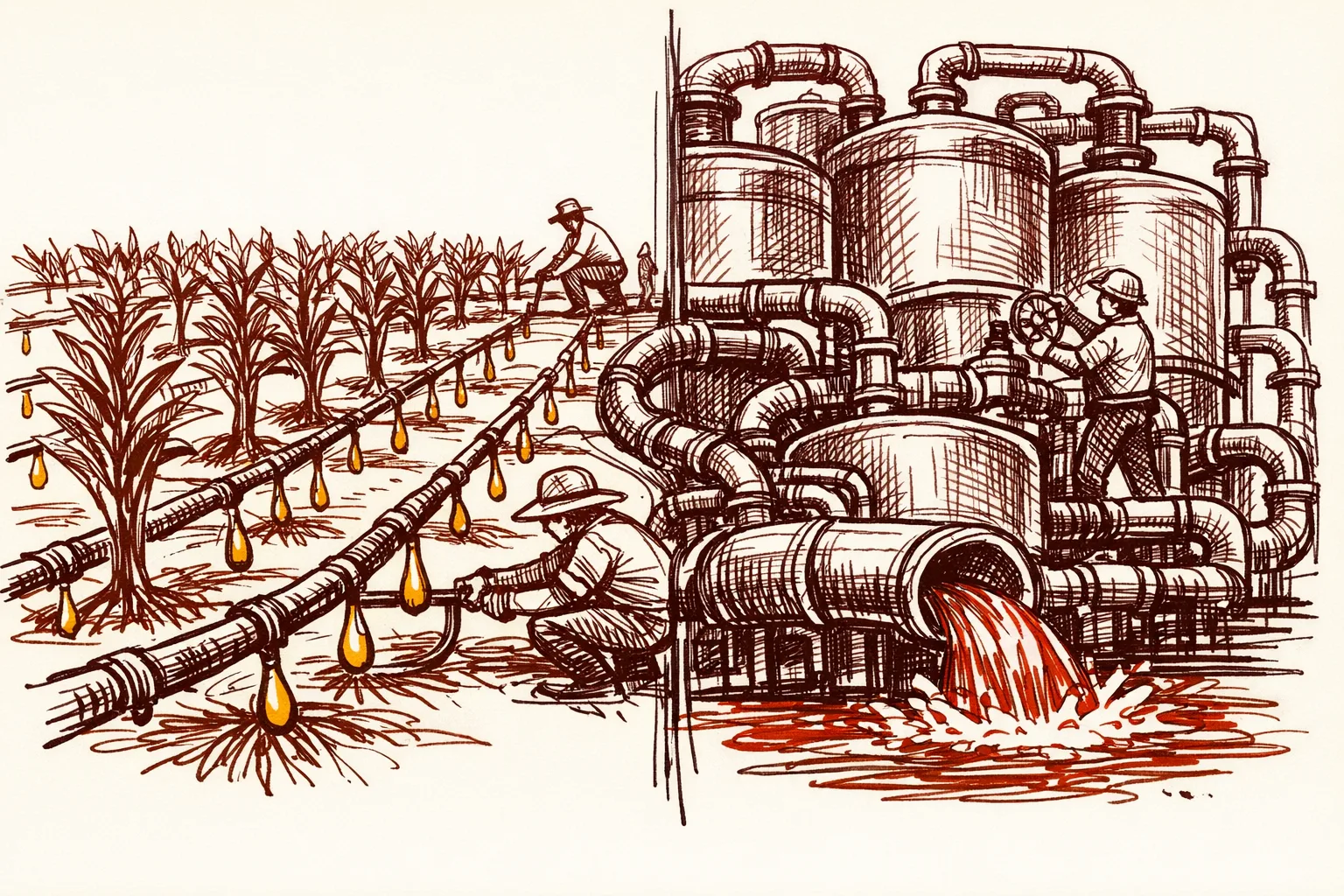
Israel மூன்று விஷயங்கள் செய்தது. முதலாவதாக, தன் விவசாய நிலத்தில் 75% பகுதியில் சொட்டு நீர்ப்பாசனம் பயன்படுத்தியது - இது போடும் தண்ணீரில் 70 முதல் 80% வரை சேமிக்கும். இந்தியாவில் பெரும்பாலான வயல்களில் வெள்ள நீர்ப்பாசனம் தான் பயன்படுத்துகிறோம், அதன் திறன் வெறும் 40% தான்.
இரண்டாவதாக, Israel தன் கழிவுநீரை மறுசுழற்சி செய்தது. 2015 வாக்கில், Israel தன் கழிவுநீரில் 86% சுத்திகரித்து மறுசுழற்சி செய்தது. இப்போது மறுசுழற்சி நீரே Israel-இன் பாசன தண்ணீரில் சுமார் 50% வழங்குகிறது.
மூன்றாவதாக, Israel தண்ணீர் கொள்கையை அரசியல் தலையீட்டிலிருந்து தனியாக வைத்தது. ஒரே ஒரு தேசிய ஒழுங்குமுறை அமைப்பு எல்லா பயனர்களுக்குமான கட்டணம் மற்றும் தண்ணீர் ஒதுக்கீட்டை நிர்வகிக்கிறது, உண்மையான செலவு மீட்டலை அடிப்படையாக வைத்து விலை நிர்ணயிக்கிறது. வற்றிப்போன நீர்மட்டங்கள் இப்போது மீண்டும் நிரம்புகின்றன.
Singapore - ஒரே அமைப்பு, எந்த சாக்கும் இல்லை
Singapore-க்கு இயற்கையான நன்னீர் ஏறக்குறைய இல்லவே இல்லை, ஒரு காலத்தில் Malaysia-விடமிருந்து 50% தண்ணீர் இறக்குமதி செய்தது. இன்று எந்த ஒரு மூலத்திலும் தங்கியிருக்கவில்லை.
Singapore-இன் தேசிய தண்ணீர் அமைப்பான PUB, முழு தண்ணீர் சுழற்சியையும் ஒரே கூரையின் கீழ் நடத்துகிறது. 2001-ல், PUB தனி அமைச்சகத்தில் பிரிந்திருந்த கழிவுநீர் மற்றும் வடிகால் பணிகளை உள்ளே எடுத்துக்கொண்டது - தூய்மையான தண்ணீர் வழங்கல் மற்றும் கழிவுநீர் மேலாண்மை இடையே இருந்த அதிகாரமைப்பு பிளவை முடிவுக்கு கொண்டுவந்தது.
PUB NEWater என்ற தொழில்நுட்பத்தை உருவாக்கியது - இது கழிவுநீரை சுத்திகரித்து WHO குடிநீர் தரத்தை விட உயர்ந்த தரத்தில் தயாரிக்கிறது. 2017 வாக்கில், NEWater Singapore-இன் மொத்த தண்ணீர் தேவையில் 40% பூர்த்தி செய்தது. 2060 வாக்கில் அதை 55% ஆக உயர்த்த PUB திட்டமிட்டிருக்கிறது.
ஒரே அமைப்பு, ஒரே பொறுப்பு, முழு பதில் சொல்ல வேண்டிய கடமை. தண்ணீர் தோல்வியடைந்தால் PUB பொறுப்பு. அமைச்சகங்களுக்கிடையே விரல் நீட்டுவதில்லை. India-வால் இதன் சொந்த வெர்ஷனை கட்டமைக்க முடியும்.
யார் பொறுப்பு ஏற்கிறார்கள்
Ministry of Jal Shakti மிக முக்கியமான இரண்டு பட்ஜெட் தொகைகளை கட்டுப்படுத்துகிறது. Department of Drinking Water and Sanitation சமீபத்திய Union Budget-ல் Rs 77,391 கோடி பெற்றது. Atal Bhujal Yojana-வுக்கு ஒரு சமீபத்திய பட்ஜெட் ஆண்டில் Rs 1,000 கோடி ஒதுக்கப்பட்டது, ஆனால் வெளியிட்ட தொகையில் 15%-க்கும் குறைவாகவே செலவழிக்கப்பட்டது. Central Ground Water Board ஆவணப்படுத்தியிருக்கிறது - India-வின் நிலத்தடி நீர் தொகுதிகளில் 17% ஏற்கனவே அதிகமாக சுரண்டப்படுகின்றன என்று. தரவு இருக்கிறது. விரைவான அமலாக்க நடவடிக்கை மட்டுமே இல்லாமல் போகிறது.
எவ்வளவு செலவாகும்
Jal Jeevan Mission-க்கு ஏற்கனவே Rs 3.60 லட்சம் கோடி பட்ஜெட் உறுதி செய்யப்பட்டிருக்கிறது. அது குழாய்களை உள்ளடக்கியது. அந்த குழாய்களை நிரப்புவதற்கான முதலீடே காணவில்லை.
Nature Communications ஆராய்ச்சியாளர்கள் கணக்கிட்டிருக்கிறார்கள் - India தன் பொது உணவு விநியோக முறைமைக்கான தானியங்களை எங்கிருந்து பெறுகிறது என்பதை மறுகட்டமைப்பு செய்தால், புதிய செலவு எதுவும் இல்லாமல் நிலத்தடி நீர் குறைவை தடுக்கலாம், அதே நேரத்தில் விவசாயிகளின் சராசரி வருமானத்தை 30% அதிகரிக்கலாம் என்று. இந்த சீர்திருத்தத்தை முடிப்பதற்கான செலவு, அதை அரைகுறையாக விட்டு வைப்பதற்கான செலவை விட மிகவும் குறைவு.
அடுத்து என்ன நடக்க வேண்டும்
முதலாவதாக, India சிறுதானியங்கள், பருப்பு வகைகள், குறைந்த தண்ணீர் தேவைப்படும் பயிர்களுக்கும் குறைந்தபட்ச ஆதரவு விலையை நீட்டிக்க வேண்டும். இந்த ஊக்கத்தொகையை மாற்றினால், வட India-வில் நிலத்தடி நீர் அழுத்தம் 25% குறையலாம். குறைவான தண்ணீர் பயன்படுத்தும் பயிர்களுக்கும் அதே ஆதரவை கொடுக்க வேண்டும், அவ்வளவுதான்.
இரண்டாவதாக, தண்ணீர் பஞ்சம் உள்ள மாநிலங்களில் உள்ள ஒவ்வொரு விவசாய மோட்டாருக்கும் மீட்டர் போட வேண்டும். West Bengal 2007-க்குள்ளேயே எல்லா குழாய் கிணறுகளிலும் மீட்டர் போட்டுவிட்டது, விவசாயிகள் பெரிதாக எதிர்க்கவும் இல்லை. மீட்டர் இல்லாமல் இருக்கும்போது, யார் வேகமாக தண்ணீர் இறைக்கிறார்களோ அவர்கள் இன்று ஜெயிக்கிறார்கள், ஆனால் பத்து வருஷத்தில் எல்லாரும் தோற்கிறார்கள் — இந்த போட்டியை மீட்டர் நிறுத்தும்.
மூன்றாவதாக, India தன்னுடைய கழிவு நீரை சுத்திகரித்து மீண்டும் பயன்படுத்த வேண்டும், அதுவும் பெரிய அளவில். தினமும் 4 கோடி லிட்டர் சுத்திகரிக்கப்படாத கழிவு நீர் நதிகளில் கலக்கிறது — இது வேஸ்ட் இல்லை, இது ஒரு வளம். Central Pollution Control Board-இடம் சுத்திகரிப்பு தரங்களை கட்டாயமாக்கும் அதிகாரம் இருக்கிறது. அதை நடைமுறைப்படுத்த பணமும் அரசியல் துணிச்சலும் வேண்டும்.
நான்காவதாக, Ministry of Jal Shakti-க்கு Singapore-இன் PUB-ஐ மாதிரியான ஒரே ஒரு தெளிவான பொறுப்பு வேண்டும். இப்போது தண்ணீர் சுழற்சி முழுவதையும் பார்க்க ஒரே ஒரு அமைப்பு இல்லை. அதனால்தான் தண்ணீர் ஆதாரமே இல்லாம திட்டங்கள் உருவாகின்றன, நிலத்தடி நீர் வற்றிக்கொண்டே போகிறது, யாரும் கேள்வி கேட்பதில்லை. ஒரே ஒரு அமைப்பு. ஒரே ஒரு அட்டவணை. ஒரே ஒரு நபர் பொறுப்பு.