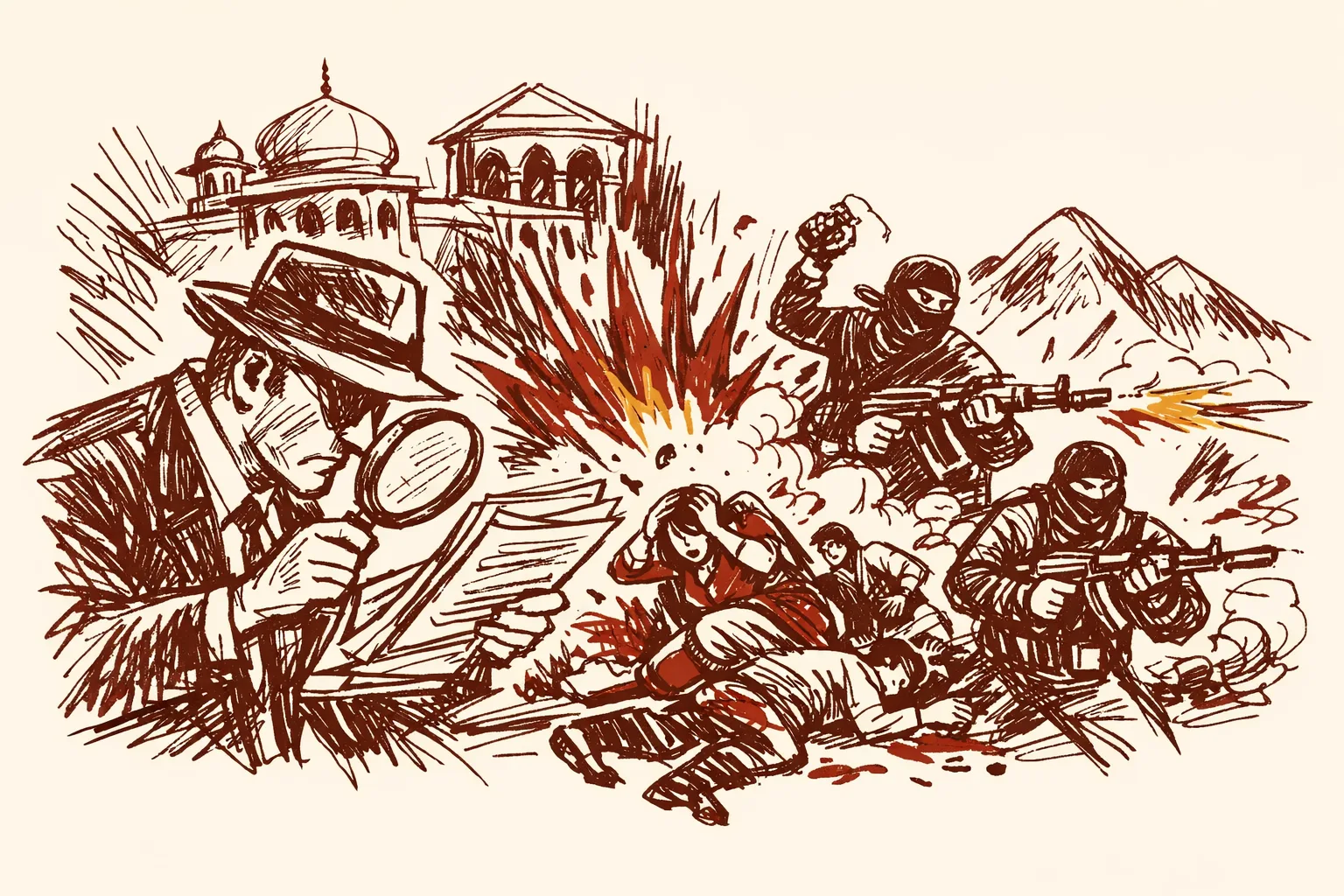
A Meadow Turned Into a Kill Zone
Baisaran Valley sits about six kilometers from Pahalgam town in Jammu and Kashmir. It is a small green meadow ringed by pine forests. Families go there for picnics. Tourists rent ponies and take pictures. On April 22, three terrorists killed 26 civilians there. The 1,597-page document filed by India's National Investigation Agency details the planning and execution of one of the deadliest tourist attacks in the region in recent years.
The NIA chargesheet - filed before a special court in Jammu - details Pakistan's conspiracy, the roles of all accused, and supporting evidence. It has charged the banned Lashkar-e-Taiba and its proxy group The Resistance Front as legal entities for their role in planning, facilitating, and executing the attack.
The Scale of the Attack and What It Cost Kashmir
The attack involved religion-based targeted killings. It left 25 tourists and one local civilian dead. In some cases, Hindu men were forced to remove their trousers to check for circumcision. A local pony operator was killed trying to disarm one attacker.
The economic damage was immediate and severe. In the first six months after the attack, Kashmir received 753,856 tourists - a drop of nearly 52 percent compared to the same period the previous year, when 1,565,851 tourists had visited. Tourist occupancy fell by 90 percent. Job losses across the tourism sector exceeded 70 percent.
One hotel in Gulmarg that typically charged Rs 70,000 per night had to reduce its rate to Rs 20,000 after the attack. The Kashmir Chamber of Commerce and Industry said the entire chain of economic activity that tourism supports had broken down.
The attack was designed to incite communal violence - a shift from cross-border military attacks to dividing India from within. Every successful attack gives Pakistan a propaganda tool at international forums.
What the NIA Chargesheet Says Happened - Minute by Minute
The mastermind dispatched the three attackers toward Baisaran Valley on April 15-16. The conspiracy was finalized days in advance.
The night before the attack, the terrorists arrived at the home of a local pony operator. Parvaiz Ahmad told investigators that around 5 pm on April 21, he was sitting with his wife and son inside their hut when the armed men arrived. They asked for water, claiming they had travelled a long distance. They were speaking Urdu with a Punjabi accent and did not seem to be Kashmiris. They told him to hide their bags and pouches. He hid them under his blankets. His wife Tahira cooked food. They asked for rotis to be packed and left by 10 pm.
The attackers also asked about security arrangements and the upcoming Amarnath Yatra before leaving. They were not just attacking tourists that day. They were probing for information about India's largest annual pilgrimage.
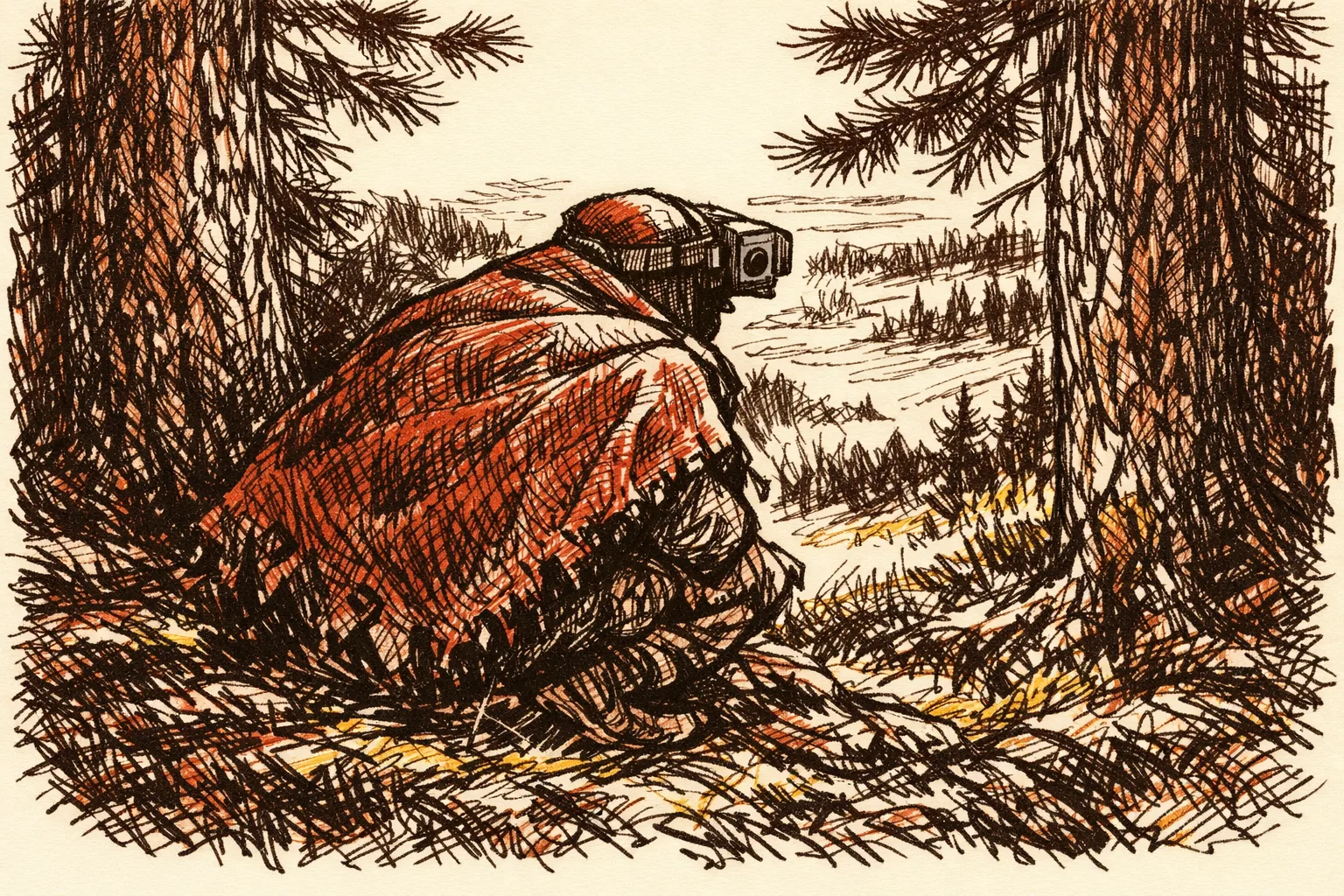
The next day, they retrieved blankets from their bags and draped them over themselves for camouflage. They moved into position near a stream to observe tourist activity inside the meadow.
One terrorist wore a GoPro action camera on his head to record the killings.
At 2:23 pm, the first shot was fired using an M4 carbine. Seconds later, automatic fire from AK-47 rifles opened from two other positions. The coordinated assault from multiple directions created a confined kill zone in the central meadow, designed to maximise civilian casualties. Tourists had nowhere to run.
Attackers asked victims to recite the Kalma - the Islamic declaration of faith. Those who could not were shot. Several victims were executed at close range while hiding behind trees. After exiting the park, the terrorists fired rounds in celebration.
The Seven Accused Named by the NIA
The agency named seven accused: Sajid Jatt, based in Pakistan's Kasur district; the three attackers, Faisal Jatt alias Suleman Shah, Habeeb Tahir alias Jibran, and Hamza Afghani; locals Bashir Ahmad Jothar and Parvaiz Ahmad; and Lashkar-e-Taiba and The Resistance Front as organisations. All have been charged with murder, waging war against India, and relevant sections of the Arms Act and the Unlawful Activities Prevention Act.
Parvaiz Ahmad and Bashir Ahmad were arrested on June 22. During interrogation, they confirmed the terrorists' Pakistani nationality and their affiliation with Lashkar-e-Taiba. They have been chargesheeted for harbouring and providing logistical support to the attackers.
All three attackers are dead. Security forces neutralised them on July 28, during Operation Mahadev in the Dachigam forests near Srinagar - 97 days after the attack.
The Mastermind - A Man Named Langda
Accused Number 1 in the chargesheet is a man named Saifullah. He goes by many names. The NIA calls him Sajid Jatt. His network calls him Langda - the limper - because he lost a leg in a previous encounter with security forces and now uses a prosthetic.
He directed the attack in real time from Lahore, remaining in constant communication with the three attackers during the assault, sending GPS coordinates and escape routes.
He was born in Kasur, Pakistan, and infiltrated Jammu and Kashmir in 2005. He lived in Kulgam from 2005 to 2007, married a local woman named Shabbira, and had a son. He later returned to Pakistan with his wife, while his son remained in Kashmir.
After the abrogation of Article 370 in 2019, he reportedly played a key role in creating The Resistance Front as Lashkar's local proxy - to give Pakistan plausible deniability. He also runs cross-border arms and narcotics smuggling via drones into Jammu and Kashmir. He has been named as the main conspirator in the 2023 Dhangri massacre, the Poonch Air Force convoy attack, and the Reasi bus attack. Same man. Same network. Year after year.
He is sitting inside Pakistan. That is the problem.

The Pakistan Connection - What the Phones and IP Addresses Show
Two mobile phones were recovered from the slain attackers after Operation Mahadev. Supply-chain records from phone manufacturer Xiaomi confirmed both phones were sold and delivered in Pakistan - one to an address in Lahore's Qaid-e-Azam Industrial Estate, the second to a buyer in Karachi. The phones were not bought in India. They were carried across the border.
Data from those phones revealed chats with Sajid Jatt giving directions to the attackers. The phones also contained screenshots of the Alpine Quest app showing coordinates of locations near Baisaran Park.
The NIA's probe found that the Telegram channel called Kashmir Fight was being operated from the Battagram area in Pakistan's Khyber Pakhtunkhwa province. A second channel called The Resistance Front Official was being operated from Rawalpindi. Both channels were used to claim and then deny the attack.
When international condemnation grew, The Resistance Front withdrew its claim and said its Telegram channel had been hacked. The NIA found that both the claim of responsibility and the denial were posted from digital networks inside Pakistan. Pakistan wanted the propaganda victory. It did not want the consequences.
What Has Already Been Tried
After the 2008 Mumbai attacks, India presented Pakistan with a detailed dossier naming Lashkar-e-Taiba and its handlers. Pakistan refused to prosecute the masterminds. Hafiz Saeed was eventually convicted by a Pakistani court on terror financing charges, but the prosecution was driven largely by FATF grey-listing pressure rather than genuine accountability.
After the 2016 Uri attack, India conducted surgical strikes. After the 2019 Pulwama attack, India struck Jaish-e-Mohammed camps in Balakot. Both were significant. Neither dismantled the infrastructure.
The difference with Pahalgam is the legal architecture. For the first time in Indian legal history, the NIA has charged Lashkar-e-Taiba and The Resistance Front as legal entities - not just individual members. This makes the organisations themselves the accused. It opens the door to seizing organisational assets and pressing international partners to treat Lashkar as a criminal enterprise, not just a collection of bad individuals.
How Other Countries Have Handled State-Sponsored Terror
The United States After 2001
After September 11, the United States went after the money and the sanctuaries. The 9/11 Commission's findings led to a shift from monitoring terrorist financing to actively disrupting it through criminal prosecution and asset-blocking. The Commission identified western Pakistan as a primary terrorist sanctuary and recommended using all instruments of national power to deny safe haven to groups operating there. The US did not separate the terrorists from the state that harboured them. It treated them as the same problem and used that framing in every diplomatic and legal forum.
Spain After the 2004 Madrid Bombings
When al-Qaeda bombers killed 191 people on Madrid commuter trains, Spanish investigators completed a 70,000-page court case within 18 months. Spain's National Court prosecuted 29 defendants at speed. Three of the key accused received sentences exceeding 40,000 years each under Spanish law. Speed matters. Long delays allow narratives to drift and witnesses to be intimidated.
The Financial Action Task Force Model
The Financial Action Task Force placed Pakistan on its grey list for failing to act against organisations like Lashkar-e-Taiba. Pakistan was removed after making formal commitments. The Pahalgam NIA chargesheet contains documented evidence of hawala funding routes and overseas directives that can be placed before the Task Force to demand Pakistan's re-listing. The commitments Pakistan made were not kept. The evidence is now on paper.
India's Military Response - Operation Sindoor
Within two weeks of the attack, India struck back.
Operation Sindoor destroyed nine major terror launchpads in Pakistan and Pakistan-Occupied Kashmir. Over 100 terrorists were killed. Targets included Markaz Taiba in Muridke and Markaz Subhan Allah in Bahawalpur - the nerve centres behind the 2001 Parliament attack and the 26/11 Mumbai carnage.
In 2016, India struck across the Line of Control. In 2019, India struck Balakot in Khyber Pakhtunkhwa. This time, India struck deep into Pakistan's Punjab heartland. The message: there is no safe distance for terror infrastructure on Pakistani soil.
After the strikes, images emerged of Pakistan Army officers conducting state funerals for Lashkar-e-Taiba terrorists killed at Muridke. Those images confirmed, more clearly than any dossier could, the direct complicity of the Pakistani state.
Multiple global leaders backed India this time rather than calling for restraint.
Who Is Accountable
The NIA - functioning under the Ministry of Home Affairs - filed the chargesheet after interviewing more than 1,100 people across eight months. All accused have been booked under the Bharatiya Nyaya Sanhita 2023, the Arms Act 1959, and the Unlawful Activities Prevention Act 1967. The trial is before the NIA Special Court in Jammu.
The mastermind, Sajid Jatt, remains in Pakistan and has not stopped planning attacks. His arrest requires Pakistan's cooperation. That cooperation has not come. Every day he operates freely is a failure of the international system that placed Pakistan off the FATF grey list.
What Needs to Happen
The chargesheet is the beginning, not the end.
First, the FATF evidence must be deployed immediately. The chargesheet documents hawala routes, drone-based arms transfers, and digital command-and-control from Pakistani territory. India's Foreign Ministry should present this at the Financial Action Task Force and push for Pakistan's return to the grey list.
Second, the legal precedent of charging Lashkar-e-Taiba as an organisational entity must be pressed internationally. Partner nations and multilateral forums should be pushed to treat Lashkar as a criminal enterprise with assets that can be frozen and infrastructure that can be dismantled.
Third, tourist security in Jammu and Kashmir must be upgraded before the next season. The NIA found that the terrorists observed Baisaran Valley for days before attacking. A proper surveillance grid - drones, sensors, real-time reporting from local guides - would have detected that reconnaissance.
Fourth, Sajid Jatt must not be allowed to plan his next attack from Lahore. Every diplomatic channel available to India must be used to demand his extradition or neutralisation. If Pakistan refuses, that refusal belongs in every forum where Pakistan asks for legitimacy.
India has shown it can build a legal case. India has shown it can hit back militarily. The next phase is sustained, documented, international pressure that follows the money, the recruiters, and the commanders wherever they sit.