Read the Full Speech Before You Scream
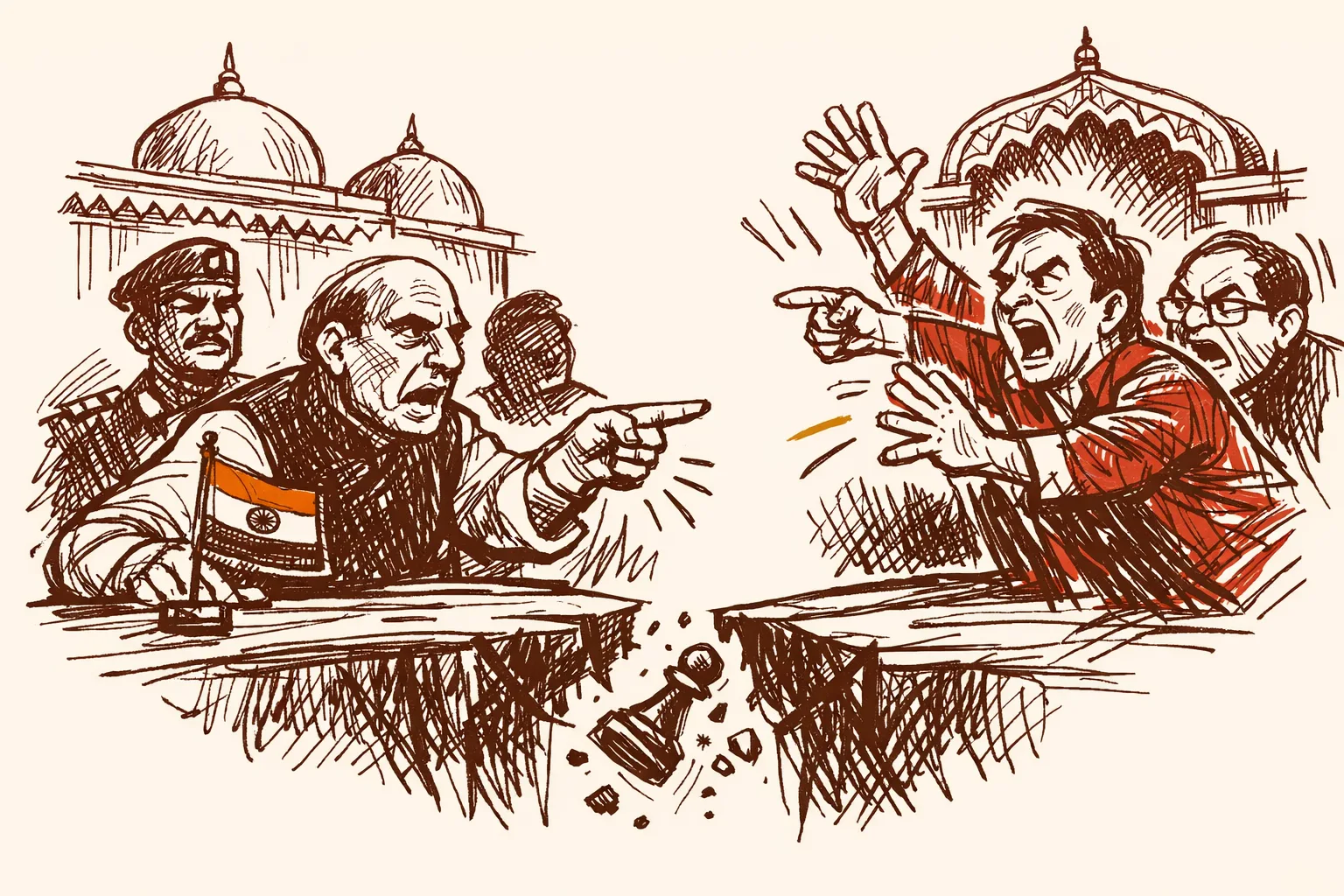
India's Defence Minister Rajnath Singh stood before the Shanghai Cooperation Organisation Defence Ministers' Meeting in Bishkek, Kyrgyzstan on April 28. Pakistan's Defence Minister Khawaja Asif was sitting in the same room. And here is what Rajnath said, on the record, in front of him.
"Operation Sindoor demonstrated India's firm resolve that terrorism epicentres are no longer immune to justifiable punishment."
"We must not lose sight of state-sponsored cross-border terrorism, which attacks the very sovereignty of a nation-state. There is no place for any double standards, and SCO should not hesitate in seeking appropriate action against those who abet, shelter and provide safe havens to terrorists."
According to the official Ministry of Defence record of the speech, Singh also said: "No grievance, real or supposed, can become an excuse for terrorism and humanitarian loss."
That is the speech Congress called anti-national.
What Congress Actually Objected To
Congress General Secretary Jairam Ramesh took one line from the address and built his attack around it. The line was: "terrorism has no nationality and no theology."
Ramesh posted on X calling this a "shameful clean chit to Pakistan." He asked whether Pakistan was not the epicentre of terrorism. He said Rajnath's statement was "as anti-national as the PM's bizarre clean chit to China."
Congress's argument is that saying "terrorism has no theology" amounts to defending Pakistan. That reading requires ignoring everything else Rajnath said in the same speech. The phrase "terror epicentres are no longer immune" is there in the transcript. So is "state-sponsored cross-border terrorism" - hardly a compliment to Islamabad. Cherry-picking one clause while discarding three others is not a reading of the speech.

What the Phrase Actually Means in Diplomatic Context
The SCO is a 10-member bloc. It comprises India, China, Russia, Pakistan, Kazakhstan, Kyrgyzstan, Tajikistan, Uzbekistan, Iran and Belarus. Every major decision requires consensus. China is Pakistan's closest strategic partner. Russia abstained from taking India's side even on the Pahalgam resolution.
In that room, India cannot name Pakistan directly in a joint statement and expect any outcome. That is not weakness - that is how multilateral forums work.
The phrase "terrorism has no nationality" was a call to strip away Pakistan's favourite shield - the argument that targeting Pakistani-origin terror groups amounts to "Islamophobia" or anti-Muslim bias. Singh was closing that escape route, not opening one. It tells every member state in the room that they cannot use religious or national identity to protect terrorist infrastructure. That argument lands harder on Pakistan than on anyone else in that forum.
What Rajnath Did NOT Say - and Why That Matters
Calling Pakistan a peaceful neighbour - he did not do that. Asking for dialogue without accountability - absent from the speech. Praising Islamabad's cooperation on terrorism - also absent.
He cited Operation Sindoor - India's military strike on nine terror launchpads in Pakistan and Pakistan-occupied Jammu and Kashmir - in the presence of Pakistan's own defence minister. Operation Sindoor, launched on May 7, destroyed nine major terror launchpads in Pakistan and Pakistan-occupied Jammu and Kashmir, targeting Lashkar-e-Taiba, Jaish-e-Mohammed, and Hizbul Mujahideen facilities.
He then reminded the forum that the Tianjin Declaration - signed the previous year - had established a collective zero-tolerance stance. He used that endorsement to demand consistency. Every SCO member had already signed that position. Singh held them to it.
What Congress Wanted Him to Say Instead
This is the question nobody in the opposition will answer: what exactly should Rajnath have said at the SCO meet?
Should he have named Pakistan directly and walked out when no consensus formed - as he did at the Qingdao meeting last year? At the Qingdao SCO Defence Ministers' meeting, Rajnath Singh refused to sign the joint communique because it omitted the Pahalgam terror attack and did not explicitly address India's concerns over Pakistan-backed cross-border terrorism. Congress said nothing then.
Should he have skipped the meeting altogether? That would have left the forum to Pakistan and China without an Indian voice in the room.
Congress has not proposed an alternative. They have only attacked. Partisan point-scoring during a moment that requires the opposite is not national security discourse.
The Track Record Congress Chooses to Ignore
This government has not been soft on Pakistan.
At Qingdao last year, India stood alone rather than sign a watered-down document. India's Defence Minister Rajnath Singh refused to sign the statement, insisting terrorism concerns must be included. Three months later, the leaders' summit corrected this omission, explicitly mentioning Pahalgam and cross-border terrorism. India's pressure worked.
Then at Bishkek, with that victory secured, India returned to the table and pushed further. Singh reminded the forum that its own declaration demanded consistency. He called for action against those who shelter terrorists. He cited Operation Sindoor by name.
And forty-eight hours after the Bishkek speech, at the ANI National Security Summit in New Delhi, Singh left no ambiguity. "We have seen that countries like Pakistan have consistently supported terrorism. While India is known worldwide for its Information Technology, Pakistan has come to be regarded as the epicentre of another 'IT' - International Terrorism," he said.
That is the same man Congress called anti-national two days earlier.

How Other Countries Handle Multilateral Forums on Terror
The United States after 9/11: Washington said repeatedly that the war on terror was not a war on Islam - the exact same construct Congress is calling anti-national when India uses it. The US used that framing to build a coalition of Muslim-majority countries. It did not stop the US from naming state sponsors of terrorism and acting against them.
The United Kingdom in Northern Ireland talks: British officials participating in peace talks with Sinn Fein used language that refused to label all Irish Catholics as terrorists - even while British security services were actively targeting IRA infrastructure. Diplomatic language and military pressure ran simultaneously. Neither undermined the other.
India at the United Nations: India has consistently argued in UN forums that terrorism must not be linked to any religion or nationality - because that framing protects India when Hindus are targeted abroad, and protects Indian Muslims from being collectively blamed for Pakistan-origin attacks. This is India's long-standing position. Congress authored much of it during their own years in government.
Multilateral language and bilateral firmness are not opposites. They operate on different registers. Confusing them is either ignorance or politics.
Who Is Accountable
The Ministry of Defence controls India's representation at SCO Defence Ministers' meetings. Rajnath Singh is the accountable minister. His speech is published in full on rajnathsingh.in. There is no ambiguity about what was said.
Jairam Ramesh made a public accusation of anti-national conduct against a sitting Defence Minister. He clipped one sentence from a multi-paragraph speech and built a political charge on it. The full transcript was publicly available before he posted. He chose to clip anyway.
What This Kind of Politics Costs India
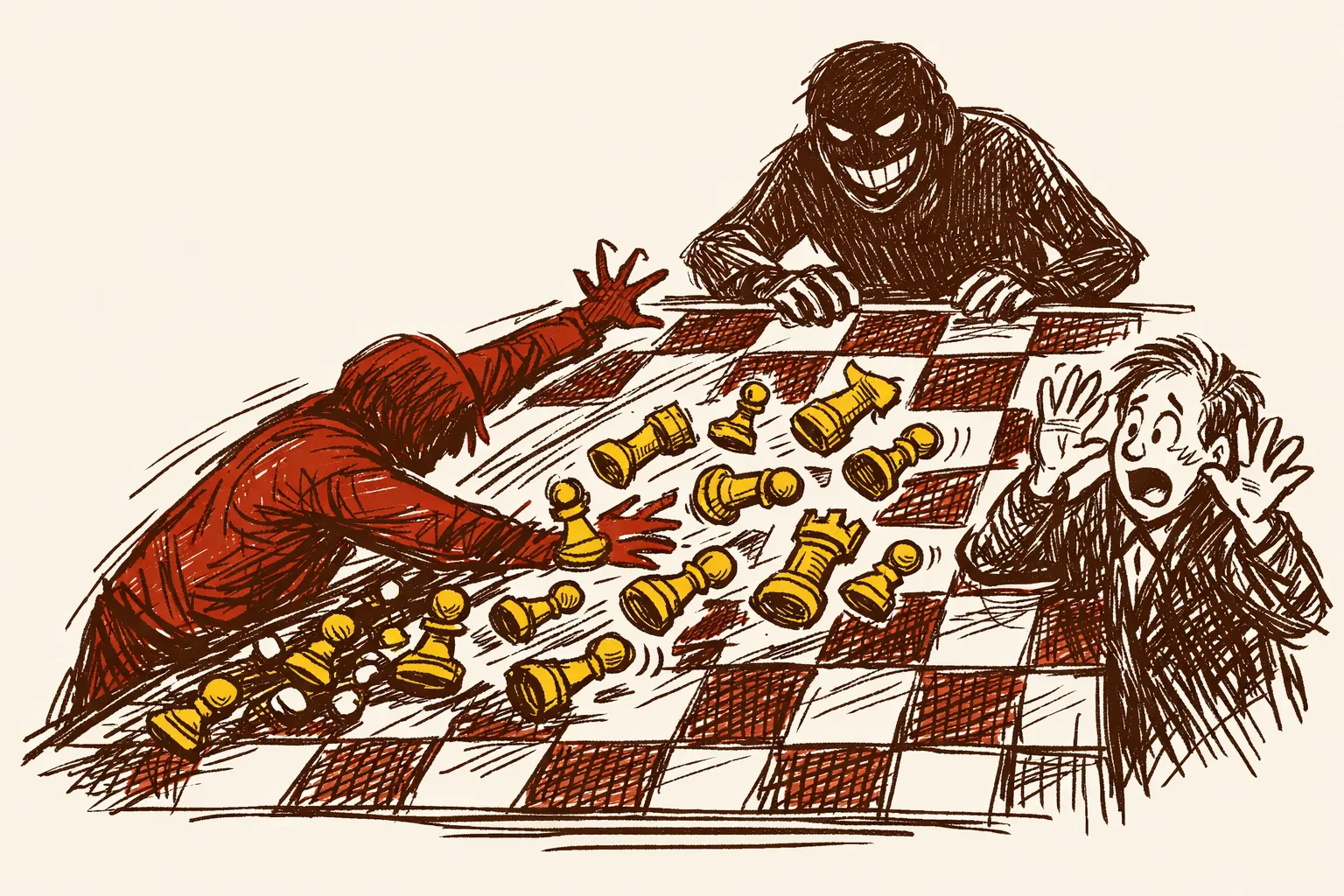
India's foreign policy works best when adversaries know that the government has public and political backing for hard positions. When the opposition attacks a Defence Minister for being too soft at a multilateral forum - using language India has used for decades - it signals to Pakistan, China, and every other player that India's domestic politics can be used to destabilise its international positions.
Pakistan's own media celebrated the "terrorism has no nationality" line as a victory. That propaganda opening would not otherwise have existed. The opposition did not protect India's position. They weakened it.
What Needs to Be Said Plainly
India under this government has taken harder positions on Pakistan-sponsored terrorism than any administration in decades. Operation Sindoor was not a press conference. Indian armed forces killed over 100 terrorists in action. Pakistan responded with drone attacks and shelling, which led to a four-day conflict between the two countries. Singh confirmed: India did not stop the operation because its capabilities had diminished - it stopped voluntarily, on its own terms.
What India needs is an opposition that understands the difference between a multilateral speech and a bilateral policy statement - and that asks hard questions about execution: how many of the 9 launchpads are rebuilt, whether FATF pressure on Pakistan is being sustained, whether the ceasefire terms are holding.
Those are legitimate questions. "Anti-national" is not a question. It is a label being misused.
Rajnath Singh was effective in Bishkek. Congress was not honest about what he said.