What Voters See When They Step Outside
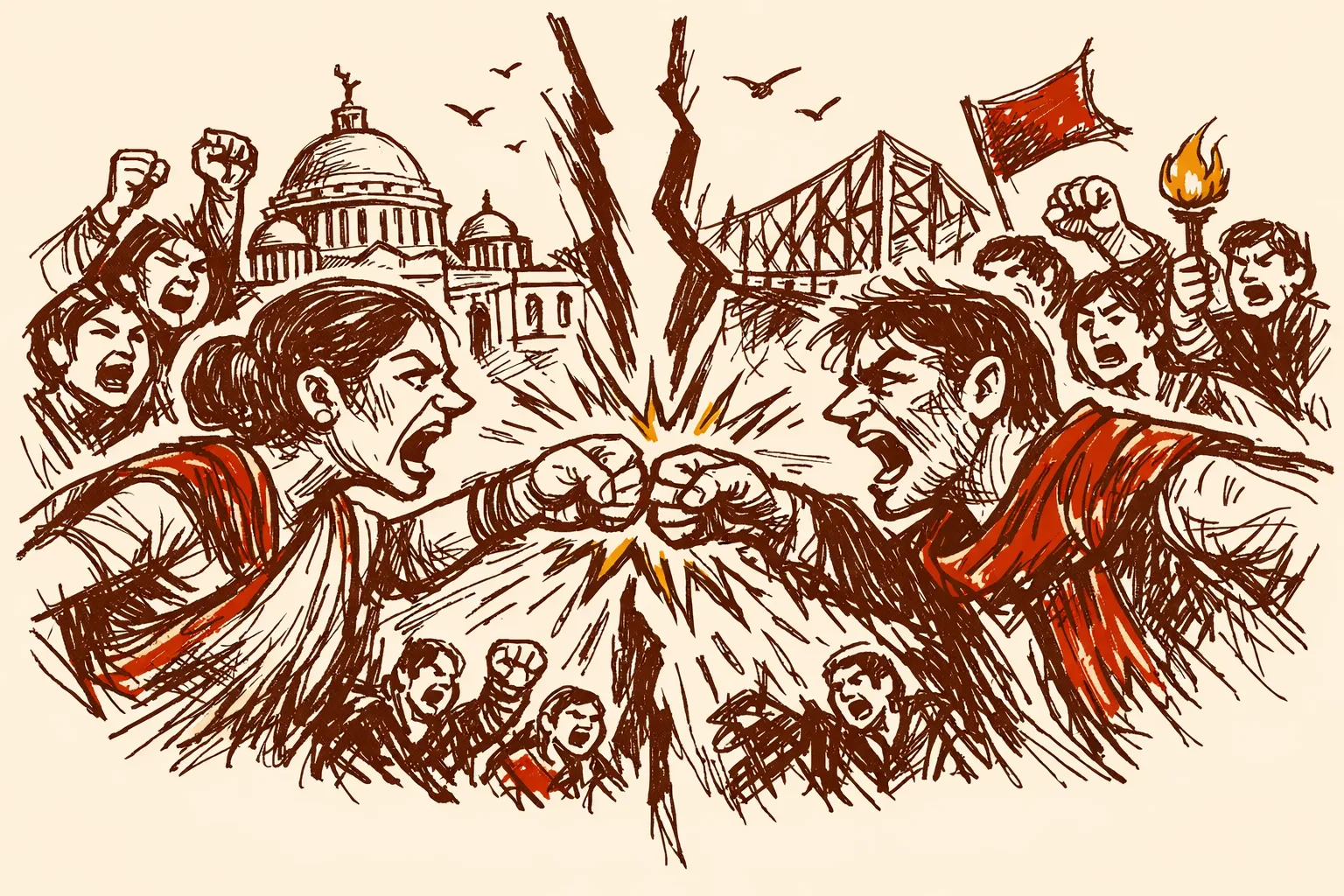
Walk through North 24 Parganas today and you will see Central Armed Police Forces patrolling streets that state police used to control. Talk to a young graduate in Kolkata and the first word out of their mouth is 'jobs.' A schoolteacher in Hooghly may not know if her own appointment was legal. This is West Bengal before its biggest election in a generation.
What is happening in Bengal right now is of a different order - it is 15 years of compounding failure, now coming to a head in a single vote.
The Scale of What Is at Stake
West Bengal is India's fourth-largest state by population - roughly 104 million people. It borders Bangladesh, Bhutan, and Nepal. It houses the country's second-largest city. What happens here matters for the whole of eastern India.
The Election Commission of India announced voting in two phases - April 23 and April 29 - with results on May 4. There are 294 assembly seats. The majority mark is 148. The Trinamool Congress (TMC), led by Chief Minister Mamata Banerjee, has governed the state since defeating the Left Front in 2011. It is seeking a fourth consecutive term - something no non-Left party has ever achieved in Bengal.
The Core Problem - 15 Years of TMC Governance
The case against the current government is not one headline. It is a pile of files.
Start with the teacher recruitment scam. The West Bengal School Service Commission ran a selection test in 2016 to hire teachers and non-teaching staff. What the CBI found was fraud at industrial scale - OMR answer sheets tampered with, merit lists manipulated, and candidates appointed who had submitted blank sheets. Individuals allegedly paid Rs 5 to 15 lakh in bribes to get jobs, according to state government sources cited by The New Indian Express.
The Supreme Court called the entire selection process 'vitiated and tainted beyond resolution.' It annulled 25,753 appointments. Former Education Minister Partha Chatterjee - a senior TMC leader - was arrested by the Enforcement Directorate. Nearly Rs 22 crore in cash was found at a property linked to his associate, Arpita Mukherjee. The Enforcement Directorate's asset attachments in the case exceeded Rs 636 crore, according to court records.
The jobs market was run as a private racket.
Then there is the RG Kar case. In August, a postgraduate trainee doctor named 'Abhaya' by protesters was raped and murdered inside RG Kar Medical College and Hospital in Kolkata - a government institution. The killing triggered the largest street protests Bengal had seen in years. Junior doctors went on strike for weeks. Mamata Banerjee, who also holds the home portfolio, came under direct fire. As of election day, her mother Ratna Debnath says justice has still not been fully delivered.
Ratna Debnath is now a BJP candidate from Panihati constituency. She said plainly: 'I am entering politics to ensure justice for my daughter and to remove this government from power.'
A C-Voter poll for News18 found that 15.9 percent of voters named law and order and women's safety as their top issue. The number one voter concern, though, is unemployment - 37.2 percent of respondents in the same poll named it first. Bengal's youth are leaving. The state ranks poorly on ease of doing business.
The SIR Controversy - The Biggest Electoral Row in Decades
Before any ballot is cast, a massive fight has already been fought over who gets to vote.
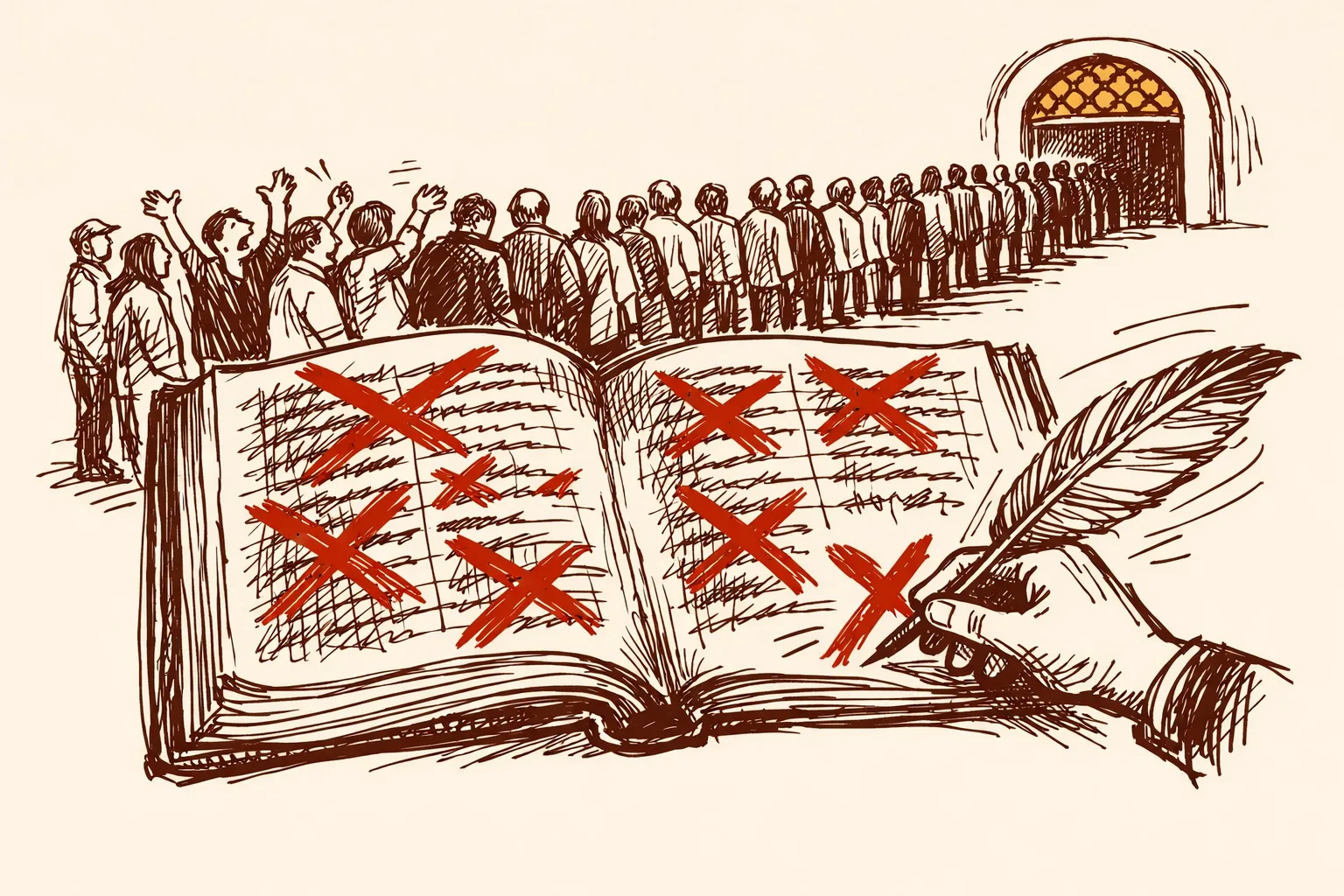
The Election Commission conducted a Special Intensive Revision (SIR) of voter rolls. The registered voter count dropped from roughly 7.66 crore to about 7.05 crore - a reduction of nearly 90 lakh names through various stages of deletion and adjudication.
The districts hit hardest were Murshidabad (7.44 lakh deletions), Malda (4.53 lakh), North 24 Parganas (12.38 lakh), and Howrah (5.93 lakh). These are also districts with large Muslim populations. An analysis by Alt News found that in Bhabanipur and Ballygunge, flagged voters were 3.1 times more likely to be Muslim than Hindu. TMC said this showed the process targeted its voter base. The Election Commission said all names were examined and those deemed ineligible could approach judicial tribunals.
The Supreme Court took up a suo motu petition on the issue. It declined interim relief but ordered 19 appellate tribunals to be set up. Former Chief Election Commissioner S.Y. Quraishi called the process 'unconstitutional and deplorable.' BJP's Suvendu Adhikari said publicly he was 'relying on SIR arithmetic' to win Bhabanipur, where over 47,000 deletions occurred against a winning margin of just 8,291 votes in the previous election.
The most alarming episode came from Malda. On April 1, judicial officers serving as appellate tribunal members were gheraoed and held captive for over nine hours at a government office in Kaliachak. Eighteen people were arrested. The Chief Election Commissioner referred the case to the National Investigation Agency (NIA). The Chief Justice of India told Bengal's Advocate General: 'In your state, each one speaks a political language and this is the most polarised state. Very, very unfortunate.'
The History of Violence - This Is Not New
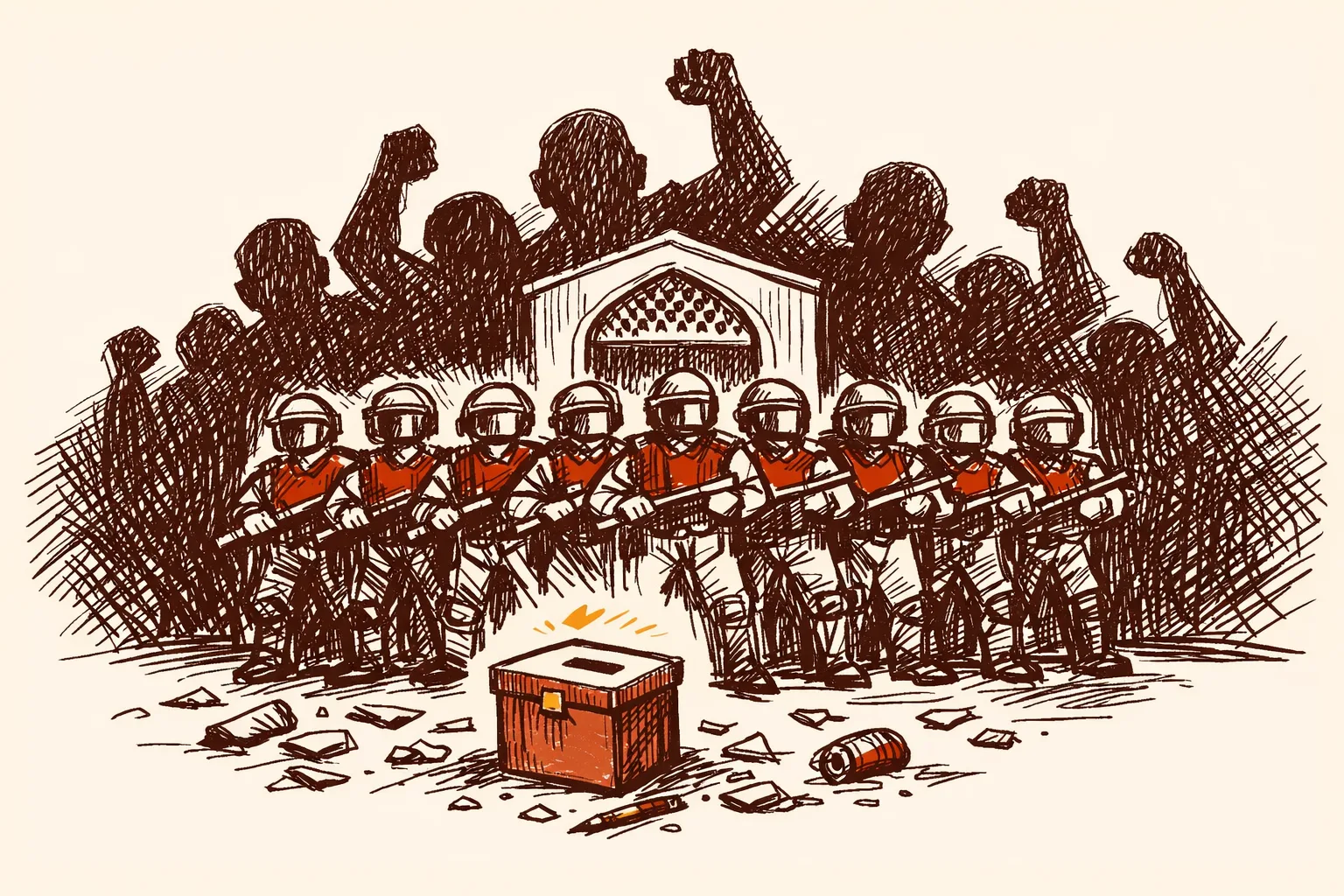
Bengal's election violence goes back decades. The National Crime Records Bureau data listed West Bengal as having the highest number of political murders in the country as of 2021.
In the 2021 assembly elections, the state voted in eight phases under massive central force deployment. Even so, post-poll violence claimed multiple lives. BJP alleged over 37 workers were killed. The Supreme Court took cognisance.
In the 2023 panchayat elections, over 45 people died in violence before and during polling. At least 11 people were killed on polling day alone, according to reports by Al Jazeera and Reuters. More than 20,000 booths were allegedly captured by ruling party cadres. Re-polling was ordered in 697 booths. The Calcutta High Court called the election monitoring 'not proactive.'
The Election Commission is deploying nearly 2.4 lakh Central Armed Police Force (CAPF) personnel - the largest deployment for any single state election in India's history. The 2021 assembly election had roughly 725 CAPF companies. This time the number is 2,400 companies. State police will not be permitted within 600 meters of polling booths. The Election Commission also transferred Bengal's Chief Secretary, Director General of Police, and several senior IAS officers immediately after the election schedule was announced.
What Has Been Tried Before
In 2021, the Election Commission split voting into eight phases to allow full central force coverage. The result was peaceful counting but widespread post-poll violence. The Commission's power ends when votes are counted; law and order reverts to state government.
The Calcutta High Court and Supreme Court both intervened repeatedly in the 2023 panchayat election - ordering central force deployment and flagging the state election commission's passivity. Court intervention improved specific situations. It did not fix the underlying problem of a state machinery that functions as a party tool.
The SSC teacher recruitment scam led to direct CBI intervention, multiple arrests, Supreme Court annulment of 25,753 appointments, and court-ordered fresh recruitment. Thousands of genuinely qualified teachers lost jobs they had held for years through no fault of their own.

How Other Countries Fixed This
Indonesia - Breaking Machine Politics Through Institutional Reform
Indonesia had entrenched regional political machines that controlled patronage, jobs, and votes. After 1998, the country created an independent General Elections Commission (KPU) with its own budget and legal power to prosecute electoral fraud. It used civil society monitors at every booth. Within three election cycles, direct violence at polling stations dropped sharply. The key was the KPU's independence from both central and regional governments. It reported to no party. Bengal's problem is the opposite - state machinery that remains deeply party-linked even under election conditions.
Bihar, India - The Nitish Governance Model
In the early 2000s, Bihar had election violence comparable to Bengal's - booth capturing, political murders, and law and order that functioned as patronage machinery. Under Nitish Kumar from 2005, a crackdown on criminal political links, combined with central force deployment and strict Model Code of Conduct enforcement, reduced visible election violence significantly. The state's bureaucracy was rebuilt over years. Bihar's fix took two full terms before results showed. Bengal is starting that process now.
Andhra Pradesh - Anti-Corruption Courts
When the YSR Congress government found rampant corruption in hiring processes, it set up dedicated anti-corruption courts with fast-track timelines. Cases that previously ran for eight to ten years were resolved in 18 months. The Bengal SSC scam has already taken years in courts. Dedicated courts with fixed timelines would mean guilty officials face real consequences before retirement.
The Bhabanipur Contest - One Seat That Tells the Whole Story
Bhabanipur is a south Kolkata constituency. Mamata Banerjee has held it since 2011. It is mixed - roughly 42 percent Bengali Hindu, 34 percent non-Bengali Hindu, and about 24 percent Muslim. She is contesting only from here, having said she will 'win even if by just one vote.'
Suvendu Adhikari - once Mamata's most powerful cabinet minister, who defected to the BJP in late 2020 and beat her in Nandigram by 1,956 votes in 2021 - is contesting from both Bhabanipur and Nandigram. Union Home Minister Amit Shah personally persuaded him to take the Bhabanipur fight. Shah said at a roadshow: 'You have to enter Mamata Banerjee's home and defeat her there.'
If Mamata loses Bhabanipur, she loses both her seat and the chief ministership.
The Fragmented Opposition Problem
For the first time in a decade, the Left-Congress alliance has broken apart. Congress is contesting all 294 seats independently. The Left Front is running separately, with CPI(M) forging new alliances with the Indian Secular Front and regional groups. The AIMIM has allied with local leader Humayun Kabir's AJUP and is contesting around 199 seats, targeting Muslim voters in Murshidabad, Malda, and North Dinajpur.
This fragmentation mostly hurts parties other than TMC. Muslim voters in BJP-competitive seats are likely to consolidate behind TMC out of defensive instinct. But Congress seats in Malda and Murshidabad could be cut into by the Owaisi-Kabir alliance, as happened in Bihar's Seemanchal region in 2020.
Who Is Accountable
The West Bengal Home Department - under Chief Minister Mamata Banerjee, who holds both portfolios - is directly accountable for 15 years of law and order failures. The state Education Department under former minister Partha Chatterjee bears direct accountability for the SSC scam. Nobody has been fired. The CBI and Enforcement Directorate are the active investigative arms - both central government agencies, operating under court orders. The Election Commission has authority over the conduct of elections. The Supreme Court's suo motu jurisdiction covers voter roll integrity. The NIA now has direct jurisdiction over the Malda hostage incident.
What Would It Cost
The election requires nearly 2.4 lakh CAPF personnel over a month-long deployment. A rough estimate based on per-company deployment costs puts the additional security expenditure in the hundreds of crores. The 500 companies retained after counting - to prevent post-poll violence - will run for weeks after May 4.
The SSC scam's direct fiscal damage includes court-mandated salary recovery from 25,753 illegally appointed employees, state legal costs, and the cost of running fresh recruitment for over 25,000 posts. The Rs 636 crore attached by the Enforcement Directorate came from public school hiring budgets - ultimately from taxpayers.
What Needs to Happen
Bengal needs three things that have nothing to do with who wins on May 4.
First, Bengal's state police must be depoliticised. The pattern across every election cycle is state police functioning as a ruling party tool. The Bihar model - where state police leadership was insulated from direct political command over two terms - is the template.
Second, all government hiring in Bengal must move to fully digital, publicly auditable systems with real-time score publication. The SSC scam was possible because OMR sheets were destroyed, scores were manipulated on private servers, and no public check existed. The solution exists. It requires a government willing to use it.
Third, Bengal needs a dedicated anti-corruption bench with a 12-month resolution mandate for corruption cases involving public officials. Without it, cases like the SSC scam run for five-plus years, allowing guilty officials to retire with benefits before any verdict.